

Hacking the Ringneck: Tactical Tips for Outsmarting Public Lands Pheasants

Retay Logo

Written by Team Retay

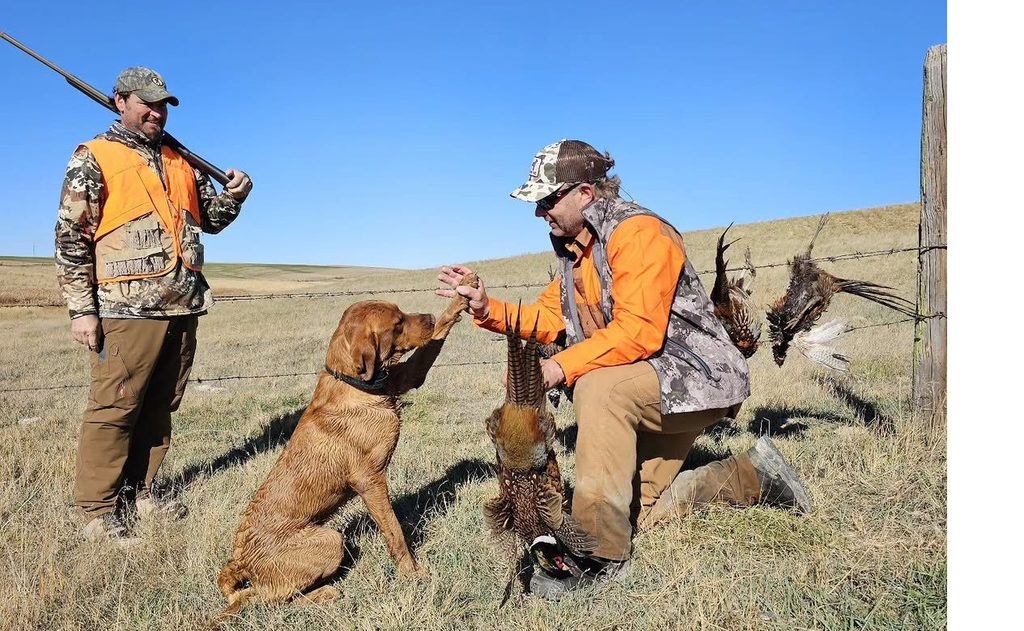
Anyone who has stepped onto a public Wildlife Management Area (WMA) or Waterfowl Production Area (WPA) on a crisp October morning knows the routine: trucks lined up at the parking lot, tailgates dropping, and an army of orange walking uniform, linear sweeps through prime switchgrass. 

By week three of the season, wild ringnecks have earned their Ph.D. in hunter avoidance. They’ve learned that the sound of a closing truck door means run, and a loud dog whistle means double back. On heavily pressured public dirt, the standard tactic of walking a straight line through easy cover rarely produces a full game bag. 

If you want to consistently put birds in the vest this season, you have to break the mold. Here are tactical strategies for outsmarting educated public land roosters. 

1. Practice “Tailgate Stealth” 

Public land birds hear dozens of hunters arrive every week. Long before you step into the field, ringnecks are already slipping away because they heard you coming. Close truck doors gently, slide dog kennels quietly, and refrain from yelling commands or blowing high-pitched whistles right at the access site. Avoid parking right where you intend to start walking. If possible, pull off further up the road or utilize lesser-known access points to keep from alerting birds hunkered near main entrances. 
Retay ringneck

2. Hunt the Nasty, Overlooked Micro-Cover 

Most hunters follow the path of least resistance: sweeping broad, clean tracts of native grass or walking flat field edges. Public land roosters know this and run straight toward cover that looks too punishing or inconvenient for humans. Pack hip waders or rubber boots and wade out to small cattail islands in marshy sloughs. Ankle- to knee-deep water isolates these pockets, creating natural refuges where pressured roosters hunker down. Overgrown homestead ruins, old fence corners, plum thickets, brushy ditch banks, and small patches of weeds along property boundaries are often bypassed by large hunting parties rushing to big fields. 

3. Master the “Push and Pause” Pace 

When pheasants sense a steady, rhythmic walking pace coming down a field line, their primary instinct isn’t to flush—it’s to run ahead or circle behind. Break Up Your Cadence: Walk 15–20 steps, then stop completely for 10–15 seconds. A stopping hunter makes a hiding rooster believe they’ve been spotted. The sudden silence breaks their nerve, forcing an explosive flush right at your feet. 

4. Cut Off the Escape Routes 

Old public land cocks don’t hold—they sprint ahead toward private land crop edges, dense woods, or drainage ditches. If hunting with a group, drop off a blocker quietly at the far end of a strip or funnel before starting the push. Work cover toward a pinch point—such as a waterway, road edge, or field corner—where running birds are forced to either flush or take flight. 

5. Shift Your Timetable (Midweek & Late Day) 

Pressure spikes on Saturday and Sunday mornings. By shifting when you hit the public spots, you encounter less competition and more relaxed birds. Wednesday through Friday mornings give birds a few days to settle back into normal feeding and loafing patterns after weekend pressure clears. While everyone else heads to the truck for lunch, afternoon hunts near heavy cover and roosting areas can produce excellent action as birds move back to roost or feed prior to dusk. 

Final Thoughts: Persistence Wins 

Public land hunting isn’t about easy limits; it’s about solving a high-stakes tactical puzzle. By slowing down, hunting the nasty cover everyone else skips, and staying quiet on approach, you’ll start seeing roosters in spots that others walked right past. 

Suit up, trust your dog’s nose, and go hit the spots that take a little extra sweat to reach. 

Find out more about Retay shotguns at https://www.retayusa.com/

Retay Logo

Strategic Tips for Hitting Those Geese

The opening weekend of early goose season is a bloodbath for local flocks, and by Monday morning, the playbook changes entirely. 

Those resident honkers that waded right into your massive decoy spread on Saturday morning are suddenly PhD-level survivors. They’ve circled fifty different spreads, listened to every high schooler in the county blow a short-reed like a dying cow, and dodged a hailstorm of steel shot. 

If you keep running the same opener strategy during week two, you aren’t hunting—you’re just educating birds faster than the state can hatch them. Here is how to adapt your early goose season tactics, beat the post-opener pressure, and pull wary, educated honkers into range when everyone else is scratching their heads. 

Recognize How Fast Birds Get “Smart” 

Geese don’t forget trauma. Within forty-eight hours of opening day, local family groups undergo a massive behavioral shift. 

● The Trap Recognition: Birds that lazily drifted toward a half-dozen full-bodies on Saturday will flare at three hundred yards on Tuesday if those decoys are sitting in the exact same spot. They learn the geometry of hunting setups. 

● The Calling Burnout: When every ditch line sounds like an outdoor convention, calling becomes a negative stimulus. Educated birds associate loud clucks and aggressive hail sequences with getting shot at, meaning silence is often your best weapon. 

Shift Off the Main Feed 

The biggest mistake hunters make after the opener is stubbornly chasing the “X” where birds were shot at forty-eight hours prior. Those fields are burned out, and the geese know it. 

● Target the Loafing Zones: Instead of fighting for position in a cut corn or silage field where every truck in the county is parked, look for mid-day security water. Find private stock ponds, marsh pockets, or river bends where pressured birds go to rest and digest after dodging the morning gauntlet. 

● Ambush the Transit Corridors: Set up half a mile off the roost between the water and secondary feeding areas. Catching flocks on a lazy transition flight when their guard is down works far better than trying to pull them into a heavily contested feeding ground. 

Retay Ace

Downsize and Scramble Your Decoys 

If you ran thirty full-bodies on opening weekend, cut that number in half—or ditch the traditional spread entirely. 

● Micro-Spreads and Family Groups: Drop down to six to eight ultra-realistic decoys spaced out naturally. Late-September birds are hyper-aware of unnatural clustering; a tight, small family pod looks far less intimidating to a flock that’s already on high alert. 

● Break the Mold: Stop arranging decoys in traditional horseshoe or C-shape patterns. Scatter them randomly, mix in different postures (feeders, sleepers, and alert sentries), and place them closer to natural cover like fence rows or irrigation pivots where birds naturally mill about. 

Master the Art of Strategic Silence 

The guys bagging birds after opening week are usually the quietest guys in the field. 

● Whisper, Don’t Shout: Put away the aggressive contest calling. Use soft, muffled murmur notes, gentle moans, and occasional feeding chuckles. You want to sound like a contented family group that has already found the dinner table, not a billboard advertising a party. 

● Call to Finish, Not to Pull: Let passing flocks locate you with your layout or natural cover. Only hit the call when they are directly overhead or working your edges, and cut the noise the second they commit their wings. 

Rethink Your Hide 

Geese looking down at a field don’t just see decoys—they see shadows, layout blind profiles, and unnatural straight lines that weren’t there on Friday. 

● Ditch the Layouts in Thin Cover: If the stubble is sparse, traditional layout blinds stick out like neon signs to birds that have been shot at all week. 

● Go Natural: Transition to zero-profile setups. Sit against a brushy fence line, tuck into a natural irrigation ditch, or use low-profile backrests brushed in heavily with local weeds. If a bird has to look twice to figure out if you belong in the landscape, you’ve already won half the battle. 

The post-opener lull separates the casual hunters from the ones filling limits all September long. When you stop doing what everyone else is doing, you stop educating the local flock—and start putting birds on the strap. 

Check out Retay waterfowl semi-autos at https://www.retayusa.com/

The Retay Ace Semi-Auto: The New Kid on the Block

Ace

August 19, 2026 — Easton, Maryland — In the world of semi-automatic shotguns, a new player has been turning heads and earning rave reviews. The RETAY ACE, with its impressive blend of innovative features, stellar performance, and an unbeatable price point, is quickly becoming a top contender for the title of “best in class.” This isn’t just another shotgun; it’s a testament to what’s possible when cutting-edge technology meets a dedication to quality and customer satisfaction. 

Performance That Rivals the Best 

The RETAY ACE is more than just a good-looking gun. It’s built for performance, and the reviews from hunters and sport shooters alike are a testament to its capabilities. At the heart of the ACE is RETAY’s patented Inertia Plus™ bolt system. This isn’t your average inertia action. It features a torsion spring that pushes the bolt into full battery, effectively eliminating the dreaded “inertia click” misfire that can occur with other shotguns when the bolt is accidentally jarred. This means reliable cycling and a quiet operation, giving you confidence in the field. 

But the innovation doesn’t stop there. The ACE also boasts a “Dead Straight” Deep-Bore Drilled Barrel and a factory-lengthened forcing cone. This combination is engineered to deliver improved patterns and consistent performance. In fact, RETAY claims this technology results in more pellets in the kill zone and a remarkable 67% improvement in shot-to-shot consistency. 

What’s more, the ACE addresses a common complaint of inertia guns by reliably cycling light loads, a feature that makes it incredibly versatile for everything from clay shooting to dove hunting. 

Unbeatable Value and Features 

One of the most compelling aspects of the RETAY ACE is the incredible value it offers. While it packs features typically found on shotguns priced significantly higher, the ACE sits in a price range that makes it accessible to a wider range of shooters. You get a lot of gun for the money, and that’s a point that resonates with many in the firearms community. 

The ACE also comes loaded with features that enhance the user experience. The trigger group can be easily removed with a single push button, making cleaning in the field or at home a breeze. The crossbolt safety is reversible for left-handed shooters, and the gun has an enlarged bolt handle and closer for easy operation with gloves in cold weather. Plus, RETAY has wisely adopted the popular Benelli Crio-choke pattern for the ACE, giving owners a wide array of aftermarket choke options. 

Retay ACE ConfigurationMSRP
ACE Black Synthetic$1,049
ACE Camo — Bottomland / Max-7$1,149
ACE-R Black Synthetic$1,049
ACE-R Camo$1,149
ACE Walnut$1,149
ACE Upland Ultralight$1,199

A Warranty That Shows Confidence 

Perhaps the strongest statement RETAY makes about the quality of their product is their Limited Lifetime Warranty. This warranty covers the firearm’s materials and workmanship for the original purchaser for as long as they own the gun. It’s a clear signal that RETAY stands behind their shotguns and is committed to providing peace of mind to their customers. While the warranty doesn’t cover things like finishes or normal wear and tear, it demonstrates a level of confidence in the core mechanics of the firearm that is hard to ignore. 

In a market crowded with options, the RETAY ACE shotgun is earning its reputation for a reason. It’s a shotgun that performs at a high level, is packed with user-friendly features, and is backed by a warranty that gives buyers confidence in their investment. If you’re in the market for a new semi-auto, the RETAY ACE is more than worth a look—it’s the best shotgun you can buy for the money. 

More information available at https://www.retayusa.com/retay-ace/

10 Budget Sporters That Will Keep You in the Action for 2026

The prices of sporting guns have risen sharply over the past few years, most recently driven by a mix of higher manufacturing costs, supply chain disruptions and a wave of tariffs. 

For wing and clays shooters, the impact is already impossible to ignore. What were once  relatively accessible sports are now under financial pressure for both newcomers and longtime participants – even putting some of our cherished American traditions at risk for future generations.

For 2026 in particular, the whiplash originates from tariffs on raw materials used to manufacture sporting guns, components and ammunition; increased oil prices that impact manufacturing and transportation; and inventories being prioritized for conflicts worldwide. For the weekend clay shooter or upland hunter these market dynamics translate into a direct hit on our wallet. And at the bottom of the food chain (the cash register of your local firearms dealer), tariffs alone on the finished product can add anywhere from 10 to 30 percent on the retail price of an over/under, side by side, pump  or semi-auto made in Italy, Germany, the UK, Turkey or Japan.

Read More

RETAY Launches the All-New Gordion Line of Shotguns

Easton Maryland,  Jan 9, 2020 – RETAY ARMS LTD. STI. of Konya Turkey announced the release of the ALL NEW Gordion series of semi-automatic shotguns in the United States.

The Gordion (named for the famed town located 80 miles Southwest of the Turkish capital where Alexander The Great found his destiny to become the ruler of Asia ) was released in Europe in early 2019.

The Gordion has met with overwhelming acclaim with hunters across Europe and now it has arrived in the United States ready to make its mark.

Read More

Shotgun Life Newsletters

Join an elite group of readers who receive their FREE e-letter every week from Shotgun Life. These readers gain a competitive advantage from the valuable advice delivered directly to their inbox. You'll discover ways to improve your shooting, learn about the best new products and how to easily maintain your shotgun so it's always reliable. If you strive to be a better shooter, then our FREE e-letters are for you.