
Hacking the Ringneck: Tactical Tips for Outsmarting Public Lands Pheasants

Retay Logo

Written by Team Retay

Anyone who has stepped onto a public Wildlife Management Area (WMA) or Waterfowl Production Area (WPA) on a crisp October morning knows the routine: trucks lined up at the parking lot, tailgates dropping, and an army of orange walking uniform, linear sweeps through prime switchgrass. 

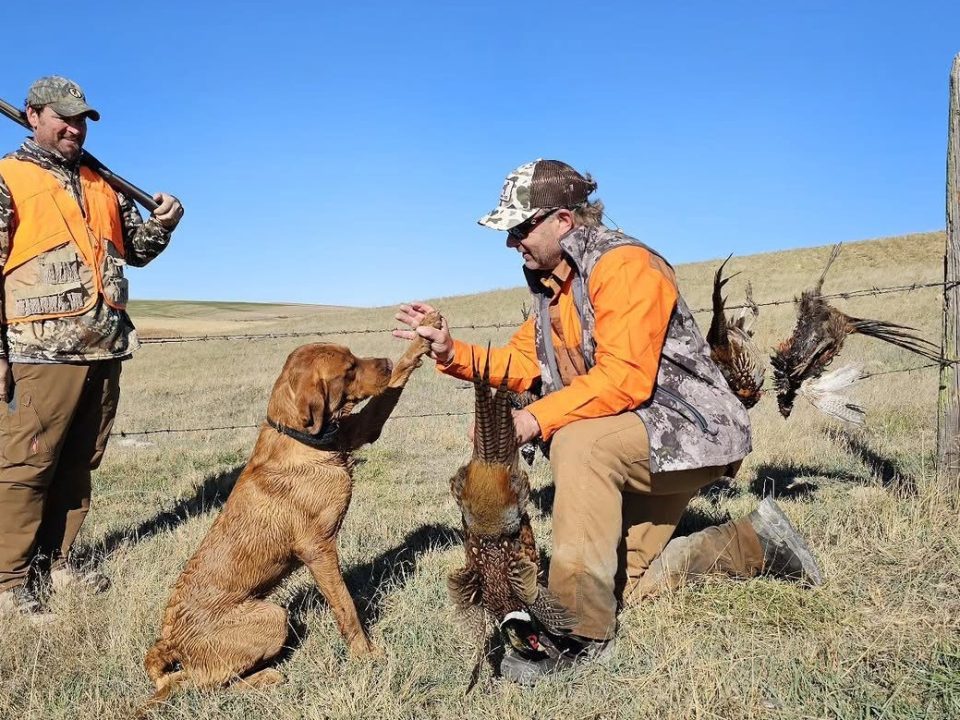
By week three of the season, wild ringnecks have earned their Ph.D. in hunter avoidance. They’ve learned that the sound of a closing truck door means run, and a loud dog whistle means double back. On heavily pressured public dirt, the standard tactic of walking a straight line through easy cover rarely produces a full game bag. 

If you want to consistently put birds in the vest this season, you have to break the mold. Here are tactical strategies for outsmarting educated public land roosters. 

1. Practice “Tailgate Stealth” 

Public land birds hear dozens of hunters arrive every week. Long before you step into the field, ringnecks are already slipping away because they heard you coming. Close truck doors gently, slide dog kennels quietly, and refrain from yelling commands or blowing high-pitched whistles right at the access site. Avoid parking right where you intend to start walking. If possible, pull off further up the road or utilize lesser-known access points to keep from alerting birds hunkered near main entrances. 
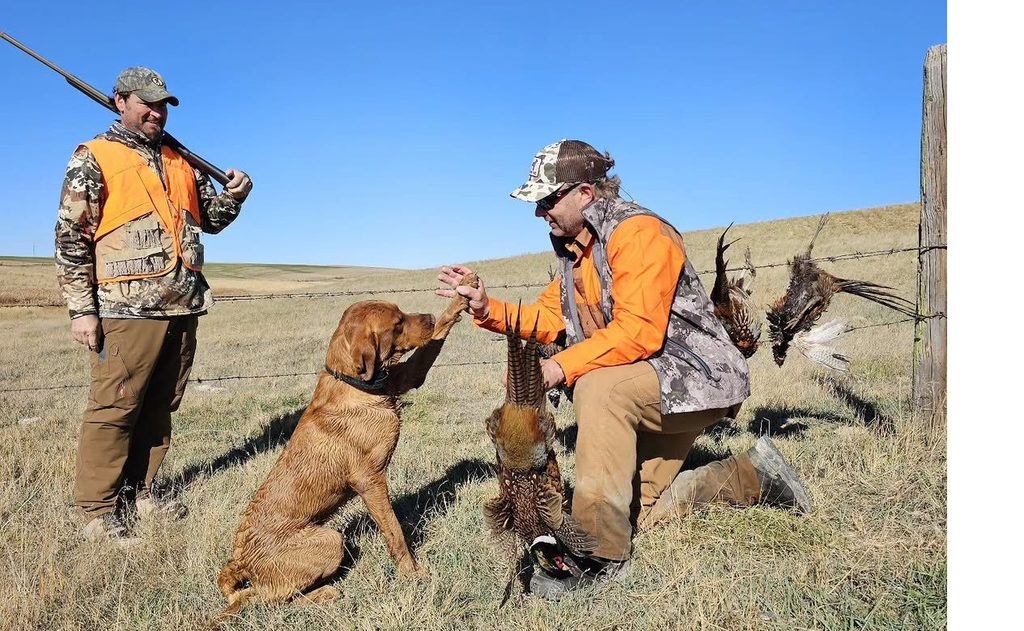
Retay ringneck

2. Hunt the Nasty, Overlooked Micro-Cover 

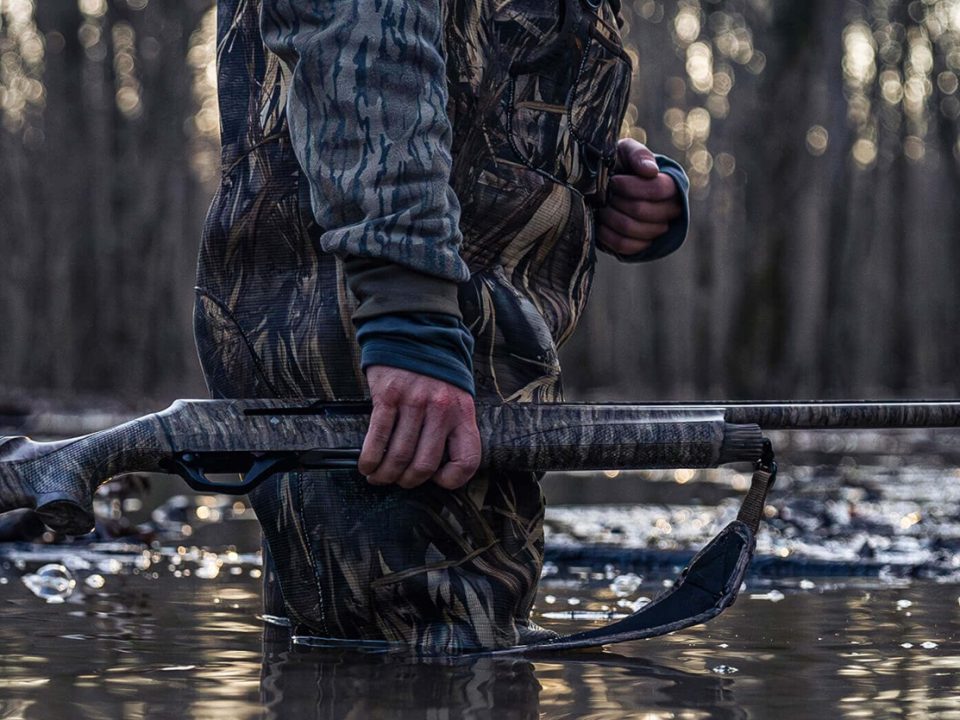
Most hunters follow the path of least resistance: sweeping broad, clean tracts of native grass or walking flat field edges. Public land roosters know this and run straight toward cover that looks too punishing or inconvenient for humans. Pack hip waders or rubber boots and wade out to small cattail islands in marshy sloughs. Ankle- to knee-deep water isolates these pockets, creating natural refuges where pressured roosters hunker down. Overgrown homestead ruins, old fence corners, plum thickets, brushy ditch banks, and small patches of weeds along property boundaries are often bypassed by large hunting parties rushing to big fields. 

3. Master the “Push and Pause” Pace 

When pheasants sense a steady, rhythmic walking pace coming down a field line, their primary instinct isn’t to flush—it’s to run ahead or circle behind. Break Up Your Cadence: Walk 15–20 steps, then stop completely for 10–15 seconds. A stopping hunter makes a hiding rooster believe they’ve been spotted. The sudden silence breaks their nerve, forcing an explosive flush right at your feet. 

4. Cut Off the Escape Routes 

Old public land cocks don’t hold—they sprint ahead toward private land crop edges, dense woods, or drainage ditches. If hunting with a group, drop off a blocker quietly at the far end of a strip or funnel before starting the push. Work cover toward a pinch point—such as a waterway, road edge, or field corner—where running birds are forced to either flush or take flight. 

5. Shift Your Timetable (Midweek & Late Day) 

Pressure spikes on Saturday and Sunday mornings. By shifting when you hit the public spots, you encounter less competition and more relaxed birds. Wednesday through Friday mornings give birds a few days to settle back into normal feeding and loafing patterns after weekend pressure clears. While everyone else heads to the truck for lunch, afternoon hunts near heavy cover and roosting areas can produce excellent action as birds move back to roost or feed prior to dusk. 

Final Thoughts: Persistence Wins 

Public land hunting isn’t about easy limits; it’s about solving a high-stakes tactical puzzle. By slowing down, hunting the nasty cover everyone else skips, and staying quiet on approach, you’ll start seeing roosters in spots that others walked right past. 

Suit up, trust your dog’s nose, and go hit the spots that take a little extra sweat to reach. 

Find out more about Retay shotguns at https://www.retayusa.com/
Retay Logo

Strategic Tips for Hitting Those Geese

The opening weekend of early goose season is a bloodbath for local flocks, and by Monday morning, the playbook changes entirely. 

Those resident honkers that waded right into your massive decoy spread on Saturday morning are suddenly PhD-level survivors. They’ve circled fifty different spreads, listened to every high schooler in the county blow a short-reed like a dying cow, and dodged a hailstorm of steel shot. 

If you keep running the same opener strategy during week two, you aren’t hunting—you’re just educating birds faster than the state can hatch them. Here is how to adapt your early goose season tactics, beat the post-opener pressure, and pull wary, educated honkers into range when everyone else is scratching their heads. 

Recognize How Fast Birds Get “Smart” 

Geese don’t forget trauma. Within forty-eight hours of opening day, local family groups undergo a massive behavioral shift. 

● The Trap Recognition: Birds that lazily drifted toward a half-dozen full-bodies on Saturday will flare at three hundred yards on Tuesday if those decoys are sitting in the exact same spot. They learn the geometry of hunting setups. 

● The Calling Burnout: When every ditch line sounds like an outdoor convention, calling becomes a negative stimulus. Educated birds associate loud clucks and aggressive hail sequences with getting shot at, meaning silence is often your best weapon. 

Shift Off the Main Feed 

The biggest mistake hunters make after the opener is stubbornly chasing the “X” where birds were shot at forty-eight hours prior. Those fields are burned out, and the geese know it. 

● Target the Loafing Zones: Instead of fighting for position in a cut corn or silage field where every truck in the county is parked, look for mid-day security water. Find private stock ponds, marsh pockets, or river bends where pressured birds go to rest and digest after dodging the morning gauntlet. 

● Ambush the Transit Corridors: Set up half a mile off the roost between the water and secondary feeding areas. Catching flocks on a lazy transition flight when their guard is down works far better than trying to pull them into a heavily contested feeding ground. 

Retay Ace

Downsize and Scramble Your Decoys 

If you ran thirty full-bodies on opening weekend, cut that number in half—or ditch the traditional spread entirely. 

● Micro-Spreads and Family Groups: Drop down to six to eight ultra-realistic decoys spaced out naturally. Late-September birds are hyper-aware of unnatural clustering; a tight, small family pod looks far less intimidating to a flock that’s already on high alert. 

● Break the Mold: Stop arranging decoys in traditional horseshoe or C-shape patterns. Scatter them randomly, mix in different postures (feeders, sleepers, and alert sentries), and place them closer to natural cover like fence rows or irrigation pivots where birds naturally mill about. 

Master the Art of Strategic Silence 

The guys bagging birds after opening week are usually the quietest guys in the field. 

● Whisper, Don’t Shout: Put away the aggressive contest calling. Use soft, muffled murmur notes, gentle moans, and occasional feeding chuckles. You want to sound like a contented family group that has already found the dinner table, not a billboard advertising a party. 

● Call to Finish, Not to Pull: Let passing flocks locate you with your layout or natural cover. Only hit the call when they are directly overhead or working your edges, and cut the noise the second they commit their wings. 

Rethink Your Hide 

Geese looking down at a field don’t just see decoys—they see shadows, layout blind profiles, and unnatural straight lines that weren’t there on Friday. 

● Ditch the Layouts in Thin Cover: If the stubble is sparse, traditional layout blinds stick out like neon signs to birds that have been shot at all week. 

● Go Natural: Transition to zero-profile setups. Sit against a brushy fence line, tuck into a natural irrigation ditch, or use low-profile backrests brushed in heavily with local weeds. If a bird has to look twice to figure out if you belong in the landscape, you’ve already won half the battle. 

The post-opener lull separates the casual hunters from the ones filling limits all September long. When you stop doing what everyone else is doing, you stop educating the local flock—and start putting birds on the strap. 

Check out Retay waterfowl semi-autos at https://www.retayusa.com/

Federal’s Texas Dove Hunting Load Now Shipping

Federal Dove

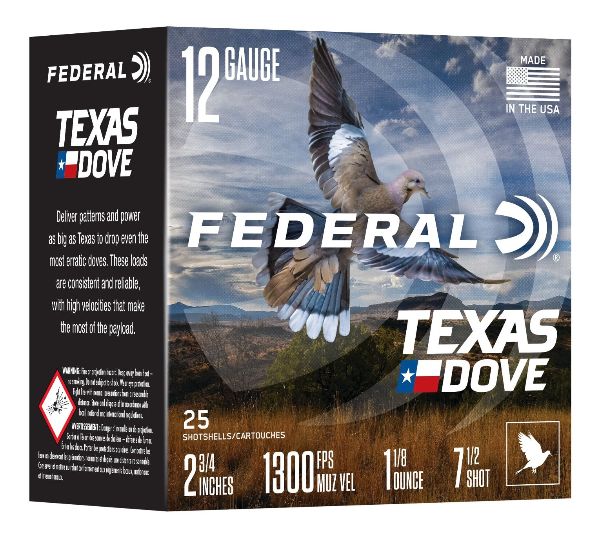
August 31, 2026 — ANOKA, Minnesota – Federal Ammunition introduces new Texas Dove hunting loads. The new product line delivers patterns and power as big as Texas to drop even the most erratic birds. Federal Texas Dove shotshell loads are consistent and reliable, with high velocities that make the most of the payload. These new loads are currently available at dealers.

“Texas dominates the nation in dove hunting, drawing hundreds of thousands of hunters to the field every year,” said Sam Oftdahl, Federal’s Shotshell Ammunition Product Manager. “The Lone Star State leads the United States, accounting for a majority of the annual harvest, especially white-winged doves. Since Texas has established itself as the epicenter of American dove hunting, we offer the product in specialized packaging with the ideal load for their sport.”

New Texas Dove features quality lead payloads, high velocities, reliable performance, and Federal’s time-tested and trusted hull and primer. They are perfect for fast-paced, high-volume dove hunts. The new product is sold in two 12-gauge configurations and in 25-round boxes with attractive, Texas-themed graphics.

Product No. / Description / MSRP

TXD12H 7.5 / Texas Dove, 12 Gauge, 7.5 Shot, 2-3/4 in, 1 1/4 oz, 1350 fps / $22.99

TXD12 7.5 / Texas Dove, 12 Gauge, 7.5 Shot, 2-3/4 in, 1 1/8 oz, 1300 fps / $20.99

Federal Ammunition products are available at dealers nationwide and online. For more information on all Federal products and to sign up for notifications about new product availability, rebate promotions, and other brand news via email, visit www.federalpremium.com.

Light Goose Conservation Order

Nexus
Written by Jay Anglin

MUSKEGON, Mich. (March 18, 2026) – The Light Goose Conservation Order (LGCO) is considered an annual tradition for many waterfowl hunters since it began in 1999. There is no other waterfowl opportunity in North America offering such latitude when it comes to regulations: No magazine restrictions, no daily bag or possession limit, use of electronic callers is permitted, and you can shoot 30 minutes past sunset – all sacred no-no’s across the US during regular waterfowl seasons regulated by state and federal law enforcement. Besides the potential for high volume shoots, anybody who participates in this unique opportunity will tell you it’s the spectacle of the spring migration that keeps them coming back.

On the best migration days hunters should expect to witness waves of various waterfowl and other bird species rolling past, but no other species of waterfowl surpasses the lesser snow goose in number and density during migration. It’s common to see hordes of snows and their smaller cousins Ross’s geese mob an area on the ground and in the air, in what can only be described as an incredible sight to behold. 

The Mid-Continent population of light geese primarily migrate through the watersheds of the Mississippi and Missouri rivers consistently congregating in key areas within Arkansas, Illinois, Missouri, Kansas, Nebraska, and Iowa, eventually packing into the neck of their hourglass shaped migration corridor in North and South Dakota. For all practical purposes, the Dakotas is where ‘CO hunters make their final stands. This typically begins sometime in mid-March but may extend into May when the bulk of these Arctic geese push into Canada and eventually hundreds of miles to the north of the border to tundra nesting grounds. 

Outfitters and guides follow snow geese as they move northward, often starting in Arkansas and chasing the best concentrations into the Dakotas and stopping along the way in key regions such as Southern Illinois, Northwest Missouri, and the Rainwater Basin of Nebraska, among others. Hardcore Waterfowl guide partner JR Borchelt of Waterfowl Assassins has been pursuing snows for decades and finishes his annual odyssey in the Dakotas. And if you want to get in on the fun, timing is critical.

“Generally, I book my hunts for South Dakota in the northern half of the state during late March thru mid-April,” said Borchelt. “I don’t run any guided hunts in North Dakota, but I do fun hunt up there mid to late April. How long we can run in South Dakota really depends on the weather and how eager light geese are to push north. Most years you can shoot snows in northern South Dakota into the last week of April, which I’ve done. But I’ve also chased them to the Canadian border as late as the first week of May.” 

According Borchelt, hunting the Dakotas has advantages and disadvantages when it comes to spring snows. “One advantage is typically hunting pressure is a little more spaced out, and this is likely due to the fact there is a lot more water to roost on with the pothole region being right there. However, South Dakota’s ever-changing weather presents challenges. Also, since it’s further north these birds have been chased all the way from the southern end of the flyway to the top and they’ve seen every spread and heard every e-caller. You must be extremely well hidden, and, ideally, try to find tactics that are unique in some ways to look and sound different.”

The debate on windsock vs full body has raged on for decades and there are some hunters who will swear by one or the other. The truth is both have their days. That said, full bodies are far more realistic and often require fewer decoys to do the job, plus they are far more durable and capable of handling permanent spread status with zero regard for the near guaranteed inclement weather associated with hunting snow geese during the LGCO. 

The biggest issues associated with full body decoys is transporting them due to their size, but there is a great option for hunters concerned about the prospect of investing in a larger decoy trailer to store a full body spread.

Borchelt is sold on one brand full body for several reasons: Hardcore.

“Hardcore full body snow goose decoys are very close to actual life size, while other decoys companies are trying to make them bigger for visibility,” he explained. “Frankly, larger decoys hurt you on the versatility side, whereas you can pack a lot more Hardcores due to their realistic size, and their weight is significantly less than compared to other brands. We regularly fit 1,000 or more Hardcore full bodies in a smaller trailer, and you simply cannot do that with any other brand of decoy. Socks may be the most condensable decoy, but if you want durability and realism, not to mention much better motion and a fair price, then Hardcore is what I’d choose.”

Snow geese are notorious for their propensity to travel and feed in huge concentrations. Subsequently, decoy spreads are notoriously big, and in some cases bordering on ridiculously enormous. “The number of decoys is extremely situational,” said Borchelt. “Hunting feeds vs. traffic or migrators – juvies vs adults? Personally, I want all the tools in my arsenal to be able to handle varying situations. Generally, I’ll go with 1,200+ for migrator rigs and about 400 or 500 for feed chasing. Typically, I’m not chasing feeds unless it’s a larger concentration of juvies, so I’m usually dealing with a big spread of full bodies.”

One of the most unique aspects of the LGCO is the legal use of electronic calls. Adult snow geese are notoriously difficult to finish and the ability to employ professionally recorded snow goose vocalizations via e-callers is often a huge advantage for hunters. E-callers are especially useful for hailing sky high migrant flocks down. However, snow geese have grown increasingly wise to the e-caller with many hunters using the same call tracks day after day, season after season. And snow geese seem to retain knowledge better than other species of waterfowl as well. 

“These birds have heard it all by the time they get as far north as the Dakotas and it’s important to keep this in mind,” added Borchelt. “I’ll use less sound when hunting feeds because they are already coming there, but when hunting migrators, I’ll run 6 or 8 e-callers and multiple tracks and run them super loud, so it reaches them way up there. Lots of sound!”

Many waterfowl hunters may be over it by the time snow geese hit the Dakotas during their spring migration, but this may be the best opportunity of the Conservation Order to hunt big concentrations of snow geese with less competition from hunters. There are turkeys to be hunted soon, and fishing may be picking up fast, but a grand finale spring snow goose hunt in the Dakotas is well worth the effort. 

Jay Anglin is a writer with Traditions Media, LLC.

ABOUT NEXUS OUTDOORS
Nexus Outdoors, headquartered in Muskegon, MI, USA, is a leading worldwide designer, marketer and distributor of performance, hunting and casual odor-controlling apparel, footwear and equipment under the ScentLok Technologies®, OZ®, Blocker Outdoors®, Whitewater, HARDCORE, and Tree Spider® brands. It also owns American Range Systems, manufacturer and distributor of the world’s strongest and safest bullet traps. Nexus Outdoors is the only company with access to all scent-controlling technologies, including their patented Carbon Alloy™ and Cold Fusion Catalyst™ technologies, which provide superior success in the field. ScentLok and Blocker Outdoors are pioneers in the hunting industry, which many credit with creating a market focused on superior scent control to get closer to big game. https://nexus-outdoors.com

A Fine Matched Pair of Woodward Side by Side Shotguns

Major Malet Peyton Phelps was born in 1869 to Lieutenant General Arthur Phelps of Edgbaston, Birmingham. Lieutenant General Arthur Phelps had a distinguished military career, including serving under Lord Ripon.

Malet Peyton Phelps followed in his father’s footsteps and in his own right, had a distinguished military career serving as the Senior Major, the second-most senior officer, in the Sherwood Foresters 1st Battalion in 1911. During the outbreak of World War I, through various reorganizations, the Sherwood Foresters could be found on the Western Front, Malta, and Egypt. Fortunately, Major Malet Peyton Phelps survived the great war and lived until 1951, when he passed away at the age of 82.

Read More

Ducks Unlimited, Bass Pro Partnership Allows Hunters and Anglers to Protect Waterfowl Habitat

DU Bass Pro

MEMPHIS, Tenn. – May 7, 2025 — Thanks to Bass Pro Shops’ newest $500,000 commitment, Ducks Unlimited’s (DU) conservation partnership with Bass Pro Shops and Cabela’s Outdoor Fund is poised to make an even greater impact on critical wetlands and associated habitat for waterfowl. This latest investment will permanently protect nearly 1,400 additional acres in the U.S. and Canadian portions of the Prairie Pothole Region—DU’s highest priority conservation landscape and the heart of North America’s waterfowl breeding grounds.

Since 2018, this fund, powered by generous Bass Pro Shops customers who choose to round up their purchases for conservation, has given more than $3.8 million to DU’s conservation efforts. DU has leveraged these contributions into more than $11 million in additional funds, resulting in a remarkable $14.8 million investment in habitat conservation focused on places that matter the most for waterfowl and waterfowlers across North America.

“We are proud of our longtime affiliation with Ducks Unlimited, and to partner with customers throughout North America to support DU’s important work to conserve this critical waterfowl habitat in the Prairie Pothole Region,” said Johnny Morris, noted conservationist and founder of Bass Pro Shops. “These efforts are clearly making a difference, and it’s exciting to see the impact this will have on future generations of conservationists.”

This sustained support has helped conserve and enhance over 83,000 acres of wetlands and grasslands, bringing tremendous benefits to waterfowl, wildlife, and people. More than 64,000 acres of these efforts have been focused in the Prairie Pothole Region. Despite its ecological importance as the primary breeding ground for waterfowl and other migratory birds, this landscape faces significant threats, losing an estimated 50,000 acres of high-value habitat each year.

“Our long-standing partnership with Bass Pro Shops, Cabela’s Outdoor Fund, their dedicated Outfitters, and loyal customers is a shining example of how passionate outdoor enthusiasts can make a real, lasting impact on the health of our wetlands and wildlife,” said DU CEO Adam Putnam. “Through this shared commitment, we’re not just conserving habitat—we’re ensuring that future generations can continue to enjoy the rich traditions of hunting, fishing, and other outdoor recreation activities.”

DU, Bass Pro Shops, and a network of conservation partners and landowners are advancing shared goals to protect wetlands and grasslands and deliver large-scale solutions for migratory birds and other wildlife across these vital landscapes.

About Bass Pro Shops

Bass Pro Shops, North America’s premier outdoor and conservation company, was founded in 1972 when avid young angler Johnny Morris started selling tackle out of his father’s liquor store in Springfield, Missouri. That was the company’s sole location for the first 13 years, and it has since grown to nearly 200 retail locations throughout North America. Today the company provides customers with unmatched offerings spanning premier destination retail, outdoor equipment manufacturing, world-class resort destinations and more. In 2017 Bass Pro Shops united with Cabela’s to create a “best-of-the-best” experience with superior products, dynamic locations and outstanding customer service. Bass Pro Shops also operates White River Marine Group, offering an unsurpassed collection of industry-leading boat brands, and Big Cedar Lodge, America’s Premier Wilderness Resort. Under the visionary conservation leadership of Johnny Morris, Bass Pro Shops is a national leader in protecting habitat and introducing families to the outdoors and has been named by Newsweek as “America’s Most Trusted Retailer for Outdoor Gear.”

Bass Pro Communications
press@basspro.com

Shotgun Life Newsletters

Join an elite group of readers who receive their FREE e-letter every week from Shotgun Life. These readers gain a competitive advantage from the valuable advice delivered directly to their inbox. You'll discover ways to improve your shooting, learn about the best new products and how to easily maintain your shotgun so it's always reliable. If you strive to be a better shooter, then our FREE e-letters are for you.