Delta Waterfowl Celebrates Introduction of the Great American Outdoors Act 250

250

June 11, 2026 — Delta Waterfowl today praised House Natural Resources Committee Chairman Bruce Westerman, R-Ark., and Ranking Member Jared Huffman, D-Calif., for introducing The Great American Outdoors Act 250 to reauthorize the Legacy Restoration Fund, a critical funding tool used to address deferred maintenance across federal public lands and waters. The investment in infrastructure would provide $95 million per year for five years.

Since its creation, the Legacy Restoration Fund has provided substantial funding for infrastructure improvements on lands managed by the U.S. Fish and Wildlife Service, National Park Service, Bureau of Land Management, and U.S. Forest Service. These projects have enhanced habitat management, improved public access, and ensured sportsmen and women can continue to enjoy America’s public lands and waters.

“We’re grateful for Chairman Westerman and Ranking Member Huffman for their bipartisan leadership in taking steps to reauthorizing the Legacy Restoration Fund,” said John Devney, chief policy officer for Delta Waterfowl. “The Legacy Restoration Fund has delivered meaningful benefits for ducks and duck hunters by helping USFWS refuge managers and other federal land managers address long-overdue infrastructure needs which directly support enhanced wetland habitat management and public access. Reauthorizing the Legacy Restoration Fund will ensure that the backlog on infrastructure on refuges and other public lands can be addressed.”

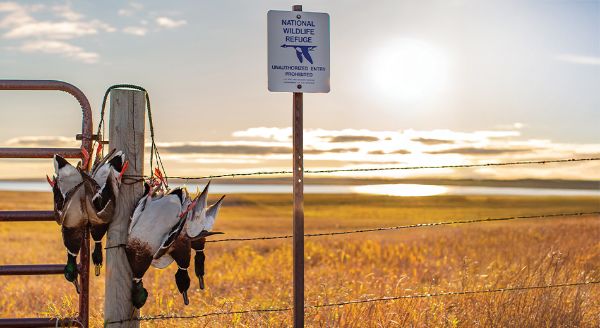
Across the country, national wildlife refuges provide critical habitat for breeding, migrating, and wintering ducks and represent important access for waterfowl hunters. Yet, the National Wildlife Refuge System currently has a $2.6 billion deferred maintenance backlog, which means pumps, water-control structures, dikes, and other essential habitat management features need repair.

“A well-managed National Wildlife Refuge System is fundamental to a brighter future of ducks and duck hunters,” Devney said. “Reauthorization of the Legacy Restoration Fund has been one of Delta’s highest priorities for this Congress and has been a centerpiece of our Restore Our Refuges Initiative.”

In 2025, Delta formally launched Restoring Our Refuges, an impactful advocacy campaign to secure enhanced public funding to revitalize the health and waterfowl value of federal refuges and state-owned wildlife management areas throughout the United States.

Delta Waterfowl will continue to work closely with members of the House of Representatives and Senate toward reauthorization of the Legacy Restoration Fund.

Delta Waterfowl is The Duck Hunters Organization™, a leading conservation group founded in 1911 that uses science-based solutions to produce ducks, conserve prairie wetlands, and ensure the future of waterfowl hunting in North America. Visit their website.
Delta Waterfowl Begins Predator Management Work to Increase 2026 Duck Production

Delta

Although snow and ice still have a firm grip over most of the prairie pothole region, field work has started for Delta’s Predator Management Program in preparation for the 2026 duck nesting season.

March 23, 2026 — Delta’s team of professional trappers has begun working at 51 sites in Alberta, Saskatchewan, Manitoba, North Dakota, and South Dakota, key areas that serve as vital nesting grounds for North American waterfowl. Up to 70% of the continent’s ducks hatch in the PPR, which is often referred to as “North America’s Duck Factory.” Millions of ducks hatched in the region migrate through all four flyways each fall and winter.

“Our efforts in the PPR give hens a leg up to produce a successful nest,” said Mike Buxton, waterfowl programs director. “Fewer predators on the landscape gives more ducks a fighting chance to make it to the fall flight.”

Delta’s proven Predator Management Program is a targeted approach to increase nest success, adding hundreds of thousands of ducks to every fall flight. Nest success, defined as a nest with at least one hatched duckling, is often less than 5 to 10% in many key breeding areas of the PPR. A hatch of 15 to 20% is required just to maintain current populations.

“Delta’s trappers focus on areas of the PPR with high waterfowl breeding density but low nest success,” said Joel Brice, Delta’s chief conservation officer. “By strategically managing predators in these areas, we increase the likelihood of more nests hatching.”

Raccoons and skunks are two primary duck nest predators on the prairie, species that were absent or scarce across most of the prairie before the 1950s. Today, these overly abundant predators can have devasting impacts on duck nests — research shows that up to 90 percent of failed nests are destroyed by predators.

“Targeting areas of the prairie with a predator/prey imbalance has proven to be a sound way to ensure more ducks will hatch each year,” Brice said. “This strategy is central to Delta’s mission of producing more ducks.”

Delta’s trappers, and more importantly, the returning ducks, face variable habitat conditions across the PPR. Late summer and fall rains in 2025 across the Dakotas kept many of the wetlands in good shape throughout the winter despite intermittent snowfall. Conditions in the Canadian provinces are mixed, with some areas still suffering drought, while other areas have better water to start nesting season.

“There’s a lot of variability in a vast place like the PPR,” Buxton said. “An area that’s dry today can be full of water in a matter of weeks. Spring rains can dramatically improve drought-stricken areas in time for returning waterfowl.”

To support and grow Delta’s capacity to produce ducks through effective Predator Management, the organization must recruit, train, and work closely with a team of professional trappers.

In April, Delta is hosting its first trapper training course, a comprehensive program designed for interested trappers to learn about essentials like safety, equipment, tactics, and lures. After attending the course, those prospective trappers will spend time afield with a member of Delta’s trapping team to gain eligibility for a contract in 2027.

“The ability to identify prospective trappers and train them well in advance provides us with a solid growth trajectory,” Buxton said. “This way, we’re expanding the impact of our Predator Management Program each year.”

Delta Waterfowl is The Duck Hunters Organization™, a leading conservation group founded in 1911 that uses science-based solutions to produce ducks, conserve prairie wetlands, and secure the future of waterfowl hunting in North America. Visit deltawaterfowl.org.

# # #

Shotgun Life Newsletters

Join an elite group of readers who receive their FREE e-letter every week from Shotgun Life. These readers gain a competitive advantage from the valuable advice delivered directly to their inbox. You'll discover ways to improve your shooting, learn about the best new products and how to easily maintain your shotgun so it's always reliable. If you strive to be a better shooter, then our FREE e-letters are for you.