

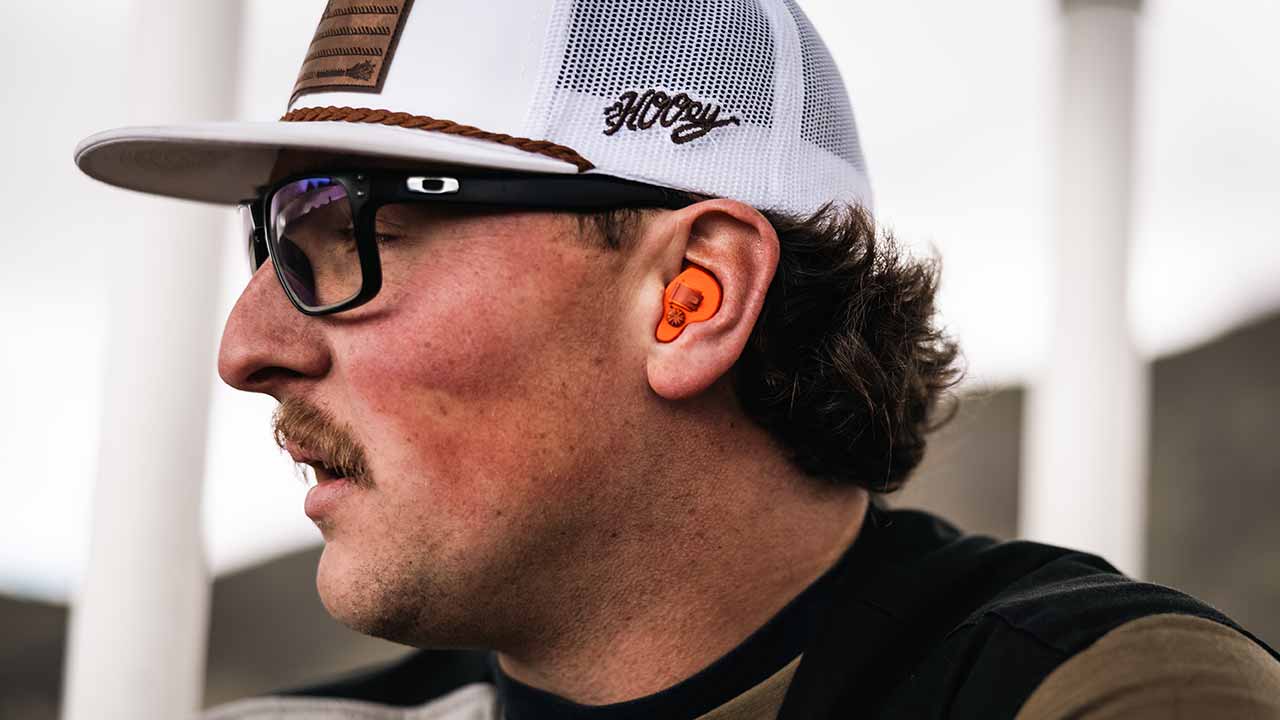

The Science of Hearing Protection in the Shooting Sports

A Safety Message From Electronic Shooters Protection
For generations, shooters have accepted hearing protection as one of the basic rules of the sport: wear eye protection, wear ear protection and get on with shooting.
But effective hearing protection involves more than simply putting something in or over your ears.
Fit matters. Comfort matters. Consistent use matters. And for sporting clays shooters and hunters, there is another important consideration: hearing protection has to coexist with the ability to communicate and remain aware of the surrounding environment.
That presents a unique challenge.
A shooter needs protection when the gun fires, but also needs to hear everything happening before and after the shot.
Modern electronic hearing protection is designed to address both sides of that equation.
Why Gunfire Presents a Unique Challenge
Gunfire isn’t simply a loud noise. It is an extremely intense, rapidly occurring impulse of acoustic energy.
National Institute for Occupational Safety and Health research has documented recreational firearm peak sound levels well above thresholds associated with the risk of hearing damage. The precise level varies depending on the firearm, ammunition, barrel length, environment and the shooter’s position.
The practical conclusion is straightforward: shooters need appropriate hearing protection, properly fitted and worn consistently.
This is especially important because noise-induced hearing loss can be permanent.
Inside the cochlea are microscopic sensory structures that convert mechanical movement caused by sound into electrical signals sent to the brain. Extremely intense sound can damage these structures.
The Centers for Disease Control and Prevention notes that noise-induced hearing loss can result from repeated exposure or from a single exposure to an extremely loud sound, blast or impulse. Once permanent noise-induced hearing loss occurs, there is currently no medical or surgical treatment that restores the hearing that has been lost.
For anyone who intends to enjoy shooting for a lifetime, prevention matters.
The Shooter Isn’t the Only Person at Risk
The person pulling the trigger isn’t necessarily the only one exposed to firearm noise.
People standing nearby can also experience significant impulse noise.
That has obvious implications throughout the shooting sports.
On a sporting clays course, several shooters may be standing together. At a range, multiple firing positions may be occupied simultaneously. In the field, hunting partners, guides and others may be nearby when a shot is fired.
Being a few feet away from the gun doesn’t eliminate the need for hearing protection.
The Real-World Challenge of Hearing Protection
Most shooters understand that they should protect their hearing.
The more interesting question is why they sometimes don’t.
Traditional passive hearing protection can be very effective at reducing sound, but it can also make communication and environmental awareness more difficult.
A conventional earplug may make conversation harder to understand. An earmuff can make the shooter feel isolated from the surrounding environment.
That matters because shooting isn’t conducted in silence.
On a sporting clays course, shooters need to communicate with the trapper, range personnel and other members of the squad.
A shooting instructor needs to communicate clearly with students.
A hunter may need to hear a guide or hunting partner while also remaining aware of the environment around them.
When hearing protection makes those interactions difficult, there can be a temptation to remove it between shots, between stations or during conversations.
That creates an obvious vulnerability.
The most sophisticated hearing protector in the world provides no protection while it is sitting in the shooter’s pocket.
Why Fit and Comfort Matter
The effectiveness of hearing protection isn’t determined solely by the specifications printed on the package.
Fit matters.
A hearing protector that doesn’t fit or isn’t worn properly may not provide the protection expected from it.
Comfort matters for another reason: shooters are more likely to keep hearing protection in place when it remains comfortable throughout a round or a day in the field.
This is where custom-fit hearing protection offers a significant advantage.
Instead of asking a generic device to fit virtually everyone, custom hearing protection is made specifically for the individual shooter’s ears.
The result is a secure, personalized fit that can remain comfortably in place throughout the shooting session.
For a sporting clays shooter walking an entire course or a hunter spending hours in the field, that can make a meaningful difference.
Put the protection in before shooting begins. Leave it in. Communicate normally. Shoot. Move to the next station or continue the hunt without repeatedly removing and reinserting hearing protection.
Consistency becomes part of the protection strategy.
Electronic Hearing Protection Changes the Experience
Custom fit solves one part of the problem.
Electronic technology addresses another.
Instead of simply reducing everything the shooter hears, electronic hearing protection uses microphones and sound processing to preserve access to useful sounds in the surrounding environment.
Conversation, range commands and environmental sounds can remain audible. Depending on the system and volume setting, quieter sounds can also be amplified.
When sound levels become very loud, the electronics control the amplified output rather than continuing to amplify it.
That distinction is important.
Electronic hearing protection doesn’t eliminate the need for physical hearing protection. Rather, it combines physical protection with electronic sound management so the shooter doesn’t have to choose between protecting their hearing and remaining connected to the environment.
For sporting clays shooters and hunters, that combination can fundamentally change the experience.
Hearing Is Part of Shooting
Consider a round of sporting clays.
Most of the time isn’t spent firing the shotgun.
It’s spent walking between stations, talking with other shooters, listening to instructions, discussing targets and preparing for the next presentation.
Then, for a fraction of a second, the acoustic environment changes dramatically when the gun fires.
Afterward, the shooter immediately returns to conversation and normal environmental sounds.
Hunting presents a similar challenge.
A wingshooter may spend hours listening to the environment, communicating with a partner or guide and waiting for an opportunity that lasts only seconds.
Hearing protection needs to work during those few critical moments without unnecessarily disconnecting the shooter during all the time surrounding them.
That is precisely the environment in which custom-fit electronic hearing protection makes sense.
Where ESP Fits In
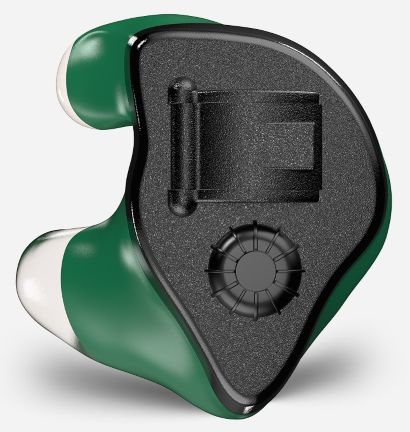
Electronic Shooters Protection, better known to generations of shooters as ESP, has specialized in custom-fit electronic hearing protection for shooters since 1994.
Every pair of ESPs is made from impressions of the individual wearer’s ears, creating hearing protection specifically fitted to that person.
All ESP models provide 25 dB NRR passive hearing protection through the custom-molded device itself.
The electronic system adds another important capability: environmental awareness.
Microphones pick up surrounding sounds and the electronics allow the wearer to hear and amplify useful sounds such as conversation and environmental cues. When sounds become very loud, the electronics control the amplified output rather than continuing to amplify them.
ESP devices can also be individually tuned to the wearer’s hearing profile. For shooters who are already experiencing hearing loss, this optional personalization allows the electronics to provide additional amplification where they need it, helping them hear conversation and important environmental sounds more clearly.
For someone who has already lost some hearing, that can be particularly valuable. Rather than simply making every sound louder, the goal of personalized tuning is to give the wearer a listening experience better matched to their individual hearing profile while maintaining the protection and environmental awareness ESP is designed to provide.
This combination allows shooters to put their ESPs in before shooting begins and keep them in throughout the shooting session.
They can talk with other shooters, hear range commands and remain aware of what is happening around them without repeatedly removing their hearing protection.
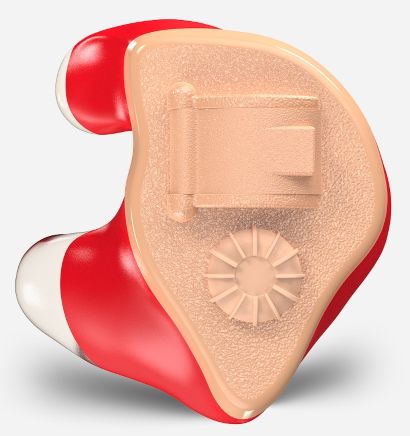
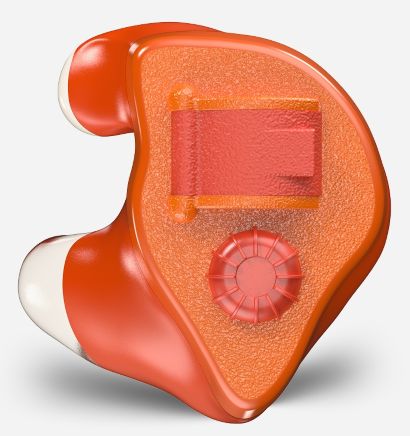
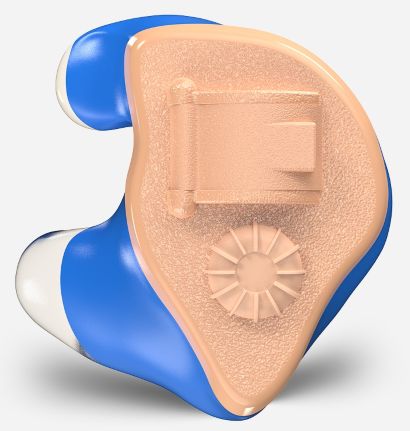
ESP’s custom-fit lineup includes the Apex, Stealth, Elite Digital and Elite Classic, with each offering a different level of sound processing and listening performance while providing the same 25 dB NRR passive protection.
For shooters who spend significant time outdoors, ESP’s flagship Apex also features Dynamic Wind Noise Suppression, electronically reducing distracting wind noise while maintaining environmental awareness.
Every pair of ESPs is custom fitted and handcrafted in the USA.
The Value of Staying Connected
There is an important difference between hearing protection and simply making the world quiet.
For shooters, hearing has a functional role.
It’s hearing the trapper.
It’s understanding the instructor.
It’s communicating with a hunting partner.
It’s hearing movement in the field.
It’s carrying on a conversation between stations.
And it’s maintaining awareness of the people and activity around you.
For shooters already experiencing hearing loss, optional tuning to their individual hearing profile can help them hear more of those important sounds.
The goal of electronic hearing protection isn’t to disconnect the shooter from the environment. It’s to allow useful sounds to remain available while hearing protection stays securely in place.
That distinction becomes increasingly important for people who shoot frequently.
Hearing the Shot Doesn’t Mean You’re Unprotected
Another misconception about hearing protection is that if the shooter can still perceive the shot, the protection isn’t working.
That isn’t how hearing protection should be evaluated.
The objective isn’t necessarily to make a shotgun inaudible.
The objective is to reduce the acoustic energy reaching the ear.
That is why proper fit and consistent use are so important.
It’s also why the labeled Noise Reduction Rating of a hearing protector should not be interpreted as a simple mathematical equation for every gunshot or every shooting environment. Firearm impulse noise is complex, and actual exposure varies based on the firearm, surroundings, fit of the hearing protector and numerous other factors.
What shooters can control is whether they choose appropriate hearing protection, make sure it fits correctly and wear it consistently.
Hearing Loss Changes More Than Shooting
Noise-induced hearing loss isn’t simply about whether a shooter can hear a faint sound.
It can affect the ability to understand speech, particularly when several people are talking or when background noise is present.
Hearing damage can also be accompanied by tinnitus, including ringing, buzzing or other phantom sounds in the ears.
For a lifelong shooter, those consequences extend far beyond the range.
Shooting is a social activity.
It’s conversation on the gun cart.
It’s instruction at the station.
It’s stories around hunting camp.
It’s communication between partners in the field.
It’s hearing the people you came to the range or field to spend time with.
Protecting your hearing isn’t simply about hearing the next shot.
It’s about hearing everything that comes after it.
Treat Hearing Protection Like Essential Shooting Equipment
Shotgun shooters pay extraordinary attention to their equipment.
A fine shotgun may cost thousands or tens of thousands of dollars.
A competition shotgun may be carefully fitted to the individual shooter.
Chokes are selected for particular presentations.
Shooting glasses are chosen for specific light conditions.
Stocks are adjusted. Loads are selected. Every detail matters.
Yet hearing protection is sometimes treated as an afterthought.
It shouldn’t be.
The scientific evidence is clear that firearm noise can cause permanent hearing damage.
Fortunately, noise-induced hearing loss is largely preventable.
Use appropriate hearing protection.
Make sure it fits correctly.
Put it in place before shooting begins and keep it there throughout the shooting session.
Consider additional protection when circumstances call for it, particularly in unusually intense acoustic environments.
And for shooters who want to protect their hearing without unnecessarily sacrificing communication and environmental awareness, custom-fit electronic hearing protection provides a compelling solution.
For shooters who already have some degree of hearing loss, the ability to personalize the electronics to their hearing profile adds another level of customization.
That is the philosophy behind ESP.
The objective isn’t simply to make shooting quieter.
It’s to help shooters protect their hearing without disconnecting them from the shooting experience.
At the sound levels encountered in the shooting sports, hearing protection isn’t an accessory.
It’s essential shooting equipment.
Your shotgun may be replaceable.
Your hearing isn’t.
Protect it accordingly.
About Electronic Shooters Protection
Electronic Shooters Protection (ESP) has specialized in custom-fit electronic hearing protection for shooters since 1994. ESP products provide hearing protection while electronic amplification helps maintain awareness of voices and surrounding environmental sounds. ESP devices can also be optionally tuned to the wearer’s hearing profile for a more personalized listening experience, an important option for shooters who are already experiencing hearing loss. Each pair is custom fitted to the wearer’s ears and handcrafted in the USA for shooting, hunting and other shooting-sports applications.
Learn more at espamerica.com.
Irwin Greenstein is Publisher of Shotgun Life. Please send your comments to letters@shotgunlife.com.

Comments