
The Vintage Shotgun Market: Are Classic Sporting Guns Becoming More Valuable, or Losing Their Appeal?
A changing generation of buyers, shifting hunting preferences and the enduring attraction of fine gunmaking are reshaping the market for vintage shotguns. Some classics are becoming increasingly desirable. Others are discovering that age alone doesn’t guarantee value.
There was a time when owning a fine vintage shotgun was almost a rite of passage for the serious wingshooter. A well-preserved Parker, Fox, L.C. Smith or English side-by-side represented more than a means of bringing down a pheasant or quail. It was a connection to an earlier era of gunmaking, when skilled craftsmen shaped stocks by hand, engraved receivers with elaborate patterns and built sporting arms intended to last generations.
Today, those shotguns occupy an interesting position in the marketplace.
Some are commanding impressive prices, particularly rare examples from celebrated American and British makers. Others, despite their age and historical significance, are finding fewer buyers willing to pay what their owners believe they are worth.
The vintage shotgun market isn’t necessarily rising or falling. It is separating into distinct categories of desirability, with condition, originality, provenance, rarity and practical shootability increasingly determining what a gun is worth.
For wingshooters considering the purchase or sale of a vintage shotgun, understanding those distinctions can make the difference between acquiring a lasting treasure and overpaying for an aging firearm.
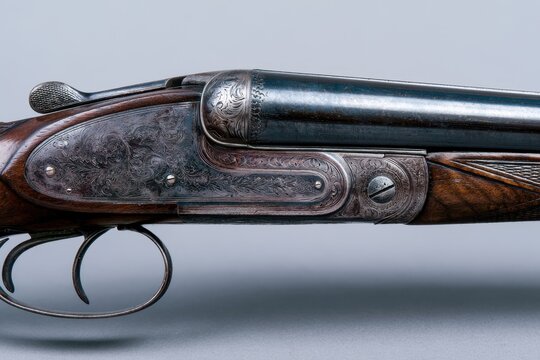
The classics still have their admirers
Certain names continue to carry considerable weight among collectors and traditional wingshooters.
American makers such as Parker Brothers, A.H. Fox, L.C. Smith, Ithaca and Winchester established reputations for producing sporting arms that remain desirable decades after their manufacture. Across the Atlantic, Purdey, Holland & Holland, James Woodward, John Dickson and other British makers occupy an especially prestigious position.
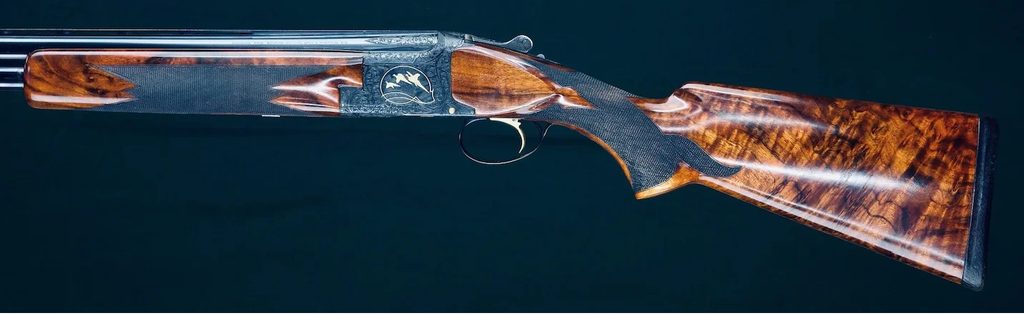
The Browning Superposed, introduced in the 1930s, also has an enduring following among enthusiasts who appreciate its engineering, handling characteristics and place in shotgun history.
These guns benefit from something that cannot easily be replicated: historical identity.
A particularly fine Parker DHE or A.H. Fox FE, for example, offers a combination of craftsmanship, mechanical interest and American sporting heritage. An English sidelock ejector from a prestigious maker brings another dimension of appeal, particularly when accompanied by its original case, documentation and recognizable provenance.
But the market increasingly distinguishes between an exceptional example and an ordinary one.
A high-grade shotgun with original finishes, attractive wood, crisp engraving and little evidence of modification may command a substantial premium. A similar model with refinished metal, replaced wood, altered chambers or questionable mechanical condition can occupy an entirely different price category.
The Winchester Model 21 illustrates the collector market
Few American shotguns demonstrate the enduring appeal of classic gunmaking better than the Winchester Model 21.
Introduced in 1931, the Model 21 developed a reputation for strength, durability and refined workmanship. Its appeal extends beyond collectors to wingshooters who appreciate its balance and traditional double-gun handling.
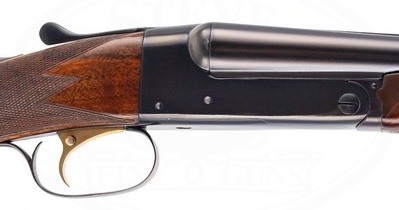
Auction results have demonstrated the potential for appreciation in selected configurations. Rock Island Auction Company’s examination of post-World War II, 12-gauge Model 21 Skeet shotguns in fine condition found that average prices increased nearly 33 percent over the period it studied, from 2017 through 2022. Particularly desirable examples have brought considerably more.
At the upper end, rare grades, special configurations, unusual gauges and documented ownership histories can produce extraordinary results.
The important distinction is that these results do not establish a universal appreciation rate for all Model 21s, much less every vintage shotgun. They demonstrate that collectors will pay for specific combinations of quality, rarity and condition.
The problem with ordinary vintage shotguns
Not every old shotgun is a collectible.
This is perhaps the most important reality confronting owners who assume that a firearm manufactured 75 or 100 years ago must have appreciated simply because of its age.
The marketplace is filled with ordinary field-grade doubles and repeaters that were manufactured in substantial quantities. Many were purchased as working hunting guns, carried through decades of seasons and exposed to weather, hard use and sometimes questionable maintenance.
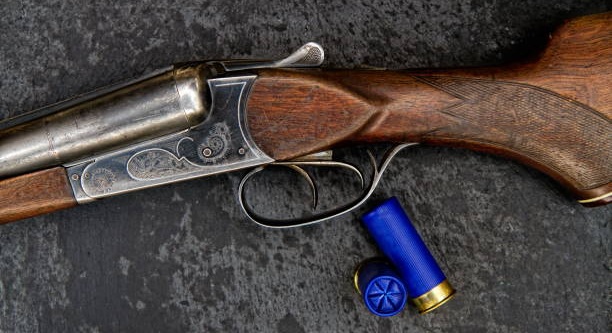
Their sentimental value may be considerable. Their resale value can be considerably less impressive.
A well-used, plain-grade double from a once-respected manufacturer may struggle to attract the attention of today’s collectors, particularly when competing against modern shotguns with better availability of parts, steel-shot compatibility and contemporary warranties.
The National Firearms Museum’s guidance on firearm valuations makes a similar distinction, noting that many heavily used, plain-grade doubles, including examples with Damascus barrels, bring considerably less than their owners might expect.
In other words, a shotgun’s age is not a substitute for rarity, condition or desirability.
The generational challenge
One of the more interesting developments affecting the vintage shotgun market is demographic.
Many of the traditional collectors who spent decades acquiring Parker doubles, English best guns and fine European over-unders are now approaching an age when they are considering downsizing their collections.
Some are selling voluntarily. Others are leaving collections to children and grandchildren who may have little interest in maintaining them.
That creates an interesting supply-and-demand equation.
More vintage shotguns may be entering the market just as the next generation of potential buyers develops different preferences.

Younger wingshooters often approach the sport differently. They may be attracted to contemporary over-unders, lightweight 20-gauge field guns, modern semi-automatics and shotguns designed specifically for sporting clays.
They may appreciate the history of a vintage side-by-side without necessarily wanting to own one.
There is also a practical consideration. Steel-shot regulations and ammunition compatibility can complicate the use of older shotguns, particularly those with Damascus barrels or other construction characteristics that require specialized evaluation.
For a hunter who wants one shotgun for everything from pheasants to waterfowl, a modern gun can be a more practical choice.
That doesn’t diminish the historical or artistic value of vintage guns. It does, however, limit the pool of buyers who view them as everyday hunting companions.
British best guns occupy a different market
The market for fine British sporting guns deserves separate consideration.
Names such as Purdey, Holland & Holland and Boss & Co. occupy a category that extends beyond conventional shotgun collecting. Their products represent a tradition of bespoke manufacturing, individual craftsmanship and luxury sporting equipment.
Exceptional examples can command substantial sums, especially when they feature desirable configurations, original cases, distinguished provenance and documented ownership.
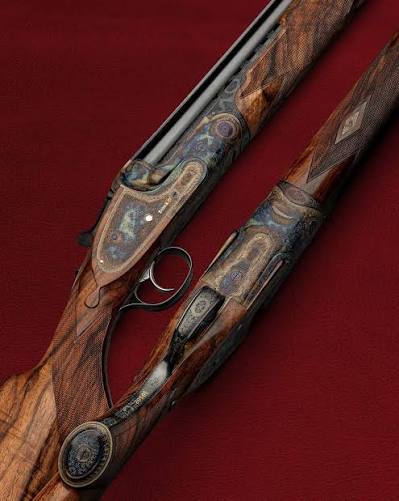
However, even within this category, not every gun is automatically an appreciating asset.
A relatively common configuration in heavily used condition may not perform like a rare, high-grade sidelock ejector with exceptional engraving and original finishes.
Buyers also need to consider the cost of ownership. Specialized repairs, replacement parts, stock work and refinishing can be expensive. A bargain purchase can become considerably less attractive after a visit to a qualified gunsmith.
For the buyer who appreciates the craftsmanship and intends to keep the shotgun for many years, those expenses may be worthwhile. For someone purchasing primarily as an investment, they need to be part of the calculation.
The Browning Superposed and the appeal of European craftsmanship
The vintage over-under market has its own following.
The Browning Superposed remains an important reference point, particularly for shooters who appreciate John Browning’s design and the craftsmanship associated with its Belgian production.
Fine examples of the Superposed, particularly higher grades and desirable small-bore configurations, continue to attract collector attention.
European manufacturers also have their place. Vintage Merkel, Sauer, Simson and other continental doubles offer a range of quality and pricing that can make them attractive alternatives to more expensive British and American guns.
Some buyers are discovering that a well-made European side-by-side can offer considerable craftsmanship for the money.
This segment may be particularly interesting for wingshooters who want a traditional gun that they can actually take afield rather than preserve as a collectible.
What is likely to appreciate?
Although no one can reliably predict the next vintage shotgun to become a collector favorite, several characteristics consistently improve a gun’s prospects.
Original condition. Original finishes, barrels, stocks and mechanical components generally command more interest than extensively refinished or altered examples.
Rarity. Limited production, unusual gauges, special orders and distinctive factory configurations can create demand beyond the ordinary model.
Manufacturer reputation. Established names with recognized histories and collector communities tend to have a more dependable market.
Provenance. Documented ownership, original cases, factory records and historical associations can add considerable interest.
Mechanical condition. A shotgun with tight action, sound barrels and properly functioning mechanisms is more attractive than one requiring extensive restoration.
Desirable configuration. Gauge, barrel length, choke configuration, stock dimensions and overall handling characteristics all influence the market.
For the wingshooter, there is another consideration: whether the gun can safely and legally be used for its intended purpose. An older shotgun should be examined by a qualified gunsmith before shooting, with particular attention to barrel condition, chamber dimensions, wall thickness and ammunition compatibility.
Is now a good time to buy or sell?
There is no single answer.
Owners of exceptional vintage shotguns may find a receptive market, especially when selling through established auction houses or dealers with access to serious collectors.
Owners of ordinary field-grade guns may encounter a more difficult selling environment. An asking price based on sentimental attachment or an outdated appraisal may not reflect what today’s buyers are willing to pay.
For prospective buyers, the current market can present opportunities. A generation of collectors reassessing their holdings may bring interesting shotguns to auction that otherwise would have remained in private collections.
But buyers should resist the temptation to equate an attractive auction price with a bargain. Condition, originality, repair history and the availability of competent gunsmithing support should all be considered.
Auction records are useful, but comparisons need to be made between genuinely comparable guns. A high-grade, engraved, small-bore Parker is not a meaningful pricing benchmark for an ordinary 12-gauge field gun.
A shotgun’s value isn’t always measured in dollars
Perhaps the greatest mistake in evaluating vintage shotguns is treating them exclusively as financial investments.
A fine old double can deliver something that a modern production shotgun sometimes cannot: the pleasure of handling an object shaped by a particular era of craftsmanship.
There is satisfaction in carrying a well-balanced side-by-side across a field, feeling the smooth operation of its action and appreciating the work that went into its construction.
For some wingshooters, that experience is worth considerably more than the eventual resale price.
The vintage shotgun market will undoubtedly continue to evolve as older collectors sell and younger shooters establish their own preferences. Some models will appreciate, others will stagnate, and a few may become increasingly difficult to find in exceptional condition.
The guns most likely to endure are those that combine genuine craftsmanship, historical significance, mechanical integrity and an appeal that transcends generations.
A vintage shotgun doesn’t have to be an investment to be valuable. But for anyone hoping it will become one, the lesson is straightforward: buy the gun, not simply the age.
# # #

Comments