
Pattern Efficiency, Pellet Count and Margin of Error: What Really Matters for Maximum Performance?
When discussing shotgun performance, hunters and shooters often focus on payload weight, choke selection or shot material. However, one factor stands above the rest: pellet pattern.
The traditional standard for evaluating shotgun patterns is the 30-inch circle. While useful, this measurement can sometimes obscure a more important concept, which is the size of the shooter’s effective pattern and the resulting margin of error.
The Traditional 30-Inch Pattern Standard
Shotgun patterns are commonly evaluated by firing at a target and counting how many pellets land inside a 30-inch circle. The more pellets inside that circle, the denser the pattern is considered.
This method helps shooters compare different loads and chokes, but it does not tell the entire story. A dense 30-inch pattern may look impressive on paper, yet it does not necessarily provide the largest effective target area for hitting moving birds.
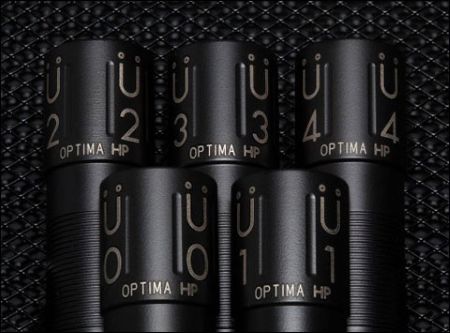
Muller Chokes
What Is Margin of Error?
Margin of error refers to how precisely a shooter must aim to successfully hit a target.
A larger effective pattern generally provides more forgiveness when a shooter is slightly off target. A smaller pattern requires greater precision.
For waterfowl hunters and clay target shooters, this distinction can significantly affect hit-to-miss ratios. Two shotgun loads may be equally lethal when centered perfectly on a bird, but the load that creates the larger effective pattern may produce more consistent field results.
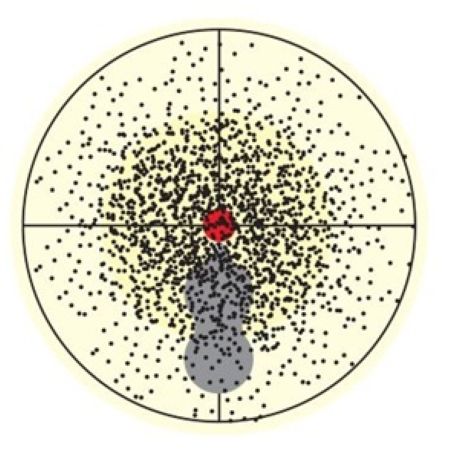
Shotgun patterning on a paper target.
Pellet Count Versus Payload
Many shooters focus on payload weight—one ounce, 1¼ ounces, or even heavier loads. However, payload weight alone does not determine pattern effectiveness.
What matters is how many pellets are actually contained within that payload.
For example:
- A one-ounce load of No. 6 steel shot contains approximately 315 pellets.
- A one-ounce load of No. 6 bismuth contains approximately 254 pellets.
- A one-ounce load of Tungsten Super Shot (TSS) contains significantly fewer pellets because the material is much denser.
Although these loads may weigh the same, their pellet counts differ dramatically.
Why Pellet Count Matters
Imagine that 100 pellets inside a 30-inch circle are sufficient to create a lethal pattern on a duck.
If a load contains 254 pellets, the remaining pellets outside that 30-inch circle can still contribute to an effective pattern. Those additional pellets expand the area in which a bird can be struck while maintaining adequate pellet density.
In other words, the effective pattern may be much larger than the traditional 30-inch measurement suggests.
A load with higher pellet counts has more opportunities to distribute pellets across a larger area while still maintaining enough density to produce clean kills.
Comparing Steel, Bismuth, and TSS
Steel Shot
Steel generally provides the highest pellet counts per ounce. Because there are more pellets available, steel loads can often create larger effective patterns and greater margin for aiming errors when paired with the correct choke and velocity.
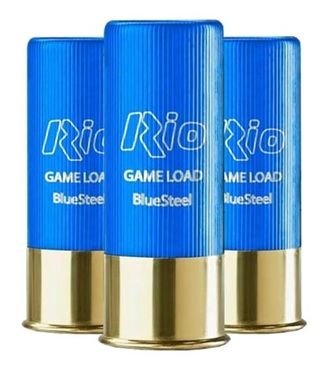
Steel shotgun shells
Bismuth
Bismuth offers pellet counts similar to steel while providing greater density. Many hunters view it as a balance between pellet count and downrange energy.
Tungsten Super Shot (TSS)
TSS is extremely dense, approximately 18 grams per cubic centimeter. This density allows small pellets to retain exceptional energy, making TSS highly effective when it connects with the target.
The tradeoff is that there are fewer pellets per ounce. As a result, TSS patterns can be very compact, reducing the shooter’s margin of error. While the pellets are highly lethal, the shooter must be more precise to place the pattern on the bird.
A TSS shotgun shell with its payload.
Pattern Efficiency Beyond 30 Inches
Shooters should think beyond the standard 30-inch circle.
A pattern that maintains effective pellet spacing beyond 30 inches may provide a significantly larger usable pattern than paper testing suggests.
For hunters shooting at moving targets, the goal is not simply to produce the densest center pattern possible. The goal is to create the largest effective pattern that still delivers sufficient pellet density for clean, ethical kills.
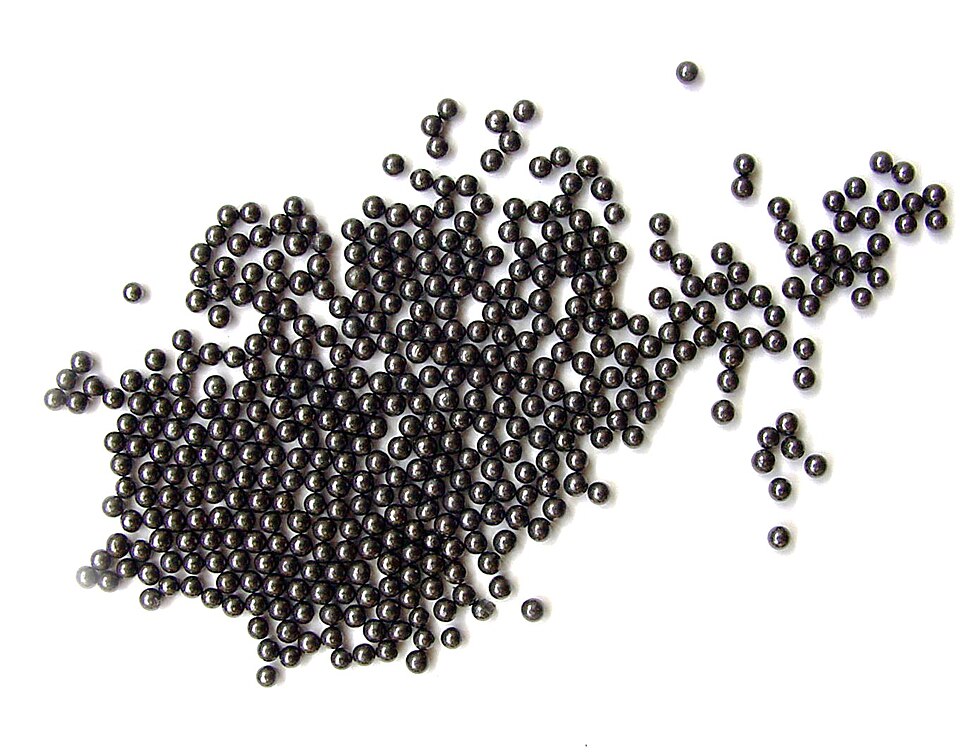
Lead shotgun shot.
The Importance of Balance
Pellet count is important, but it must be balanced with several other factors:
- Pellet size
- Shot material
- Velocity
- Choke selection
- Intended game species
Too much velocity can disrupt a pattern. An overly tight choke can create a small pattern with little forgiveness. Too few pellets can reduce pattern coverage.
The most effective load is one that balances all these variables while maximizing useful pellet distribution.
Conclusion
The traditional 30-inch pattern test remains a valuable tool, but it should not be viewed as the final measure of shotgun performance.
A shooter’s real-world success often depends on pattern efficiency and margin of error. Loads with higher pellet counts can create larger effective patterns, increasing the likelihood of connecting with moving targets.
While premium materials such as TSS offer tremendous lethality, they may also produce smaller patterns that demand greater shooting precision. Steel and bismuth loads often provide more pattern coverage because of their higher pellet counts.
Ultimately, the central lesson is simple: pellet count plays a critical role in determining pattern size, pattern efficiency, and a shooter’s margin of error.
Jimmy Muller is Inventor and Founder of Muller Chokes. He is an NSCA Master Class shooter and FITASC, Sporting Clay and 5-Stand Competitor.
Muller Chokes manufactures each of its space-age chokes to the specific bore specifications of individual shotguns. Virtually every other choke maker delivers the same constrictions regardless of the shotgun. Muller Chokes owns patent #8,7452,324 for gun-specific shotgun patterns that match the internal bores of the gun maker’s specifications. Muller Chokes are made of Aerospace/Ballistic Aluminum. Improve your wing and clays performance with Muller Chokes. Find out more at https://mullerchokes.com
Jimmy Muller is Inventor and Founder of Muller Chokes. NSCA Master Class shooterFITASC, Sporting Clay and 5-Stand Competitor. Find out more about the extraordinary Muller Chokes at www.mullerchokes.com

Comments