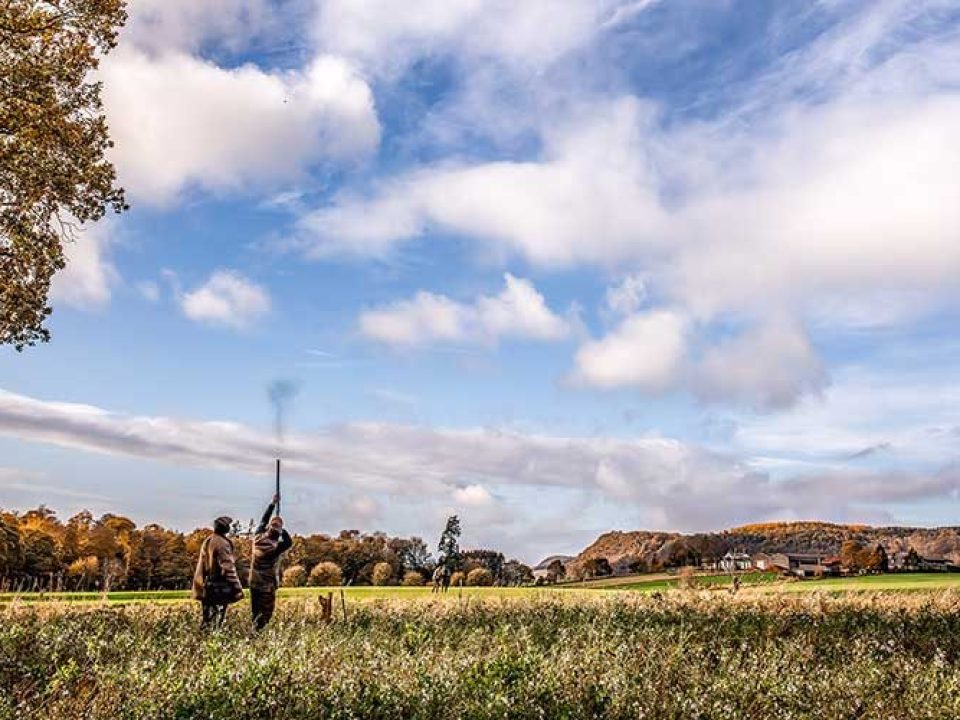
Whenever I travel for a shoot – whether it’s a World FITASC or chasing driven birds in Spain – I inevitably find myself exploring the local vineyards. Drawn into some of the most beautiful landscapes on earth, I’ve learned that walking the vines is the ultimate way to truly understand a region’s food, people, and culture. These pursuits have allowed me to experience the great, robust reds of Umbria and Tuscany, the legendary sweet whites of Hungary’s Tokaj and Balaton Lake region, and the dramatic, high-altitude varietals grown in the northern mountains of Cyprus.
Spain, in particular, holds a special place in these travels. While shooting partridge across the rugged countryside is an unforgettable thrill, I equally enjoyed exploring the incredible wines of Rioja. Walking through historic cellars lined with decades of aging oak, you quickly realize that Rioja’s deep, structured Tempranillos and beautifully aged Reservas are a masterclass in tradition and terroir. It is a region where the wine is inextricably bound to the history of the land and its people.
Definitions of the Golden Hour include “a period shortly after sunrise and just before sunset when the sun is low in the sky, producing soft, warm, and diffused light.” This source goes on to state that “shadows are longer and less harsh, colors appear richer and more golden or reddish, and the light is more flattering, especially for photography and film.” All of that is true, but there are Golden Hours, and then there are Golden Hours. This was the latter. In all my time outdoors, and all of my wife, Frances’ time as a photographer of my shooting and hunting, there had never been richer colors and softer light than what surrounded us on the Elbert County Gun Club’s sporting clays course near Elberton, Georgia.
The encompassing environment balanced perfectly the beautiful Fausti CLASS shotgun I held. It had a bright-finish receiver with gold game birds, a Prince of Wales grip and slender game-style forend. Frances and I found ourselves at our gun club near Elberton, Georgia with less than a month before a return to a favorite hunting area, the mountains and high-plains of the Eastern Cape of South Africa. In fact, our return to the Eastern Cape, prompted our session on the sporting clays course. It did not take much prompting by “Sports Afield” Editor-in-Chief, Diana Rupp to convince me to both write up an article on an upland bird hunt planned for the Eastern Cape and carry along a shotgun from the storied, Fausti family of Brescia, Italy. Company president Giovanna Fausti graciously agreed to Diana’s suggestion, and shipped me the beautiful, CLASS 12 gauge over/under with 30” barrels currently resting in the crook of my arm.
The author with a Fausti CLASS at Elbert County Gun Club’s sporting clays course.
CLASS over/under shotguns reflect both the quality of manufacturing, and attention to aesthetic detail, for which Fausti is known. The CLASS comes in .410, 28, 20 and 12-gauge chamberings. Having hunted Eastern Cape birds with Stormberg Elangeni Safaris before, I knew that I’d be trying to knock large, tough Guinea Fowls out of the air. On the same hunt, I would pit myself against Grey-wing Partridges that often flushed well before a hunter was close, always moving incredibly fast while using the Eastern Cape’s windy environs to add jukes to their flight paths. I knew both the Guinea Fowl and Grey-wing hunts required a 12-gauges power and reach, at least for this hunter. Giovanna recommended the 30-inch barrel equipped on this shotgun after I described the potential for longer shots, even with, or likely because of, the longer barrels, the CLASS sent my way, handled quickly, proving superb on distant targets on the sporting clays course I went to prepare for the hunt.
The Fausti Class over/under.
When I raised the Fausti CLASS for the first time, I noticed that it settled naturally into my shoulder and supporting hand; it also pointed quickly at whatever object chosen, at whatever angle. A partial explanation for the wonderful fit is that Fausti fashions each action around the particular gauge. The 12-gauge sent to me thus had a more robust gestalt than would a lighter gauge yet at the same time, looked and felt streamlined in its design. This afforded the quick and repeatable shouldering and target acquisition while simultaneously providing a classic elegance and beauty to the shotgun. Put another way, the shotgun looked as good as it handled.
Complementing its beautiful lines were the action’s so-called coin finish with gold inlays of partridges. Likewise, the gold of the CLASS insignia complimented the rich brown of the oil-finished walnut stock. The checkering on forearm and pistol grip again combine beauty, and functionality, promising a good grip for hands sweating from chasing Guinea Fowl and climbing in the Eastern Cape mountains’ thin air in pursuit of Grey-wings.
The Fausti CLASS ready for action.
A feature not immediately apparent when one is examining the shotgun, but one that Fausti, rightly, sees as unique and functionally significant is the Four-lock system that secures the closed CLASS (and all other Fausti over/unders). To quote Fausti, “As the name suggests, the system is based on four holding points: a pair of classic lugs made in the barrel monobloc for a vertical hold and locking of the barrels to the action, to which is added a further pair of lugs contained inside the sides of the action, which guarantees a lateral closure and a mechanical seal in the longitudinal direction between the barrels and the action.”
As always when working with a firearm foreign to me, I worried how it and I would perform in the field. First up was the challenging ‘Red’ course at my shooting club. The positioning of the machines at the particular stand at which we spent most of our time prevented the shooter from seeing the clays until they were well along their fight path. The Modified (upper barrel) and Improved Cylinder (bottom barrel), removable chokes, patterned the shot well enough that I missed no birds.
After warming up with singles, I switched to true pairs. Even this presentation resulted in broken targets, with no escapees. Time-after-time, whether I pushed the buttons controlling the machines, then shouldered the CLASS and fired, or waited for Frances to respond to my call of “Pull,” the birds disintegrated. I am not a shotgunner. I state that with no self-deprecation, or shame. I have been, and will always be, primarily a rifle shooter and hunter. However, after the first time I chased game bird species in Africa, I swore I would never miss that wonderful experience when on the Continent. The sporting clays course results with the CLASS 12-gauge proves that it functions very well for someone like yours truly, and would perform even better in the hands of an accomplished shotgunner.
One last point that may surprise others as much as it did me. The CLASS model is an entry level shotgun from Fausti. With a MSRPs of $3515 (20 and 12-gauges) and $4280 (.410 and 28-gauges), it should fit into the budget of most looking for not only a beautiful firearm that they will be proud to carry, but also a highly-functional and sturdy tool for use on both a clays course and in my pursuit of South African game birds.
Mike Arnold brings decades of experience in hunting and conservation. Through his work in the field and in education, he shows how ethical hunting supports wildlife and sustains wild places. Visit his web site Mike Arnold Outdoors at https://mikearnoldoutdoors.com
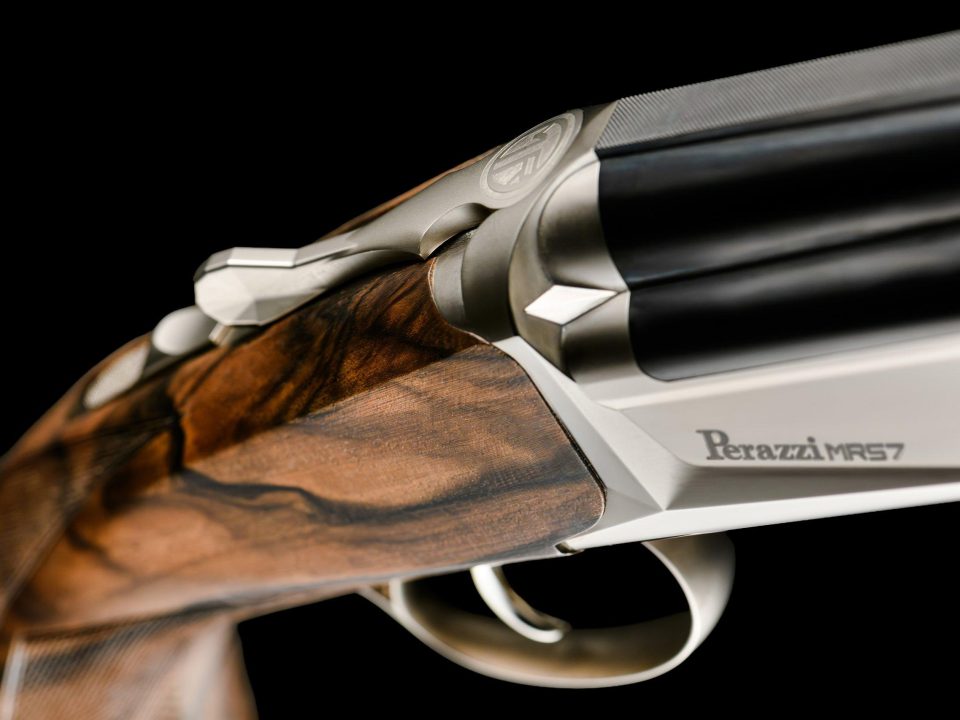
With the new Perazzi MR57, the Italian shotgun maker, which holds 62 Olympic medals, has taken an audacious leap into redefining the competition over/under as a work of art that turns clay targets into fairy dust.
Perazzi has always believed that even the most successful platforms must continue to evolve alongside the sport. As shooting disciplines progress and target presentations become increasingly complex – particularly in sporting clays – the demands placed on both shooter and shotgun continue to change. The MR57 was designed with this evolution in mind.
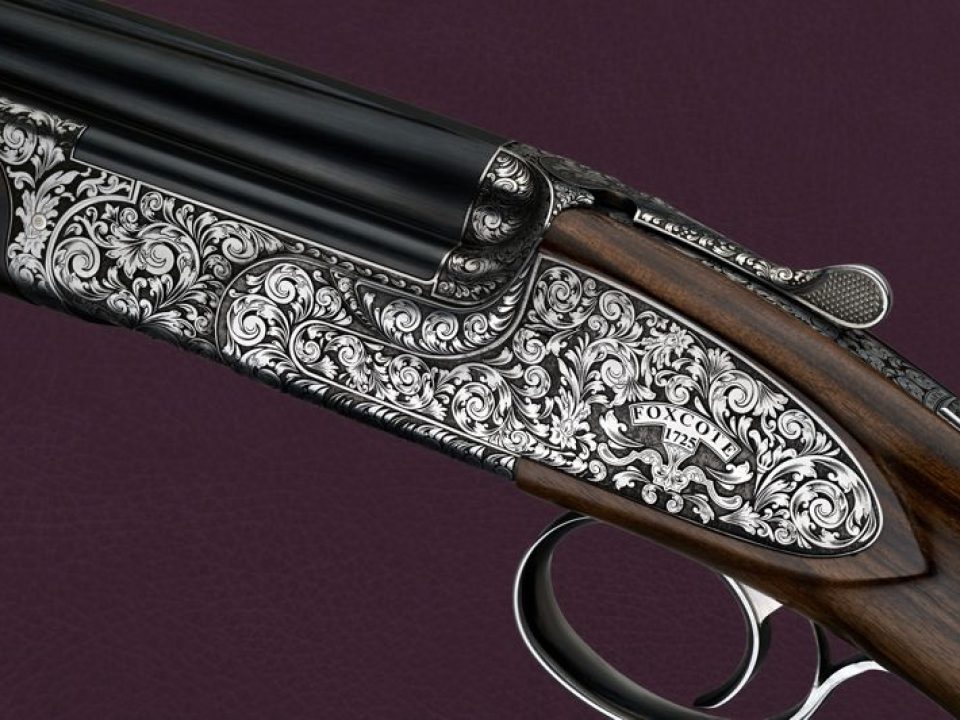
First introduced by Longthorne Guns in 28 gauge, the Foxcote over/under pays tribute to Foxcote House, an 18th-century country estate in the village of Ilmington, England noted for the owner’s shooting parties dropping in by helicopter.
Now, the English gunmaker has upped the Foxcote’s firepower by adding a 12 gauge – certainly more apropos of us mere mortals for downing the plump high-flying pheasants of that lovely country manor. The 12 gauge continues the design and shooting principles of the growing Foxcote family.
Join an elite group of readers who receive their FREE e-letter every week from Shotgun Life. These readers gain a competitive advantage from the valuable advice delivered directly to their inbox. You'll discover ways to improve your shooting, learn about the best new products and how to easily maintain your shotgun so it's always reliable. If you strive to be a better shooter, then our FREE e-letters are for you.
About Shotgun Life
Shotgun Life is the first online magazine devoted to the great people who participate in the shotgun sports.
Our goal is to provide you with the best coverage in wing and clays shooting. That includes places to shoot, ways to improve your shooting and the latest new products. Everything you need to know about the shotgun sports is a mouse-click away.
Contact
Irwin Greenstein
Publisher
Shotgun Life
PO Box 6423
Thomasville, GA 31758
Phone: 229-236-1632