
Shotgun Talk

Writer Michael McIntosh once said, “Collectors and shooters see guns from different angles…” To that I say, Amen! I happen to be both a collector and a shooter, which creates a whole new set of angles that I won’t get into right now. But what I thought I would do in this month’s column is share a couple of my staunch opinions about shotguns. For space reasons, I will limit my comments to hunting shotguns. So, for better or worse, here they are… Don’t feel too embarrassed if you disagree with me on one or two.

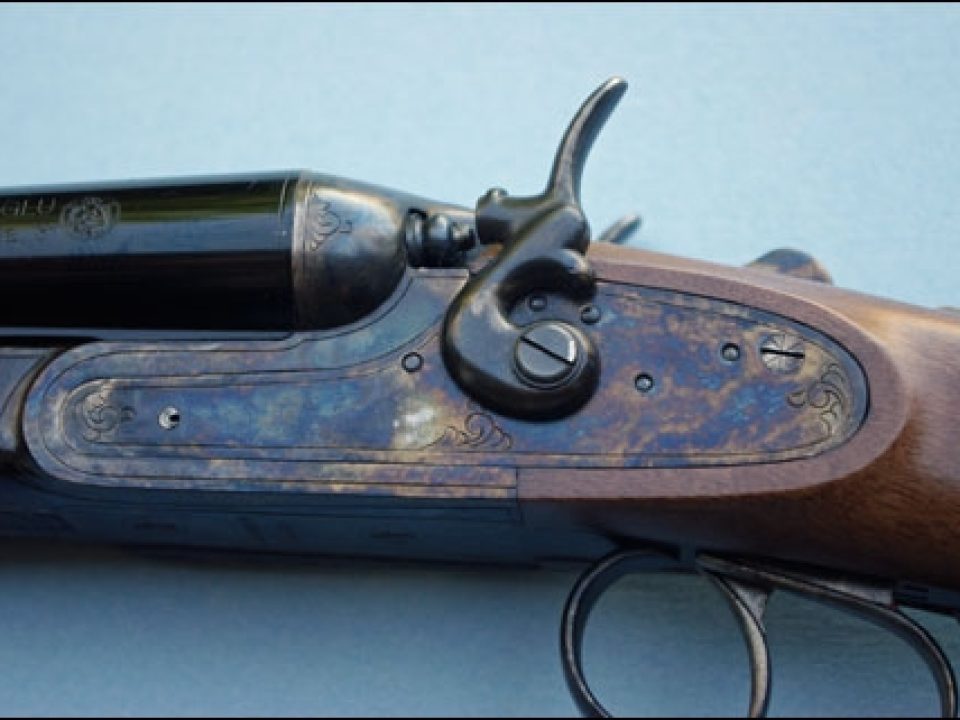
The most stupid thing ever put on a good double gun is a Selective trigger. Double triggers are a love, and a single trigger is fine by me. But a lever that lets you switch back and forth from one barrel to the other? Please… This is one novelty that I hope goes away.

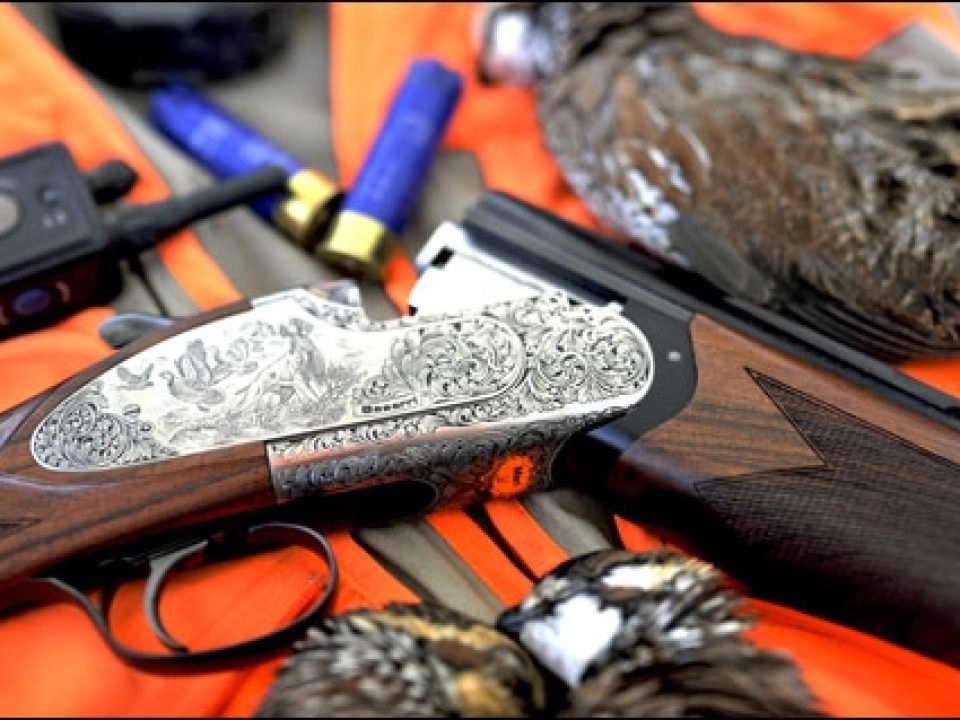
The best American-made over under for the money is the Ruger Red Label. The best pointing auto-loader ever made is the Remington 1100. And as long as we are at it, the best waterfowl gun is the 3 1/2″ chambered Benelli Super Black Eagle II and the Browning Gold Hunter auto loaders. The best waterfowl load? The 3-inch Heavy Shot. It is amazing…! But who wants to pay $3.00 every time you pull the trigger?

The best barrel length for a doublegun is 28 inches. You won’t swing it too fast and you won’t slow it down or stop the gun too soon. For a young shooter just starting out, I will give the nod to 26-inch barrels to lighten the gun – as long as they can be upgraded to 28-inch barrels as soon as they can handle them. The best gauge for a young shooter? It’s 28 gauge. Not a bad upland gun for any shooter, young or old, except maybe for pheasants. The best load for the 28 gauge is a 2¾-inch shell with ¾ ounce of #7½ shot. Trust me on this! The best chokes for this load in a 28 gauge? Skeet and skeet. It is a dandy quail gun/load combo.

The best fixed chokes for any double gun? If I had to pick two it will come as no surprise that I would choose improved cylinder and modified. If you are shooting steel shot at waterfowl over decoys the best choke is improved cylinder. Steel patterns are very tight. Last year I shot a black duck with an improved cylinder choke at 87 paces with a 3-inch Kent Fasteel cartridge loaded with #2 shot. A great cartridge if you don’t mind watching the brass rust while you hold it in your hand.

Pistol grip or straight stock? This falls into the “whatever your preference is” category. You will shoot either equally well if you practice with them. In the end, it just doesn’t matter, as long as you can live with it. I shoot both and switch back and forth regularly. I kind of like the lines of the straight stock, but I’m a loyal Yankee and will never let go of the fact that I come from a nation of riflemen.

Now you will hate me, especially if you love the game of skeet. I think American skeet shooting ought to be done with a low gun. No pre-mounting. Further, I think the shooter should not be able to call “pull” when he is ready for the target. This job belongs to the one pulling and he should be able to pull at will. I would really like to see a “new” skeet game start at clubs all across America that I call “walk-up skeet.” The shooter moves around the field freely and the puller pulls at random. In the end, 25 birds total have been launched and the shooter never knows from what direction or exactly when. This in my mind, puts back some of the spontaneous excitement back into skeet shooting that most closely resembles flushing birds during upland hunting. Which is the whole reason skeet shooting was invented for in the first place.

Just one more. Is the worst gun law (one of many) in the State of Massachusetts? It’s the trigger lock law. I was guiding some gentlemen from Texas not too long ago and told them we have to have our guns cased and trigger locked while transporting them in our vehicles, and locked up while in our homes. And if they ever get stolen, the police and the DA prosecute the gun owner. Their jaws dropped, their eyes got big, and then they spoke in the manner that makes Texas the great state that it is: “That’s the stupidest thing I’ve ever heard of. What if you got to get to your gun?” Amen brothers. Don’t ever give up your freedoms in Texas like we have here in Massachusetts.

Capt. David Bitters is a writer/photographer and a striped bass/sea duck hunting guide from Massachusetts. His photos and essays have appeared in over one-hundred magazines. Capt. Bitters is currently finishing his first book, A Sportsman’s Fireside Reader – Tales of Hunting, Fishing, and Other Outdoor Pleasures. Contact him at captdaveb@baymenoutfitters.com or (781) 934-2838. You can also write him at P.O. Box 366 Duxbury, MA 0233.

Casa de Campo

Story and photos by Jerry Sinkovec

Casa de Campo has a distant sounding ring to it, but it can be as close as three hours away or less. It’s located on the south shore of the Dominican Republic outside the town of La Romana which also has an International airport. Atlanta, New York and Miami are three of the major jumping off places.

Casa de Campo features what any Caribbean destination resort has to offer and much, much more on their 7,000 acres. They have three award-winning golf courses like Teeth of the Dog, which is world renown, and it has spectacular views of the sea and surrounding terrain. The management at Casa de Campo is currently finishing a $20-million-dollar renovation to create 78 new Elite rooms and suites, along with a new, contemporary main hotel area.

GIF 1098bldg

Casa de Campo.

Over the years I’ve heard about and seen articles on Casa de Campo and I was impressed with what they had to offer. Now, I’ve had a chance to experience the resort. They have the world’s largest sporting clays facilities with over 200 stations and the tallest tower in the world. At 110 feet, it throws targets in all four directions from three different levels. They also have three lower towers on site. In addition, they have three trap fields; one for regular and handicap; one for trap doubles; and one for wobble trap. They also have a single skeet field and two Barnaby pigeon rings.

Since I didn’t have my own gun with me because I flew into Santo Domingo (for the shorter time in the air and the nicer terminals), so I used one of their Berettas. They have a large selection of shotguns you can use and they are primarily 12-gauge Beretta field guns with a manual safety. They also have guns in the four different gauges. I decided to shoot a couple of rounds of skeet to see how their Berettas would handle. The barrels felt a little heavier than my Browning, but the gun seemed to handle about the same. I only dropped a few targets so it wasn’t bad. The distant horizon was great for seeing the targets on the skeet field as well as the trap fields.

If you want to bring your own gun it can be easily done by filling out a gun permit two weeks before you depart and fly directly into the Casa de Campo/La Romana Intl. Airport (code: LRM) where the resort has good working relations with the authorities. You may encounter problems at the other two airports at Santo Domingo and Punta Cana, which are both about 90 minutes away.

The following day I went out with Shaun Snell, the manager of the shooting complex, to shoot the sporting clays field. I let him pick out the stations and I went after the different presentations. There was a nice selection of targets with what I would call normal type presentations All of them were doable, but I still could miss one now and then. It was fun shooting incomers from one of the two grouse butts on the course. I found the presentations off the top of the tower the most difficult, never having seen targets like that. They were so fast that you couldn’t pick them up until they were about 10 to 15 yards out and had slowed a bit. Be prepared for the unexpected and a good amount of fun. The next time I go back I hope to shoot all 200 plus stations.

GIF 1057tower

The sporting clays tower at Casa de Campo.

You could spend 14 days there shooting 14 stations each day and you would not have shot all the sporting clay stations they have to offer. There is a great diversity in the presentations, which will challenge you as hard as you’d like to be challenged. Some stations are on the soft side and are used for instruction.

In years past the shooting focused on sporting clays, trap and live bird shooting with top competitors coming from Europe and South America. Some of the live bird competitions are still held there but not with the same frequency of years past. Over the years things have changed as has the interest in the different disciplines. Seven years ago Shaun, who is from England, took over the management of the shooting complex and started to make some changes. They have a clubhouse where the pro shop and office are located along with the Safari Club restaurant and bar. It’s a great place to relax with a soothing drink after a day of shooting or hunting.

Under Shaun’s management the focus has turned to upland bird hunting and waterfowl hunting. Casa de Campo is the only place on earth where you can do bird hunting 365 days a year. There are no licenses to buy, no bird limits, just great outdoor experiences. They have over 10,000 acres devoted to hunting upland birds and waterfowl. They have developed their own kennels and have an active breeding program which is operated by Shaun’s wife. The dogs that were used during our upland bird hunt were outstanding with pointers locating the birds and other dogs to flush them out.

Our upland hunt started after lunch on an average day. It was warm but pleasant and included about a 40 minute drive to the hunting property. The dogs were excited and anxious to get to their task. The terrain was on the flat side with some low hills and gullies and grass that was a little higher than normal. There were pockets of thick brush throughout the area that provided great cover for the birds. It wasn’t long before one of the dogs was on point. Another dog was released that flushed the birds and three partridge were flushed. With two guns shooting all three partridge were taken. Over the next few hours we were able to get 51 birds that included quail, partridge and pheasant. It was an exciting time with some great hunting and dogs that really knew their stuff.

The following day we went out early in the morning to the area where the duck hunting took place in lush terrain with many ponds and streams and bigger hills. Some small blinds were set up for the three shooters. It wasn’t long before ducks came over the hill to land in the pond behind us. At first it was one, two or three birds, but later the ducks came over in larger groups. The shooting was fast and furious and by the end of the morning each shooter had about 48 birds.

GIF 1708ducks

The ducks kept on coming.

The largest shoot they have at Casa de Compo is the Sugar Invitational. It is a private shoot that takes place in April. Every year there are some changes to the format as it includes a few hundred clay targets and live bird shooting in different events. The shoot is normally conducted over four days. (For more information on events at Casa de Campo you can contact Shaun at the shooting center at 809-523-3333 ext. 5145.)

The accommodations at Casa de Campo vary from large villa homes to a variety of hotel rooms including the new Elite room and suites, with all the amenities of a large resort. My hotel room was larger than most hotel rooms and comfortable and had a covered balcony on the back side with nice views. Although my room wasn’t one of the newly remolded rooms it was more than ample and came with a well-stocked mini bar and great air-conditioning.

The Ivory colored sand beaches and palm trees are just beautiful. Since I was pretty busy on this trip, I only had one afternoon to spend at Minitas Beach to soak up the solar BTU’s and sip on a few margaritas. It was glorious. This resort covers 7,000 acres and so each room is provided with a golf cart to get around in. And it is really handy.

GIF 1114beach

One of the lovely beaches at Casa de Campo.

There are many other things to do at Casa de Campo. They have over a dozen tennis courts and several of them are lighted for play in the evening. The courts looked new, but it’s just that they are so meticulous in their maintenance. The La Terraza Tennis Center has been dubbed the “Wimbledon of the Caribbean.” At the equestrian center you can ride out on a large selection of trails on either an English or western saddles, but if you want to ride make sure you bring long pants. I didn’t so I couldn’t ride. Less than 100 yards from the stable is a polo field where a match was taking place the day I was there. I had fun capturing some action shots of the game.

There are other activities at Casa de Campo as well.  There is deep-sea fishing, sailing, kayaking along with snorkeling and diving as well. You can also take an excursion or one of the many tours available or just rent an ATV and explore on your own. There are also spas where you can relax or get a massage which I did and felt totally renewed. They also have a fitness center where you can work out like you normally would at home and stay in shape after eating all those grand meals every evening. You can also rent a bike if that is more to your liking for staying in shape.

The nine restaurants in the resort’s inclusive package are simply great, with one of them being in the five- diamond class. At the restaurant at the Marina my dining partner and I ordered a large Man-O-War, about 20 inches in length and eight across, with its decks awash with sushi, sashimi, wasabi, sliced ginger and other delights. I never thought we’d finish it off, but we did such a grand job of clearing the decks, any good admiral would have been proud of our efforts.

My favorite appetizer that was available at two different restaurants and prepared a little different at each restaurant was tuna tartar. I had it just about every night. The restaurant that would easily win a five-diamond award is Le Cirque, which is located by the beach. The food there was really outstanding as was their selection of wines. The ambience of the restaurant was superior to what you would normally expect. And you could look out over the beach and barely hear the surf pounding on the shore.

Whatever your taste in food is you’ll find something there to suit you. And there will soon be the new La Cana Restaurant and Lounge by Il Circo in the main area too. There are art galleries and a museum on the property along with its own large shopping area. You can also visit and explore Altos de Chavon, an area where everything has the look of a few hundred years ago that also has some shops and restaurants on the Casa de Campo property. You’ll feel at home even though you’re away from home at Casa de Campo, because of the great staff.

Jerry Sinkovec is a freelance outdoor and travel photojournalist who writes for over 45 different publications nationally and internationally. Jerry is also designing shooting clothing and accessories for Wild Hare Intl. He is the shooting and travel editor for Outdoors Now. He is also the director of the Instinctive Target Interception Shotgun Shooting School headquartered in Idaho Falls, Idaho. He has been teaching for the last 20 years, and has been endorsed by Browning in Utah. He conducts classes in all the western states. His address is: I. T. I. Shotgun Shooting School, 5045 Brennan Bend, Idaho Falls, ID 83401. He can be reached at: 208-523-1545, or online at itishooting@msn.com or http://www.itishooting.com.

For more information on Casa de Campo you can contact:

Casa de Campo Direct
P.O. Box 140, La Romana, Dominican Republic
Phone 800-877-3643 or (809) 523-8698

E-mail: res1@ccampo.com.do Web site: http://www.casadecampo.com.do

Shotguns Up: Sporting Clays According to Bobby Fowler, Jr.

Common wisdom says one thing, Bobby Fowler Jr.’s trophy case says another.

Since he first started shooting competitively in 1993, Fowler has won about 150 titles in sporting clays and FITASC. He’s dominated the sports so thoroughly, that his middle initials should be HOA. Every gauge, on both sides of the Atlantic, in his home state of Texas – no tournament is safe from Fowler’s monumental skills in achieving the highest overall average.

Read More

The Radical New Wad Inside Remington’s Ultimate HyperSonic Steel™ Shells

A research team at Remington has developed a revolutionary new wad design that lets steel shot fulfill its long-promised potential as the ultimate waterfowl load.

For waterfowl hunting, steel shot is the odds-on favorite. Other non-toxics are available, and most all of them result in better performance than steel. But these other non-toxic waterfowl loads are not purchased in huge quantities for one basic reason – they are more expensive than steel loads – a lot more expensive.

If you shot any of the early steel loads from several decades back you know those loads were very poor. They shot horrible patterns, produced a lot of powder fouling, and maybe crippled more ducks than the lead pellets that ducks ingested. Slowly the shotshell manufacturers improved on the steel loads. One factor that helped this along was new powders designed with steel in mind. This resulted in less powder fouling. Those who shot semi-auto shotguns at ducks cheered this breakthrough as this meant their shotguns now kept shooting instead of jamming so often.

Another factor that helped steel loads kill ducks more effectively was that the ammo companies were able to increase velocities with the new powders. Since steel is less dense than lead (lighter by 30 percent), the increased velocity helped steel enhance its killing power.

However, current steel loads are at their maximum – both from a velocity standpoint and from a chamber pressure standpoint. In fact, most high velocity steel loads produce chamber pressures that are right at the top of what experts consider safe. Increase chamber pressures further and we increase the chance of starting to blow up some shotguns. No ammo company is going to do that in these sue-happy times.

So how can we (1) reduce chamber pressures and still keep velocity of steel loads at current levels, and/or (2) increase steel shot velocity levels – and still keep chamber pressures within proper safety standards?

A research team at Remington went to work on this problem, and they have come up with a solution that promises to be a major breakthrough in shotgun ballistics – not only for steel shot but lead loads as well – in fact maybe all future shotshells.

Remington developed a totally new concept in a plastic wad that makes all of the above possible. The wad design is so new that we don’t even have any new loads to test – that have these wads installed. Remington is so confident in this wad’s potential that they are calling this the biggest breakthrough since the introduction of the plastic wad itself.

Remington had a name for this wad, but they have pulled that name back in hopes of a better one. Maybe now you’re getting some appreciation of how new this technology really is.

GIF DRAWING

Check the accompanying artist’s rendition of this wad. The main breakthrough is the precision engineered “ignition chamber,” the smaller cylindrical part at the base of the wad. This ignition chamber is designed to nestle into the top of the primer pocket.

The powder is dropped in a normal manner. When the new wad is seated some of that powder works its way into the ignition chamber. To insure that powder fills that ignition chamber a ball-type powder with tiny grains will be used. Now remember that the ignition chamber is sitting right on top of the primer.

When the primer is ignited the small amount of powder in the ignition chamber gets ignited first, thus the burn is started. In turn, the wad and shot column move slightly forward, and this allows the burning powder in the ignition chamber to ignite the rest of the powder charge.

How can this reduce chamber pressures? It’s all about delaying (slowing down) full ignition of the powder. Use of the new wad system means that powder ignition is stretched out over a longer period of time – and that’s how chamber pressures are reduced. Bottom line – these researchers had to think out of the box to come up with a new way to reduce chamber pressures.

While I like the idea of the new wad for reducing chamber pressures in steel shot loads – I’m thinking to the future – and hopefully building this wad technology into target loads and field loads using lead shot. Being a recoil conscious freak I’m hoping the new wad will reduce felt recoil in target loads – via reduced chamber pressures – but still maintaining standard target load velocities.

Remington says they will be using slow-burning ball-type powders with the new wad and their new steel loads. I know of no current slow burning ball powders available to reloaders, but evidently Remington has worked with a powder manufacturer to develop such a powder.

An example of a slow burning powder and the resultant reduction of felt recoil would be reloading with slow burning IMR 7625 powder to develop an 1150-feet-per- second load with 1 ounce of shot in 12 gauge.

Work up the same 1-ounce, 1150-feet-per-second load using a fast burning powder, and it won’t take any rocket science research to feel that the 7625 load is very soft in comparison. Of course, 7625 is not offered in a ball-type configuration, but I can only assume that the science to do that is doable. The same principal that allows a slow burning powder like 7625 to have less chamber pressure – is now offered via a wad – a wad that slows down the burn rate and results in lower chamber pressure – and lower chamber pressures mean less felt recoil – a gentle shove rather than a sharp rap.

Remember – as the ignition chamber powder ignites the wad and shot charge move slightly forward – increasing the area for the rest of the powder burn – and thus we get the slower powder burn – ignition stretched out over a longer period of time.

A second new feature of breakthrough wad will be the “stress concentrators” built in near this wad’s base. Again, check the artist’s rendition. The new wad is not split down the sides, as most all other wads are. The “stress concentrator” areas, however, start the wad slits upon powder ignition. There are internal “slits” inside this wad, making it easy for the stress concentrators to start and complete the wad slitting up the sides. But because the slits start opening from the bottom, the pellets in the wad are held there longer, which Remington says results in tighter down range patterns.

Initially, (which means Fall 2010) Remington will only offer the new shotshells with the new wad in 12 gauge and in steel 3-inch and 3 ½-inch loads. All these loads will be at the same velocity – a whopping 1700 feet per second – which means no lead changes no matter which of these loads you are using.

Remington is calling the new shells HyperSonic Steel. Interestingly 1 1/8, 1 1/4 and 1 3/8 ounce loads will be offered in the HyperSonic Steel – again all at 1700 feet per second. The 3-inch 1 1/8 ounce loads will be offered in BB, 2 and 4. The 3-inch 1 1/4 ounce loads will be offered in BB, 1, 2 and 4. The 3 ½-inch HyperSonic Steel will be offered in BB, 2 and 4 at 1 3/8 ounce.

As much as I’m excited about these new steel loads with the new wad I’m looking farther into the future – and lead target and field loads that utilize this new wad technology that permits slower burn rates with resultant lower chamber pressures and less felt recoil.

If a slow burning powder like 7625 in ball form could be used with this new wad chamber pressures could be reduced even further. Think of shooting a 1-ounce 12-gauge load at 1200-feet-per-second that results in even less recoil than we see today using slow burning 7625. The 7625 is used only as an example here, for there are other slow burning powders, though when it comes to 12 gauge shotshell powders IMR 7625 is one of the slowest.

I predict you are going to be hearing a lot more about this new wad design, and this wad could be the biggest advancement since the development of the plastic wad – especially if the wad technology can also be applied to lead loads.

Nick Sisley has been a full-time freelance outdoor writer since 1969. He writes a regular shotgun column in Wildfowl magazine, Sporting Clays magazine, the Skeet Shooting Review and others. He’s authored eight books and penned thousands of magazine articles. He can be contacted at nicksisley@hotmail.com.

Remington Ballistics:

http://www.remington.com/products/ammunition/ballistics

{loadposition signup}

Combat to Clays: A Woman’s Journey

When I left theFBIAcademyafter sixteen weeks of training in 1986, I was covered in the most beautiful shades of purple, green, and yellow from my face to my collarbone, and down my bicep. The shotgun was too long, and my long neck and high cheekbones made it impossible to mount the gun properly to my shoulder while maintaining a proper sight picture (which is critical to defensive shotgun shooting). I lifted my face off the gun while shooting creating a horrible flinch, and all of the bad habits that ensue when shooting an ill-fitted gun followed suit. I was convinced that no one had ever hated a shotgun like I did in my bruised and frustrated condition.

Read More

Autumn Sounds

There are many sounds that I dislike in this world, one of them being the noisy dishwasher in my kitchen. My wife raising her voice, especially if my name is involved, is another. A blaring radio or television is not a very nice sound. You can add screeching brakes, a noisy muffler, air traffic, and jackhammers to that list, among other things.

Sounds that I DO enjoy, and this may surprise you, include chainsaws!  Chainsaws are man’s work and he is creating something to be used later in a quieter way. A fire in the fire place for instance, to help contemplate some of life’s most difficult decisions. A chainsaw also gets you outside to enjoy the fresh, clean air and there are few sweeter smells in this life than fresh cut wood – especially if it’s fir, apple, or cedar! Then again, a pretty, young lady (my wife) handling an 18-inch blade, pausing to wipe her brow while sending a lovely smile my way is a pleasant thought… But I digress.

I also like the sounds of guns in autumn. Especially while sitting on a deer stand. Hearing a rifle crack in the valleys and mountains in the distance builds an excitement in the hunter’s heart like no other. I always offer up a “Praise God” when I hear a rifle crack, knowing that somewhere, some place, a lucky deer hunter has just filled his freezer with the finest, tastiest meat on earth. I’d like to sit around that hunter’s fire some evening and listen to the story of how he got his buck.

I’d give an awful lot, and do, to hear the call of the quail again in the cool of the evening air. “Bob-white…Bob-white…” Last fall I stocked fifty quail on my property just to hear their tranquilizing song. It worked for a while, but now I hear none and see the tracks of the fox and coyote. The “BOOM” of my shotgun would be a pleasant sound when I see the makers of those tracks. Will I stock again in the spring? Yes. Two-hundred this time… History proves Yankees don’t give up that easily, especially in love and war.

I wish I could bring back the call of the whip-poor-will that serenaded me to sleep each night in the summers of my youth in Duxbury. Sometimes several would be calling all at once. What a beautiful sound! The Lord God knows I miss them. Where they have gone, I do not know. The housing development on top of the cow pasture and the filling in of the little brook may have something to do with it…

One of the sweetest sounds in this life is my children giggling. They are a happy and contented lot, very smart and talented, if you don’t mind me saying. The sounds of quail and whippoorwill, and rifle shots in the mountains, and geese honking at dawn are all very, very close to my heart. But when I’m old and gray, and close my eyes, the one sound that I will remember and carry with me into Heaven, will be the laughing and giggling of my children.

Capt. David Bitters is a writer/photographer and a striped bass/sea duck hunting guide from Massachusetts. His photos and essays have appeared in over one-hundred magazines. Capt. Bitters is currently finishing his first book, A Sportsman’s Fireside Reader – Tales of Hunting, Fishing, and Other Outdoor Pleasures. Contact him at captdaveb@baymenoutfitters.com or (781) 934-2838. You can also write him at P.O. Box 366 Duxbury, MA 0233.

Clays Shooting Bliss at Seven Springs

How about a big, juicy Beretta Burger?

Or maybe a spicy Krieghoff Crabcake Sandwich is more to your liking.

Want something with a little more roughage? You can always order the Shotgun House Salad with lots of greens and homemade dressing.

These are some of the menu selections from The Grille at the Sporting Clays Lodge of the Seven Springs Mountain Lodge in Seven Springs, Pennsylvania. You can chow down in the classic chalet setting or grab a table on the 7,000-square-foot deck with a dazzling view of the valley below.

Read More

America Rising: Ithaca’s New 12-Gauge Phoenix Shotgun

There are no signs on the factory at 420 North Walpole Street in Upper Sandusky, Ohio, but open the old door and the pungent smell of machine oil is your first hint that the Ithaca shotgun is being re-born.

This rambling building that once housed a rolling rink, an automotive center and mold-making operation has been transformed into the backbone of the Ithaca Gun Company. Hard-working American men and women, like so many discarded in the upheaval of globalization, are now devoting their full measure of sweat and muscle to manufacture a new 100-percent American-built over/under shotgun code-named Phoenix.

“It’s nice to think that we could help our brothers and sisters in America by keeping and creating new jobs,” said Ithaca machinist, Tom Troiano.

Every screw, spring and steel billet is sourced from the U.S. as the company brings to life the stunning new 12-gauge Phoenix. From its inception, the Phoenix was designed to honor the proportions and sturdy sensibility of the classical over/under American shotgun.

GIF InsideBreakOpen

Ithaca’s Phoenix in-the-white.

Shotgun Life recently enjoyed the privilege of spending a full day at Ithaca talking with nearly everyone in the company. We spoke with the men who made the barrels, the receivers and the stocks. We spent time with management. And we were given the unique opportunity to be the first one outside of the company to shoot a prototype of the forthcoming Phoenix.

We can report unequivocally that design breakthroughs engineered into the Phoenix have made it the softest shooting 12-gauge over-under we have ever pulled a trigger on. The felt recoil on the Phoenix is virtually nonexistent – on par with the benchmark Beretta 391 Target Gold 12-gauge semi-auto – kicking only just enough to reset the inertia trigger.

Better yet, with a starting price of about $2,500 and moving to $10,000 depending on the type of engraving and grade of American walnut, the Phoenix could easily mark a renaissance of the big Ithaca shotguns.

That’s why Ithaca named the Phoenix after the dazzling mythical bird which rose from the ashes to fly once again. But leading Ithaca authority, Walt Snyder, author of the definitive books The Ithaca Company From the Beginning and Ithaca Featherlight Repeaters…The Best Gun Going observed that the new Phoenix also has an historical precedence.

In 1945, Ithaca had built a one-of-a-kind 12-gauge, over/under prototype. As the Model 51, it had serial number EX1, for experimental 1. It now appears that the new Phoenix is a direct descendant of that orphaned masterpiece.

GIF Full-length

The Phoenix as we saw it at the Shot Show.

Our first glimpse of the new 12-gauge over/under took place in January 2009 at the expansive Shot Show. There in booth 1736, I was drawn to the allure of an elegantly understated over/under that was all chrome-moly black steel and American walnut. The receiver, devoid of engraving, drew me in and I picked up the gun. I mounted it to my shoulder, my immediate impression one of a tight, well-balanced shotgun. Then I moved the top lever to the right and to my astonishment the barrels slowly fell open as though on hydraulics.

This was the shotgun that Walt would see several months later at a dealer event in Wilmington, North Carolina. Ithaca’s Mike Farrell arrived with it and Walt’s initial impression was that “It looked like a very well made gun. It seemed to mount and balance very well.”

At the time of the Shot Show, the gun remained months away from being in shooting condition and it hadn’t been christened the Phoenix. But after returning to the office, I would occasionally call Mike, the company’s number-two guy (no one at Ithaca has a job title), until he agreed to let me visit the company and actually try the shotgun.

For those of you familiar with Ithaca shotguns, it would be easy to dismiss the Phoenix as another heartfelt effort to salvage this fabled American manufacturer established in 1883.

Taking its namesake from the first factory in Ithaca, New York, the company’s fortunes in later years have been a tortured tale of missteps as one management team after another tried to reclaim the glory years that spanned the late 1800s until Pearl Harbor. That was a triumphant epoch when Ithaca manufactured shotguns such as the Flues side-by-side, the Knick trap gun, the 3½-inch Magnum 10 and the Model 37 pump based on a design by John Browning.

Beginning in the late 1960s, the company changed hands several times until it padlocked the doors in1986. The following year a new investor group took the helm until 1996, when entrepreneur Steven Lamboy acquired the assets and rights to make the Ithaca doubles. He turned out some beautiful shotguns in Italy bearing the Ithaca name but fell into bankruptcy in 2003. By 2004, the Federal government attached the company’s bank accounts for back taxes and a bitter lawsuit ensued in New York state between various stakeholders. In 2005, Ithaca’s assets were surrendered and the company liquidated.

That’s when Craig Marshall entered. Owner of MoldCraft in Upper Sandusky, he converted the family mold-making business into a new iteration of Ithaca. During the transition, the Marshalls assembled the flagship Model 37 pumps from existing inventory with every intention of restoring the marque’s luster. Unfortunately, the Marshalls eventually found themselves under-capitalized for the venture to the extent that they were forced to idle the factory for eight months between 2006 and 2007.

Finally, in June 2007 industrial glass magnate David Dlubak acquired the company’s assets and Ithaca name from the Marshalls. He started making fresh plant investments in the nondescript Upper Sandusky facility and brought back the team working on the Model 37.

As Dave explained to us in Ithaca’s distinctly blue-collar conference room, “We want to make a high-quality shotgun, at an affordable price, that will fit in the working man’s hands. The gun is going to be that guy’s pride and joy. The old Ithacas lasted fifty or sixty years. Now we make them to tighter tolerances and with better steel. We don’t want cheaper, we want better.”

Like many luminaries in the industry, Dave did not get his start making shotguns. Just as Harris John Holland began as a tobacconist, and Charles Parker a maker of spoons, curtains and locks, Dave comes from a family that owns and operates one of the largest industrial glass recycling businesses in the U.S., Dlubak Glass.

Dave was in the process of finalizing a new product called “bubble glass” that combined concrete and glass in faux log building material. Replete with grains and knots, bubble glass is resistant to fire and insects but soft enough for an ordinary drill bit. He was looking for a mold maker who could package the bubble-glass logs for affordable and dependable shipment.

He went to MoldCraft and met the Marshalls. Dave was presented with an opportunity to invest in Ithaca. Instead, he bought it.

Although a long-time aficionado of Ithaca shotguns, he acquired the company because of “the quality of the people and their ability.” These tool-and-die makers were the “elite of the elite,” he said.

For example, barrel-maker Roger Larrabee has been a tool-and-die machinist for 47 years. He trained Tom Troiano, who turns out the receivers.

“Roger trained a lot of the guys here,” Tom said.

GIF 3Guys

Ithaca craftsmen Roger Larrabee, Tom Troiano and Dan Aubill.

As a self-described “control freak” with a passion for quality, it was paramount for Dave to build a team with the capabilities to “make all the parts here,” he said. “I’m interested in making it all under one roof.”

He characterizes the Ithaca Gun Company as being in “stage two,” meaning that it has resolved the manufacturing issues with its current popular pump guns: the accurate Deerslayer series, the rugged Model 37 Defense, and the sweethearts of the pump-gun community, the 28-gauge Model 37 and the Model 37 Featherlight and Ultralight.

These shotguns showcased the production capabilities of the company. They demonstrated the team’s ability to craft receivers from a billet of steel or aluminum, to do away with soldering or any other heat-inducing joining, and to machine one-piece barrels with integrated rib stanchions that eliminate any potential warpage from the run-of-the-mill rib soldering.

“Ithaca certainly seems to have manufacturing savvy,” Walt said. “I’ve seen their Model 37 and it’s beautiful and I would assume they would be successful with the new over/under.”

These accomplishments came from “spending many midnights sorting these things through,” Dave said. “We’re not in love with wood, we’re in love with steel.”

The company’s passion for steel is clear when you tour the factory floor. As raw Pittsburgh steel goes from the mill-turn lathes to to grinders to finishing machines to polishers there is an almost monastic sense of duty among the people making parts for the shotguns. All the tooling and fixturing was developed in-house. Custom software was written by the youngest guy on the crew for the tightest possible tolerances. The individual components are funneled into an assembly room where one person hand fits everything together into a single shotgun.

After the factory floor I spent time with Aaron Welch, Ithaca’s designer and engineer. Looking over his shoulder in the cramped office, he rotated the solid-block 3D models of the Phoenix on his computer monitor.

There was the Anson-Deeley boxlock action ready to fire 2¾ inch shells.

I discovered that a secret to the low recoil of the Phoenix are the three capsule-shaped pockets machined into the bottom of the receiver. They are designed to distribute the load of shooting, improve longevity of the components and help absorb the spent gasses. Moreover, the slightly greater mass of the receiver and monobloc combine to give the Phoenix a lower felt recoil. The less-restrictive 1.5 degree forcing cone and somewhat heavier burled stock also helped tame excessive kick.

In examining the monobloc, Aaron talked about how the barrels are held to the breech section by a tubular connector, instead of being soldered, to improve reliability. At the business end of the 30-inch barrels, the muzzles are dovetailed together, rather than soldered, to prevent distortion from thermal expansion.

That sense of a hydraulic assist when opening the shotgun comes from cocking rods that push against the hammer springs when you move the top lever.

The top bolting mechanism was borrowed from the old Ithaca Knick. It sits high in the receiver for a stronger grip on the monobloc.

Next I looked at how the rib slides into the stanchions and is mounted with a single screw. Aaron said that interchangeable ribs would be available to provide different points of impact.

In the end, the Phoenix would weigh about eight pounds.

Now it was time to see how all the parts worked together.

GIF CEO

Dave Dlubak with the Phoenix prototype.

Mike grabbed the prototype of the 12-gauge Phoenix. The shotgun was still in-the-white with a couple thousand test rounds through it.

We drove a few minutes to a piece of property on a lake that had once been a quarry. A house overlooking it was under construction. The house belonged to Dave and was being built from bubble glass in cinder-block form factors.

In addition to the house and lake, the property also had a trap machine set up by the previous owners.

Mike handed me the gun and in fact it did feel very well balanced. I practiced mounting it a few times. The straight stock fit quite well. Dan Aubill, the guy in charge of Ithaca’s custom stock program, had told me that it was measured to fit the “average guy” with a 14¼ inch length of pull, zero cast, drop at comb of 1½ inch and drop at heel of 2¼ inch.

Pushing the top lever, the barrels slowly fell open. I loaded in two 1? ounce shells. Mike took up the controller and when I called “pull” two things immediately took me by surprise. The first was the extremely low recoil, the second is how I completely pulverized the targets.

Mike and I went through a couple of boxes of shells, the two of us taking turns pulling targets. The trigger was light and crisp, the beads lined up perfectly and the tapered forend enabled a wide range of control.

I turned out to be the last one who shot the Phoenix that day and when the time came to return it to Mike I thought “I gotta get one of these.”

Irwin Greenstein is the Publisher of Shotgun Life. Please send your comments to letters@shotgunlife.com.


Useful resources:

http://www.ithacagun.com

Shotgun Life Newsletters

Join an elite group of readers who receive their FREE e-letter every week from Shotgun Life. These readers gain a competitive advantage from the valuable advice delivered directly to their inbox. You'll discover ways to improve your shooting, learn about the best new products and how to easily maintain your shotgun so it's always reliable. If you strive to be a better shooter, then our FREE e-letters are for you.