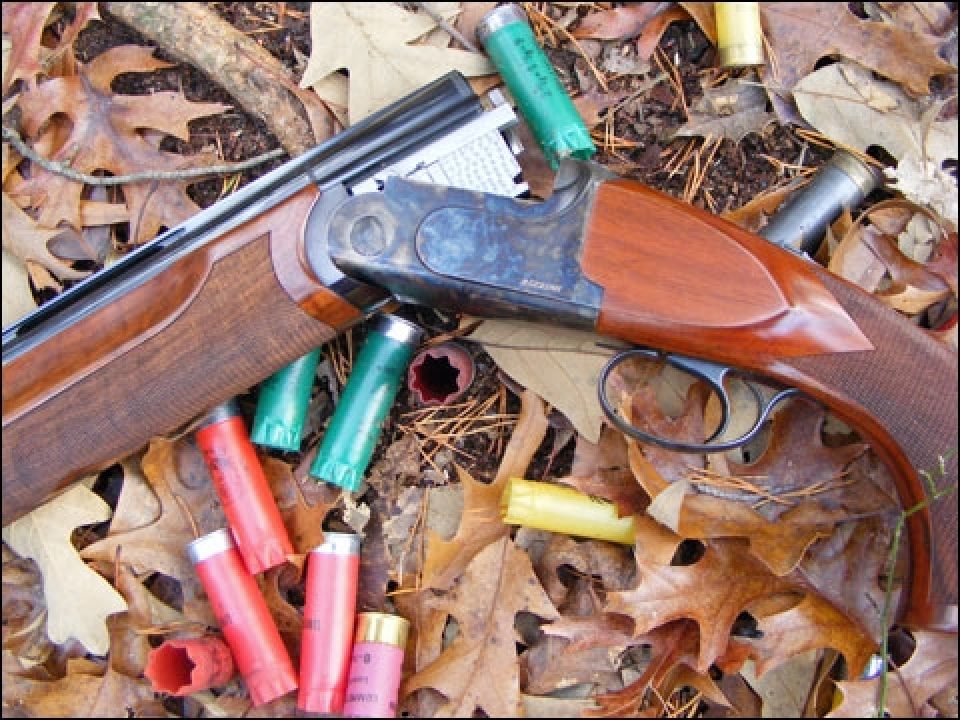

.410 Fun With a Lovely Browning Citori

On the used gun market the most valuable, discontinued Browning – the Superposed over and unders – are those in 28 gauge. But .410 Superposed over and unders are not far behind in price.

Interestingly, there were more .410s produced in the Superposed than in 28 gauge. Further, the most valuable of the Superposed guns are the higher grades. There were quite a number of different higher grade Superposed over and unders, but we know them best as the Pigeon, the Pointer, the Diana and the Midas – with the Grade I being the lowest priced of these guns. Even the Grade I owned was very nice with its deep-cut engraving. But if you have a 28 or a .410 in Pigeon, Pointer, Diana or Midas Grade you certainly have a shotgun that’s worth plenty.

So I’m wondering if the Citori over and unders, especially those in the higher grades and in the smaller gauges, are destined to increase in value over time. The high-grade Citoris being offered by Browning are currently the Grade IV and the Grade VII. Like the 20, 28 and .410 Superposed, the small gauge Citoris are built on a 20-gauge frame. The Citori I’ve been shooting up a figurative storm with is the .410 Citori Grade VII with 28-inch barrels. More about shooting that gun shortly.

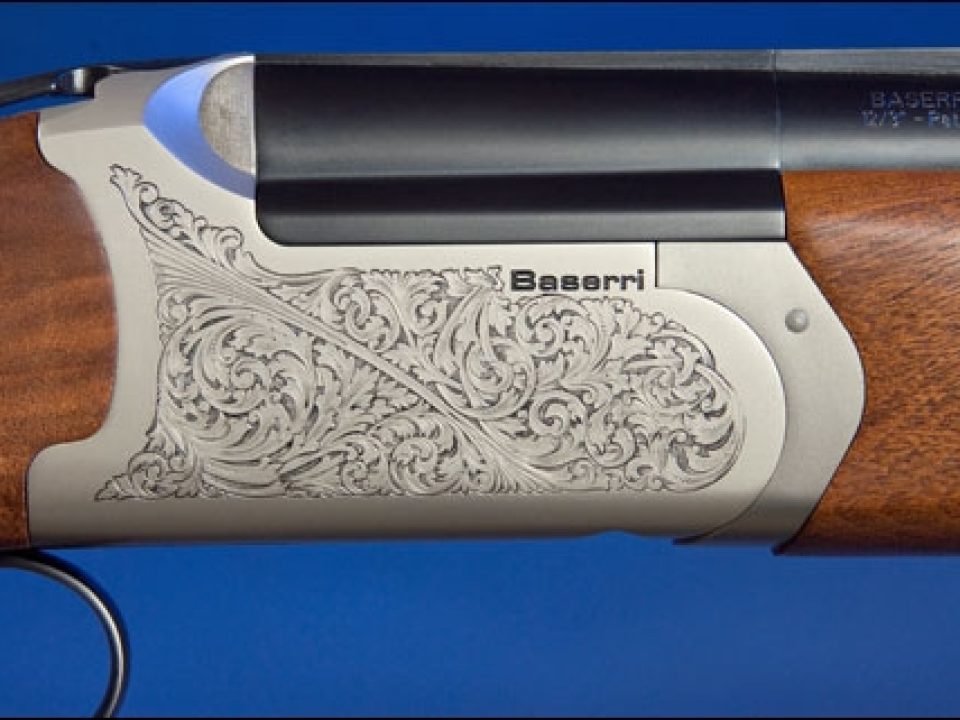
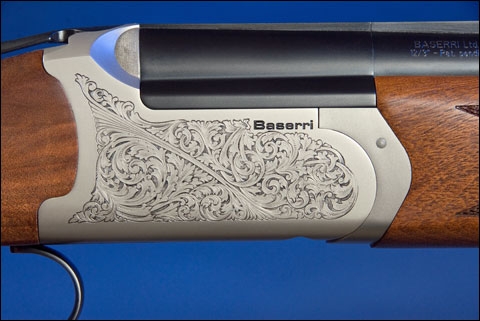
The three small-gauge Grade IVs are intricately engraved – including game scenes of flushing quail on the left side of the receiver, a flushing ruffed grouse on the right. To my eye this engraving is extremely well executed.

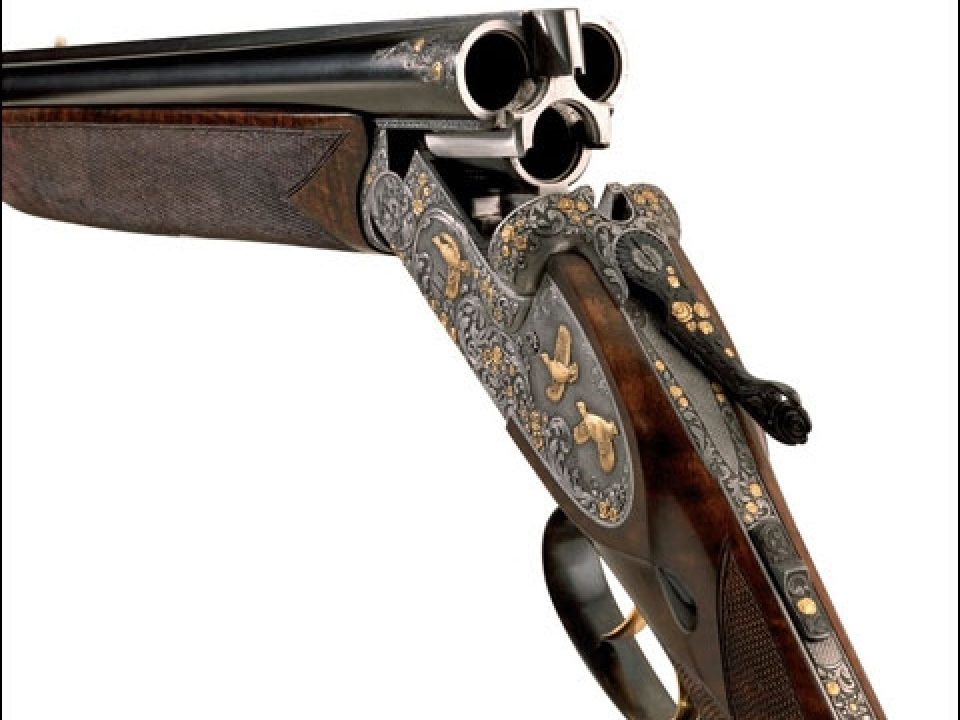
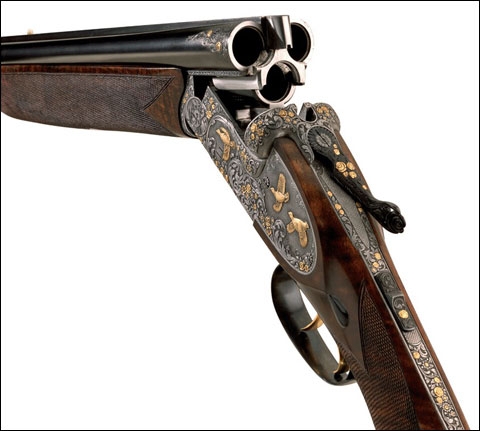
The Grade VII is also intricately engraved all around the game scenes – with three flushing grouse in gold on the left of the receiver, three flushing quail in gold on the right. The birds are well rendered, but it’s all the surrounding engraving that really catches my eye.

GIF SideEngr

These are the three flushing grouse in gold on the Grade VII small gauges, but note the intricate and excellent engraving surrounding the birds.

On the head of a pointer in gold on the bottom of these receivers, that gold head is surrounded by one heck of a lot of very intricate engraving. There’s also intricate engraving on the fore-end iron, the barrel “wings,” the receiver fences, the opening lever, top tang and trigger guard. This isn’t “just” engraving, as it’s very intricate and special, and the workmanship makes me wonder what these guns are going to be worth 60 – 80 years from now.

I realize (and probably so do you) that most of today’s engraving starts out with some type of chemical or etching process, but then that resultant engraving is worked on extensively by hand – by experts. For most of us, the days are over for real hand engraving with no help from acids, chemicals or whatever.

GIF bottomEngr

There’s even a Pointer’s head in gold on the bottom of the receiver. Again, note the full engraving all over the receiver bottom.

If a master engraver works for four months engraving one gun he is probably going to want about $40,000 – and that’s just for the engraving. The price of the gun itself is not included. So I’m guessing that the only shooter who can afford $40,000 worth of engraving has to make about $400,000 in four months. Along those same lines, if it takes a master engraver a year to make a super fine piece he’s going to want about $100,000 these days. The only folks able to afford that much money certainly have to make two million a year or more. That’s why I say true hand engraving has gone beyond most of us.

However, the engraving on production shotguns these days is sometimes outstanding – at least on some of the shotguns I’ve examined over the last several years. Today’s Grade VII Brownings are engraved so well that anyone examining these guns will be very impressed.

The Citori Grade VII .410 I have been shooting is the Lightning. Of all the various Citori models the Lightning is my favorite. I no doubt favor this model because of the stock’s lines – the semi-open pistol grip and the Lightning-style fore-end – which is rounded on the end.

The name “Lightning” and the style of the stock were stolen from the Superposed Lightning model. Browning was very wise to put this model in the Citori line as the Superposed Lightning was not only one of the best sellers – the Superposed Lightning is also very much sought after in the used market.

GIF checker1

The semi-pistol grip of the Lightning model on the Citori Grade VII .410.

With the Grade VII you obviously get a very nice piece of walnut for the stock and fore-end. Further, the checkering is not only perfectly done – it’s tight at 20 lines-to-the-inch. The trigger is gold plated. In all three small gauges the Lightning wears a plastic butt pad so you will never have any gun mounting problems due to a sticky pad. The vent rib sits reasonably high, a good thing for hopefully preventing too much head lifting at trigger-pulling time. That rib is slightly tapered on the small gauge guns – .270 at the breech – .245 at the muzzle. Three screw chokes are included in all three gauges (even the .410): improved cylinder, modified and full. Also, it would be nice if Browning supplied at least one, preferably two, skeet chokes.

Because of the 20-gauge receiver, this Grade VII Lightning .410 is lightweight  It weighed in at 7 pounds, 2½ ounces with 28-inch barrels (26-inch barrels are also available).

With my Baker Barrel Reader I measured the top barrel at .411, the bottom at .410. The improved cylinder measured .405, the modified .400 and the full went .395. The fore-end weighed 14.9 ounces and the barrels, 2 pounds 15 ounces.

Using my Shotgun Combo Gauge I measured the length of pull at 14 3/8 inches, the drop at comb 1½ inches, the drop at heel at 2 ¼ inches, and the gun balanced right on the hinge pin.

While serious competition skeet and sporting are great (I know a lot of you don’t shoot competition) just shooting for the fun of it is what I do these days. Accordingly, I have never met a real shooter who did not love shooting the .410. With that gun’s minimal recoil and impressive breaks at short ranges – using the proper chokes – what’s not to love about shooting a .410?

Although all the Lightning model .410s have 3-inch chambers (great for hunting), my clay target fun has been with the 2 ½-inch, ½-ounce rounds. For this shooting the Grade VII is pure joy, plus the 28-inch barrels swing well; and because of the 20-gauge receiver and the gun’s resultant weight of 7 pounds 2½ ounces there’s essentially no recoil at all.

The .410s that are really light, like under 5 pounds or a bit over 5 pounds, have more recoil than with this heavier Browning. Not that the recoil is bad in a 5 ½ pound, .410 shooting 2 ½-inch shells; it’s just that the recoil is even less with this Browning I’ve been having fun with. Another benefit to the heavier .410 is that this Browning .410 swings great compared to a 5 ½ pound .410.

To simulate upland bird flushes – the likes of ruffed grouse, woodcock and quail – I do a lot of this fun practice shooting from a low-gun position on stations six and two on a skeet field. These quartering away targets are often seen in hunting situations. But I also shoot plenty of low seven and low five targets, which also simulate certain upland bird shots.

Despite opinions by some, the .410 can be a good hunting gun as long as the shooter restricts the range. When I hunt with a .410 I go to the 3-inch shells. In addition to close-flushing upland birds, the .410 is also ideal for dove shooting, especially if the birds can be shot within the .410’s comfort zone. To simulate practice for this gunning I like to call for the bird from a low gun position, taking quartering incomers from stations one, two, six and seven, and full crossing shots from stations three, four and five.

Is this Grade VII Citori a shotgun that will gain in value as the decades pass by? There’s no guarantee of that, just the guarantee of one heck of a lot of shooting fun – speculative financial hopes be darned. With a suggested retail $5,109, this .410 is great fun to shoot today and could make for a lasting heirloom.

Nick Sisley has been a full-time freelance outdoor writer since 1969. He writes a regular shotgun column in Wildfowl magazine, Sporting Clays magazine, the Skeet Shooting Review and others. He’s authored eight books and penned thousands of magazine articles. He can be contacted at nicksisley@hotmail.com.

Helpful resources:

http://www.browning.com

{loadposition signup}

Hunting Grouse With the Stealth Approach

The ruffed grouse is to the forest what pheasants are to the grasslands. But unlike the flashier, bigger plains bird, you can’t bully a grouse around. The “we-got-’em-surrounded” mentality that often works with pheasants – big crowds pushing a section of real estate to pinch birds and force them to flight – won’t get you anywhere in the grouse woods. No, this is one bird that requires finesse.

Read More

Peer Review: Krieghoff K-80 Pro Sporter

Call me crazy, but when I started shooting the 12-gauge Krieghoff K-80 Pro Sporter the first thing that came to mind was not another shotgun – but a car.

And it wasn’t just any car, but the BMW X6 M sport utility vehicle.

What do the Krieghoff K-80 Pro Sporter and the BMW X6 M SUV have in common?

Essentially, they share an engineering philosophy that combines elements of their best products to create a new paradigm that delivers stunning results.

Read More

A Grouse to Remember

Growing up on the North Hill Marsh in Duxbury, Massachusetts was an outdoor kid’s dream. Fishing, hunting, trapping, camping, living off the land – this is how I spent much of my childhood.

I remember waking on a cold, frosty dawn, crawling from my tent pitched high on a hill. Ducks and geese were noisily feeding on the pond below. A smoky mist whisked over the water’s surface. As I stood up and stretched, I nearly had a heart attack when two ruffed grouse exploded into the air no more than ten feet behind my camouflaged tent. I’ve studied and hunted grouse all my life, and I still jumped a foot off the ground when they launch themselves into the air like rockets – at 45 miles per hour! If you haven’t experienced the shear exhilaration of a surprised ruffed grouse flush, you’re missing out on one of the most spectacular rushes nature provides (see your doctor first).

One day, I was hunting a hillside where I had seen and flushed (and missed) a ruffed grouse on three different occasions. Grouse are the hardest game bird to hunt because they are literally as fast as lightning. One flash and they are gone. On this particular evening though, I was confident I would come home with supper.

As I side-winded around the hill, I came to a beautiful pine grove that smelled with the sweet perfume of fall. As I stood there deeply breathing in nature’s bouquet, a ruffed grouse came roaring into the grove at full throttle. He spotted me just as he put on the brakes and dropped his landing gear. If ever a grouse was surprised, this bird sure was. I swear his eyes were as big as saucers as he touched down no more than five feet in front of me. (Ruffed grouse are never supposed to come towards you. In fact, they are heard and rarely seen as they pour on the afterburners and disappear through the woods like a super sonic jet at an air show – now you see me now you don’t!)

He immediately started making a nervous, red-squirrel-like whistling. He strutted, contemplating, not quite sure what to do. I stood there in utter surprise myself. When I realized supper was at hand, I tried to raise my gun. Only one thing stood between me and the tender, white meat: tall and medium-sized pine trees. Actually there were three and I was standing port of arms right up against them. When I had first come upon the “cathedral in the pines,” I leaned against these trees and poked my head into the grove. Sort of like when you crack open a door and stick your head into a room to look around. Now I was so close to the pines, I couldn’t snap my gun to my shoulder for the shot.

Suddenly, the ruffed grouse got his wits about him and exploded into the air. I nearly had a heart attack. In the blink of an eye he was gone without a trace. I stood there, heart pounding in my chest, and laughed out loud. Somehow, this bird had skunked me again. As I walked home re-playing the scene in my mind, I wondered – if I were a fox, would he of gotten away?

Capt. David Bitters is a writer/photographer and a striped bass/sea duck hunting guide from Massachusetts. His photos and essays have appeared in over one-hundred magazines. Capt. Bitters is currently finishing his first book, A Sportsman’s Fireside Reader – Tales of Hunting, Fishing, and Other Outdoor Pleasures. Contact him at captdaveb@baymenoutfitters.com (781) 934-2838. You can also write him at P.O. Box 366 Duxbury, MA 02331.

Blue Creek Sport Shooting Complex and Preserve

Montana’s newest sporting clays facility is up and running in less than a year. Jim Bailey, owner and general manager is in the construction business and had planned to use the land for an upscale home development, and had started to do that when the housing market went south.  He then gave a lot of thought to how else to utilize the land for a profitable return since he already had done some work in developing roads, etc. After some discussion with some friends he decided to develop a sport shooting complex.

Read More

The Last of the Pendragons?

Once upon a time, the dream of a magnificent plantation called Wingfield bloomed full and flush in the enchanted quail kingdom of South Carolina’s Low Country.

Amid the live oaks and long pines, no more than 60 gentlemen hunters giddy on the stock market bubble would live in grand houses and partake in the sportsmen’s lifestyle entitled to the plantation aristocracy.

Read More

The iPhone ClayTracker Takes on the Ruins of Lehigh Valley Sporting Clays

Imagine a game of sporting clays without the hassle of a clipboard and pencil.

As you walk up to the cage, you don’t have to search for a place to rest the clipboard that holds the score sheet. Where should I put it? Lean it against the gun rack? Balance it on the railing? Leave it in the cart and remember the scores to write down later? Hand it off to a friend who hands it to a friend and so on until eventually someone in the squad ends up dealing with the clunky thing?

Read More

Shotgun Life Newsletters

Join an elite group of readers who receive their FREE e-letter every week from Shotgun Life. These readers gain a competitive advantage from the valuable advice delivered directly to their inbox. You'll discover ways to improve your shooting, learn about the best new products and how to easily maintain your shotgun so it's always reliable. If you strive to be a better shooter, then our FREE e-letters are for you.