Saturday, Sep 04th

Last update05:10:09 AM GMT

60-Seconds-with

Wingshooting

Ode to the Atlantic Brant

E-mail Print

Most fantasies are better than the actual experience. Occasionally the opposite is true, a well known fact of hunters around Maryland.

Waterfowlers dream of someday hunting the Eastern Shore. Magazine articles during my youth described hunting this coveted area for sea ducks, Canada geese and Atlantic brant, a mystery goose, to hunters living away from coastal areas. Most references I found in books or magazines spoke of brant blundering in during sea duck hunts.

A Maryland waterfowl biologist once told me, “Mainly hunters from other places hunt brant, only guides from here chase this bird and always with clients. Most of us who live here have never found a way to make that damned goose taste good, but the damned things are fun to hunt.”

I wondered how many brant were actually prepared for dining these days, considering this short-winged goose was sold in large numbers to restaurants during the dark market hunting era. No doubt most today are sent to the taxidermist and fixings are saved for the more succulent Canada geese.

Locals claim to not eat them and perhaps only non-residents would attempt any type of dining preparation, no doubt with less than desirable results. Yet, early outdoor writers left a mystique about the Atlantic brant that made many of us yearn to learn more.

My chance to hunt Atlantic brant came with an invitation from my friend, Christina Holden, a Maryland resident. We loaded gear in a tender boat on a chilly day when most stayed indoors.

DecoyMan
Jeff Coats holds up one of this hand carved decoys.


Cold air immediately reddened our faces while Jeffrey Coats, a superb Eastern Shore guide turned his camouflaged boat into Chincoteague Bay. Bags of brant decoys made comfortable seats. A brisk January breeze tried to cut though my best rain suit that was backed by some of the finest cold-weather undergarments. I spent many years being cold in my youth and plan to stay warm during the second half of my life.

We quickly cleared the small harbor and Coats kicked the big engine in high gear. The boat’s momentum slipping through shallow bay water occasionally flushed a sprinkling of sea ducks into flight and provided ample time for me to reflect on the area’s remarkable waterfowl history.

I had little trouble visualizing hunters digging holes to plant sink boxes on sandy or mud beaches. A gaggle of live decoys would be placed out in front to quack or honk their heads off at passing flocks that circled and then settled in for an easy harvest, a practice outlawed since 1935.

My eyes focused on a distant black line on the bay’s surface proving to be surf scoter, a much sought after sea duck. Hunters once floated close to flocks in boats with bow mounted cannons. They set off their battery of flying shrapnel into large numbers of ducks or geese.

I thanked God that those times ended before most waterfowl become extinct. Waterfowling history adds interest to this beautiful area in a day before good camouflage and boats with huge motors. Many hunters of that era were expert callers who took large numbers of ducks and geese compared to our modern daily limits.

My daydream ended when Coats cut his outboard motor and started drifting toward a shallow area alongside an uninhabited strip of land. We set out bags of brant decoys hand carved by the talented guide and numerous V-boards, each holding three or four brant silhouettes. I wondered if the cautious geese would visit our spot in this vast area of water. I was assured that a good set of decoys over underwater eel grass and sea lettuce would draw the lines of brant.

I closed my eyes and remembered the words written in 1905, “A Close Call,” by Alexander Hunter.

“But he may sit in a land blind during the whole winter and never see a brant hovering over the decoys, for that wary game bird gives a wide berth to marsh, cape, island or mainland and feeds only in the open a half mile or more from shore. In the early morning and late evening they ride the waters in vast numbers and are quick to take flight at the sight of any craft.”

I soon understood the mystery, our query presented a challenge. Coats was said to be the best living guide for brant, so chances were good that primer caps would soon be exploded, sending steel shot at a rare goose—at least for a hunter from the Heartland. Perhaps a mature bird would become a trophy for my office wall.

Coats set out the last decoys and V-boards, taking a final glance.  He was satisfied that everything looked natural before settling down in the big boat. Camouflage netting over the boat’s top and sides made us less visible to the sharp-eyed birds we planned to hoodwink.

“I use the V-boards for brant because they are visible longer distances than decoys,” Coats explained. Birds sometime come straight in from long distances because they can see other birds. The decoys are needed when birds are closer.”

I thought about what he said while peeking through a slit in the camouflaged canvas. An hour later a flock pushed towards us and Coats started making brant sounds on his call, several high-pitched BRRRRRR’s. They flew straight in and low over the surface, a big difference from Canada geese that will circle several times. Holden stood up and dropped her first brant while I missed—three times.

Damn, missed my first opportunity to shoot a brant I thought. Hope I get another chance.

Dog
A cold retrieve from a bay in the Atlantic ocean.


We stood up and watched as Coat’s black lab, Poacher reached the brant. The eager dog became tangled on two decoy ropes connected to the heavy V-boards while swimming in. Coats motioned the dog to swim back and in different directions until he was freed. I have seldom witnessed better communication between a dog and his owner.

Holden limited out with a second bird on the next pass of brant while my birds continued flying. I glanced down at her shell box, #3 steel shot. I had been shooting BB’s, an old habit from Canada goose hunting. She slipped me some #3’s that I eagerly loaded in my 870 Wingmaster pump 12 gauge with a new surge of hope.

Soon three brant pushed along the shoreline toward our decoys and not over five feet above the surface. I stood up and swung on the first brant, squeezed the trigger and dropped him. The second shot missed, but the third shot dropped the lead goose. I limited out in 30 seconds after changing to smaller shot that offered more pattern.

Coats decided to try for a limit while we visited in the comfortable boat. Camouflaged canvas on the side rose up to hide us from the sharp-eyed brant that do not seem wary like Canada geese. They were smart enough to move down the shoreline to a cove where we watched several hundred birds pass our set to join live birds, ignoring Coat’s calling. Several flew over for a look, but kept pushing on to their live comrades.

“Hard to compete with live birds,” Coats said. “In the evening we’ll start seeing singles and small groups of brant. For now they’re content to sit.”

Two brant left the group a half hour later and bored in towards our set. They did not circle, but came straight in. Coats didn’t call, the brant knew where they wanted to go. They quickly swung over our decoys flying side by side and Coats fired, dropping both with one shot. Poacher swam out and brought in both geese that laid stone dead on the surface.

“That’s the key, save ammunition,” Coats said while we rolled our eyes.

That evening we dined at the Crab Alley Restaurant, in West Ocean City, Maryland. I took a big bite of Crab Imperial, a white sauce with big chunks of fresh crab meat poured over a flounder fillet. I should have enjoyed the meal more, but I couldn’t stop thinking about the brant flying towards our decoys, getting bigger and bigger until they set their wings and hung out like piñatas on a string. I would see the same sight while trying to sleep that night. I didn’t sleep much knowing that we were hunting the following morning.

George Zahradka, of Middle River, Maryland. and Wayne Radcliffe, of Glen Arm, Maryland., two veteran Eastern Shore hunters, set out several dozen brant decoys and V-boards on a small island the following morning before daylight. The grass-covered isle sat directly in sight of where we had hunted the evening before. This time, we hunted on the island, in camouflage that was darker colored than our surroundings. Holden leaned against a supply pack while I positioned against an old abandoned crab trap cushioned with decoy bags.

geese
A few of the brants at the end of the day.


“The key is staying perfectly still,” Zahradka said. “We should pick up singles and small groups of brants, maybe a couple of ducks.”

Soon a dark shape winged towards our decoy set. Holden, after out shooting me for two days and no doubt feeling sorry for the old man whispered, “You take this one.”

I watched the brant flying in a straight line before executing a sharp right turn and landing in the decoys. I leaned up and spooked the brant to flight. He had barely lifted off when a load of #3 steel shot dropped him back down among the decoys.

“If you had missed, I had your back,” the ornery Holden said. “I was on him too, good thing you didn’t miss.”

“Good start,” Zahradka said. “There should be more.”

His prophesy proved to be correct as a long string of at least 50 birds flew down across the bay and straight towards our set. Three birds flew lower than the rest and dropped down for a closer look at our decoys. Holden had the shot and swung on the last bird, squeezed her trigger and dropped the mature brant among the decoys.

The morning brought more strings of brant flying across the channel. Some continued on to another destination while others turned and dropped down to investigate our decoys that spread out a hundred yards. Several dropped into the convenient opening for easy shots. Holden and I limited out on brant by noon and regretfully called it a day when so many sea ducks were in the area. I had a flight to catch.

Hours later I sat on a jet soaring back to Kansas, my wife and home. Visions of long strings of brant turning towards our decoys clouded my thoughts and I realized why writers of the past passionately described brant when so many other desirable table-fare fowl flooded the Eastern Shore. My waterfowl biologist friend had said it all, “The damned things are just fun to hunt.”

Kenneth L. Kieser is a veteran outdoor writer of more than 25 years and author of the western novel “Ride the Trail of Death” published by La Frontera Publishing. You can contact him at letters@shotgunlife.com.

For more information about hunting with Capt. Jeffery Coats, call (410) 410-937-4034 or email him at  jeff@pitbosswaterfowl.com and you can check his web site at: www.pitbosswaterfowl.com.

For more information about hunting waterfowl in Maryland, contact the Maryland Department of Natural Resources at: 410-260-8540 or check their web site at: www.dnr.maryland.gov.

Montana Pheasants... just stay on the porch

E-mail Print

I know that if you want to hunt wild and hard to find pheasants in Montana you have one of two choices, either cold weather or very cold weather, and lots of hard hunting which means a bunch of miles on foot.

So when my hunting partner, Mark, asked me to join him and his friend Mike to hunt for a couple of days in Northern Montana, I thought about what I knew the conditions would be like, and in spite of that knowledge I jumped at the chance.

Mark described the place we would be hunting as a private ranch of some 70,000 acres that Mike had permission to hunt on and we would also have the ranch bunkhouse to ourselves for accommodations. On top of all of this I would be hunting with Mark’s amazing Black Lab, Puck, which was enough reason to go by itself.

The following weekend we loaded all of our gear into Mark’s 4x4 Dodge and headed east on I-90 with Puck in the back in his crate very content knowing birds were in his future. When packing my gear I was careful to make sure I had enough cold weather gear to get me through the weekend without frostbite, and more than one change of outerwear as the chances of getting wet were pretty good this time of year.

RIVER3
A river runs through the 70,000-acre ranch called the PN.

The list always includes the long johns, bibs and plenty of socks. My camo duck hunting cold weather coat has a liner along with gloves that go well past the wrist for reaching into cold water and being able to use your hands afterwards. I figured I had better take it all with me just in case.

Fortunately, having bird hunted the southern plantations of the USA I own a couple different size vests and these days the 2X does fit over my outerwear so I grabbed it as well. When Mark came to pick me up he accused me of packing for two weeks instead of two days. I hate being cold was all I could say.

The trip was pretty normal until we reached a small town in Montana (name escapes me) where the highway to our destination turns north. As we came around the bend we were staring at a vertical mountain face within a few feet from the road. Right up tight against the face stood seven Big Horn sheep, a very nice ram and his harem. As we approached Mark pulled over so we could get a good look and it became clear they were no strangers to traffic as they just looked at us while we looked at them and were not the least bit concerned.

Their demeanor didn’t matter to us as the opportunity to see these magnificent creatures up close was a bonus to the trip. I have seen them before through binoculars but never six feet away. Since we were starting to tie up traffic, we needed to move on and as we did I thought to myself that in the future I most likely would have no interest in hunting sheep, except with my camera. It was precisely at that moment I realized my camera gear was in the back of the rig.

As we headed north into Montana we were pleasantly surprised at the weather being so unusually warm and the discussion turned to how this weather would affect the bird behavior. I had my suspicions that if it didn’t cool off we would be hard put to find any birds in the usual places and exhibiting the normal behavior.

We arrived at the ranch on schedule and met up with Mike. It had been a long day so we got comfortable and discussed the plan for the next day of bird hunting. Mike’s plan was to go to an area a couple of miles from the ranch house and work some high grass draws which also had timber and some heavy cover. He had hunted this area before with good success and believed it would be a good first day. This ranch offers all the ingredients for good bird hunting, plenty of cover, good feed plus fresh and accessible water. Pheasants prefer all three within a short distance and the PN, as this land was called, provided it all everywhere.

No one could tell me what PN stood for but in Montana land parcels have some strange names. Normally I would share where we were but in this case we were on private land. I can tell you we were north of Great Falls and without Mike I could never find it again.

Mark-in-Deep-grass
Mark hunts pheasants in the deep grass.

The next morning we were surprised the weather had turned even warmer, in the sixties. We were all in heavy camo and vests with winter boots and that was not going to work. Clearly, by noon it would be in the seventies and this was pretty much unheard of in November in Montana.

Nevertheless, we headed to the trucks to make our way to the area Mike wanted to start in. The first hour was tough going, climbing up and over rocky draws and hills, through heavy brush trying to push up some birds. The dogs were working hard but nothing was happening. We stopped often to water the dogs and ourselves. Layer by layer as the sweat was soaking our clothes we shed our gear. I asked Mark if we made a wrong turn in Idaho and went south to the desert. This is just plain strange.

Somewhere around ten o’clock I was dripping wet and was down to a tee shirt and vest. I had never bird hunted in these conditions before and the terrain along with the hot weather was making this trip a tough go. Here we are sweating profusely, climbing over downed trees, swampy creek bottoms and still no birds and you have some pretty unhappy hunters.

This is certainly not like hunting the nice flat straight rows of milo and sorgum of South Dakota or Kansas or even Georgia. This is tough bird hunting and by now we are stubbornly determined to keep going until we found some success.

Around eleven o’clock our stomachs told us we need to refuel, and the dogs were looking pretty beat as well. The way back to the truck was through some deep and heavy brush along a full creek bed, which under any normal circumstances would have held many birds, except of course today. I sent Puck into the brush along the creek and as always he was up to the task. Still nothing! I even thought he gave me a sideways look, but I am sure it was my imagination.

It was unanimously decided that it was time to head back for lunch, and for the afternoon hunt we would head up to high country and find some sharpies and if lucky maybe a few Hungarian Partridge.

As we turned the last corner taking us back to the house, Mike’s truck in front of us came to a screeching halt. Mike jumped out of his truck, gun in hand and started shooting at the huge hay rounders stacked near the back barn.

Mark and I could not figure out what he was doing until we saw a bunch of pheasants taking flight in all directions. Not only were they flying but they were running between the hay rounders (A rounder for you easterners is a huge hay bale in a round wheel shape about eight feet high in all directions.

The dogs were still in their kennels in the truck beds making a racket as they could hear the roosters and the gunshots of course. We are all trying to reload and bring down a few. If anyone saw what was going on I can only imagine that it must have looked like a well-staged Keystone Cops movie.

Remember, we were on our way back to lunch so vests were gone which meant no shells, no hats, boots untied to relieve sweaty feet .Once we realized what was going on and none of us had more than a couple of shells in our pockets we all had to scramble back to the trucks for more.

We let the dogs out of their kennels, but to their dismay and ours most of the birds were gone. The ranch must have sounded like WW III had started. Finally, when our guns were empty and the smoke had cleared we took count and had harvested several nice big birds. In retrospect the challenge had been to make sure we were shooting in the right direction away from the house and each other. Fortunately all of us are experienced and in spite of the chaos we did not put any holes in the barn, the house or each other.

After all of that tough going, sweat and no results it was clear we would have done better had we stayed on the porch. The birds would have come to us, but then it wouldn’t have felt like we earned them I guess. .

The next day, we found another spot for morning pheasants and got a few birds and all in all it was a great hunt. For me three things really stood out on this hunt. The crazy weather of course and a white tail that jumped up a few feet in front of me that took a few years off my life. I have jumped a lot of deer in the woods in years past but never one so close I could almost give her a kiss as she went by me. Last the gunfight at the hay bale corral. Hunters 5 pheasants 0.

Montana is big country and it’s great hunting for all sorts of game. If it wasn’t so far I would go more often, but always go prepared for some tough weather and it can change very quickly to bad just as fast as to good. I am looking forward to my next trip and perhaps it will be a bit more normal but then...maybe not.

The trip home was not as planned. We hit a sudden snowstorm in Idaho and it was at that moment the front 4x4 differential in Mark’s truck went south on us.

We limped over the passes and down I 90 at a snail’s pace and well, suffice it to say it was an appropriate ending for a very strange hunting trip.

Fortunately time takes away some of the sting and we can look back at that trip fondly and even jokingly as Mark still has the Dodge even though he hates it, He calls it his money pit. I told Mark that next time at the PN maybe I will stay on the porch.

Al Hague is an avid outdoorsman and published author as well as outdoor photographer. Al resides and hunts mostly in the western half of the US and Canada. His photos can also be seen on http://www.shutterpoint.com and http://www.theartshop.com.

It's FREE, But It's Not for Everyone
Join an elite group of readers who receive their FREE e-letter every week from Shotgun Life. These readers gain a competitive advantage from the valuable advice delivered directly to their inbox. You'll discover ways to improve your shooting, learn about the best new products and how to easily maintain your shotgun so it's always reliable. If you strive to be a better shooter, then our FREE e-letter is for you.

Please fill out this form to sign up.
First Name:
Last Name:
* Email:
We value your privacy. We will never rent or sell your e-mail address to another company.
Irwin Greenstein, Publisher

Hunting Grouse With the Stealth Approach

E-mail Print

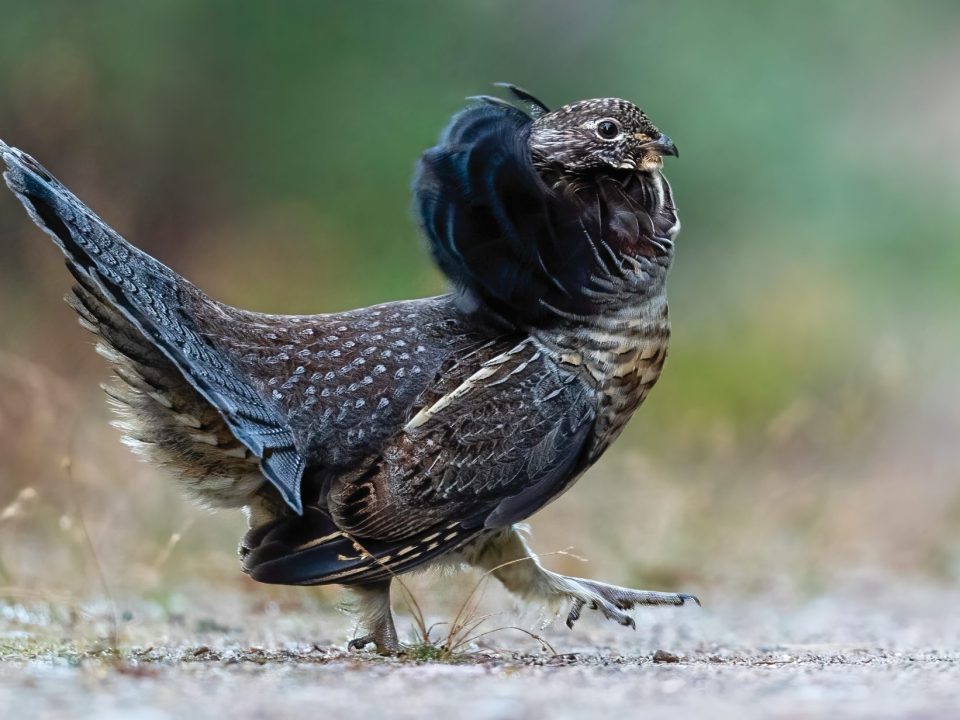
The ruffed grouse is to the forest what pheasants are to the grasslands. But unlike the flashier, bigger plains bird, you can’t bully a grouse around. The “we-got-’em-surrounded” mentality that often works with pheasants – big crowds pushing a section of real estate to pinch birds and force them to flight – won’t get you anywhere in the grouse woods. No, this is one bird that requires finesse.

Like a Circus

I used to hunt with four or five gentlemen every year on some private, long-abandoned logging grounds we had access to in the mountains of West Virginia. It was gorgeous grouse habitat: meadows interspersed by ancient apple orchards and hawthorne tree stands, and where the selective logging had occurred, downed, left-over logs were surrounded by myriad berry-bearing shrubbery and young tree regrowth. It had everything and more that a few grouse could want – shelter, food, and relatively little encroachment from humans. The place never failed us. We always shot grouse. But knowing what I know now, we could have done better – a lot better – and so could others I’ve seen hunt as I did with these guys.

ruffgrouse3

Our first problem was that there usually were a half-dozen of us. But it wasn’t just the number of human trespassers to this piece of grouse fairyland that was the problem. We also usually had as many dogs between us, and since every one of us carrying a gun was a weekend warrior with a job in the city, after a long drive and a crappy motel stay, every single one of us had to put our dogs out – at the same time. There simply weren’t enough weekends in the season to go around, so leaving a dog on the truck – “I’m not leaving my dog behind!” – wasn’t even a consideration. The result was a circus.

Now, part of my group’s three-ring problem was due to more than just the confusion brought on by a dozen hunters and dogs running amok. The environment played a role in the confusion as well.

I never hunted those mountains when the wind wasn’t howling, and the weather was often just altogether brutal, with stinging drizzle, sleet, pouring rain, and always freezing temperatures (the place wasn’t too subtly named Mount Storm). To hear over the wind and elements as we pushed the ground, we got loud. “Bird! Bird!” one would bellow, as a grouse was gotten up and fired at, the cadence of shouts and gunfire continuing as the birds maneuvered, often unscathed, between all of us and the trees. Our dogs’ beepers and bells only added to the ruckus. Like I said, it was a circus.

Pair Off

Six of us abreast in the typical pheasant-field-push formation often did not much more than push the birds continually ahead of us. And if you were thinking four pointing dogs and a Lab or three must have balanced that out, well, you’d just be wrong. In all, while we never went home empty-handed, we truly had the wrong approach.

Let me make this clear: grouse hunting is not a group sport. For this many hunters having only a few opportunities to get together at one time, we should have split up. We should have set out in pairs in completely different directions, each pair of humans with no more than a brace of dogs. From a full-limit standpoint, the camaraderie would have been better left for lunch and the end-of-day flask sip.

man-dog-bird-hunting

But even had my group insisted on the throng approach, we had another problem that compromised our ratio of trigger pulls to birds bagged. Remember all that shouting and ringing of dog bells and shrieking of whistles I mentioned? That’s a whole lot of excess noise that any grouse in its right little bird mind will flee the country on. See, with grouse, the trick to gun-ready flushes lies somewhere between silence and sounds that will startle – not in a constant din.

You and a friend (I’ll get to the dogs in a minute), working at a leisurely pace through the woods, kicking through dry leaves, snapping twigs, and keeping conversation minimal, will usually encourage the ruffed grouse to hunker down and hold tight. Evolution has taught them that their wonderful plumage is terrific camouflage, if they will just hold still. Well, up to a point, anyway.

Hold too long, and that fox or bobcat padding through the understory is going to pounce. But you know what that fox or bobcat does before he pounces? He gets quiet. He sits back on his haunches or crouches down on his belly, pausing to make sure the energy he’s about to expend will result in a captured meal. It’s in that moment of stillness that a pinned grouse will often opt to exercise his alternate survival skill, which is he’s going to flush.

Hunt grouse like the predators do. Move steadily, but easily, through the cover, keeping noise to just what your brush pants and canvas coat sleeves make as they pass. Walk for a while, then pause. Stop. Stay quiet for a moment, look around, and be ready to shoot. If a grouse is nearby, there’s an excellent chance he’s going to take flight the second you scratch the leaves with your toe as you begin to step forward again.

This minimalist, this stealth approach, is the way to shoot grouse. You are playing to the birds’ known behavior, instincts that have served them well over centuries. And by proceeding in this manner, you are setting yourself up to be best prepared to take the shot when it presents itself. You’ve looked around, can see where between the trees a flushing ruffie is likely to fly, and now have a much better chance of putting a bacon-wrapped grouse breast in the pan instead of seeing just a few tail feathers drifting to ground.

The added beauty to this method is that you don’t even need a dog. But I don’t know a died-in-the-wool grouse hunter who would set forth without one.

Man’s Best Friend

Grouse hunting is the domain of pointing dogs. Setters, pointers, short-hairs, and Brittanies rule the roost here, though having one of those and a flushing dog like a Lab or a cocker or springer along certainly makes a nice day out, too. Most hunters know the key to successful upland hunting with dogs is good dog training, but, in reality, most amateur handlers rarely know what that fully encompasses. My West Virginia grouse-hunting friends were good examples of this overall lack of gundog knowledge.

In addition to the group approach, ours were hunts that seemed to resemble track events. I don’t know whether these guys had been taught this way or if, over their years pursuing grouse had come to believe it was necessary, but their collective approach was to push as much countryside as they could as fast as they could. Even in years I was in relatively good shape, I often huffed and puffed to keep up with them.

dog-on-point-in-field

A big part of the reason for this mad rush through the hillsides – and aside from their driving belief that it was miles covered that put birds in the bag – was because none of our dogs were finished dogs. (Mea culpa, I’d have to include mine in that mix.)

For a pointing dog to be truly finished, or fully trained, he needs to hold point until the handler orders otherwise. That means for five seconds or five minutes or five hours, whatever it takes.

A finished pointing dog does not crowd the bird, does not creep on his point, and never flushes the bird. Further, he should remain staunch when the bird flushes and the gun is fired. This is what is commonly known as “steady to wing and shot.” Part of this philosophy is a safety issue. If the dog is steady to wing and shot, you not only know where he is, but he will not be leaping into the pellet string if you fire at a low-flying bird.

Another reason to have a steady dog? Grouse don’t usually fly far after flushing. If you move quietly along the flight path, you can often relocate a once-flushed bird some 30 to, say, 100 yards from where he first rose. But when a dog isn’t steady to the wing or flush, there’s a strong probability he’s going to give chase to the bird once it flushes, and that will keep the bird moving further and further ahead. You’ll never get the chance to reflush and shoot again.

Keep this in consideration, too: if your pointing dog won’t remain steady to the flush, he’s probably full of other bad habits, like creeping and crowding, and probably flushing more birds than you can imagine. So what you have with a pointing dog that isn’t finished is a dog you can’t trust out of your sight.

Back on those West Virginia hunts, we rushed – aw, hell, we flat-out ran – to get to our dogs so we could flush the birds before the dogs took matters into their own paws. It didn’t mean our dogs didn’t point, it didn’t mean that they couldn’t find birds, it was just an issue of them not being completely steady.

Of course, this meant that we kept our dogs at pretty close range, too. Lots of amateur handlers never let their pointing dogs range out of sight for exactly the reason I just discussed: they can’t trust their dogs.

hunter-brittany-pup

But think: are you really finding more birds with a dog you keep under your thumb? Maybe one or two, but really, if you’re going to hunt with a close-working pointing dog on a bird that holds as well as the ruffed grouse, you’d probably kick up just as many without him. The “point” of a pointing dog is to find birds you the hunter are not finding. And for that to happen, you need to let him range. The more ground he’s covering, the more birds he’s finding. It doesn’t mean you don’t want him to close it down a bit in really thick cover, but repeat after me: It is okay to let my pointing dog range out of my sight.

I know, I can hear it already. You’re wondering: how will I know where the dog is if I can’t see him? There are two solutions to this, the electric beeper collar or, my favorite, the traditional cow bell. (And no, I don’t think the sounds of bells or beeper collars flush grouse. Pheasants maybe, sometimes, but not grouse.)

I use a beeper collar often when bird hunting most upland species, especially in more open habitat, because I can hear it from further away and often over high winds. I always use one that functions in both a running mode and a pointing mode so I can tell, generally, what the dog’s doing. But I actually like the bell better for grouse hunting. Here’s why…

The bell is exacting where the beeper collar is generalized. With the beeper, I only know the dog is moving or standing still. And if he’s out of sight, I don’t know if the standing-still beep means he’s on point, taking a drink of water, or peeing on a tree. With the bell, I know all of these things and much, much more, just by the way it rings.

A steady clang? I know he’s working the cover methodically and thoroughly. When the clattering gets a little spastic, I know he’s hot on scent. And just a tiny “tick, tick, tick?” That’s the clanger echoing his breathing, when he’s solid on point – and I can hear this even when I can’t see him, which allows me to get ready to shoot when I do spy him and walk up on the point.

Also, I hear the difference between a dog that’s begun to creep on his point and one that takes a step to balance his body. I also can tell if he’s lost control and charges the flush –

and it doesn’t take a practiced ear to figure this out.

I really like to use a bell in conjunction with an electric collar (on an e-collar-trained dog, of course), because you can make corrections to the dog without having him in your sight. The bell tells you, is he creeping? Give him a little nick to put him back on hold. Hear him charge a flush after being silent on point? Give a jolt to pull him off the pursuit. (All of this, of course, assuming your dog is at least mostly trained and understands this type of correction. You wouldn’t want to do this to a young dog just beginning and turn him off birds, but that’s a subject for a whole separate article.)

The point of the bell is that I can let the dog do the work of finding birds instead of me hiking all over hell and half of Georgia. I take the dog off the truck, set him loose, listen for the bell, and walk toward it, either leisurely in the general direction if the dog is working steadily, or directly toward the last place I heard it ringing if it stops. I work less, while the dog finds more birds. Two birds in the hand….

So remember, when it comes to ruffed grouse, a careful, thoughtful, and methodical approach is what brings success with this forest dweller.

Jennifer L.S. Pearsall is a professional outdoor writer, photographer, and editor, who has been a part of the hunting and shooting industries for nearly 20 years. She is an avid clays shooter, hunter and dog trainer. Please visit her blog “Hunting the Truth” at http://huntingthetruth.com.

It's FREE, But It's Not for Everyone
Join an elite group of readers who receive their FREE e-letter every week from Shotgun Life. These readers gain a competitive advantage from the valuable advice delivered directly to their inbox. You'll discover ways to improve your shooting, learn about the best new products and how to easily maintain your shotgun so it's always reliable. If you strive to be a better shooter, then our FREE e-letter is for you.

Please fill out this form to sign up.
First Name:
Last Name:
* Email:
We value your privacy. We will never rent or sell your e-mail address to another company.
Irwin Greenstein, Publisher

Puck the Black Lab…Friend, Teacher and Athlete

E-mail Print

If you own a dog, then the following story will be familiar to you. If not, then perhaps it will inspire you, or at the very least make you chuckle a bit.

Prior to my being given the opportunity to meet and develop a relationship with Puck, it had been many years since I had a dog, but most importantly I have never owned a hunting dog. My chosen career path of many years did not lend itself to having a dog as I was transferred often and traveled much.

Over the years I would often read stories about hunters and their dogs as well as see the different levels of field trials and such. I would envy the handlers and their obvious relationship with the dogs and I was equally fascinated with the eagerness, devotion and joy exhibited by these amazing creatures. The skill and intensity with which they performed their tasks was a thrill to see and I could only admire them from a distance. My lifestyle would not be fair to a dog as I did not have the time to devote that he would deserve.

Having grown up back East where bird hunting is not a major pastime I had never even had the opportunity to shoot over a dog of any kind. It would be fair to say that only in the last four years have I become a devotee of wing shooting and all the true pleasures it offers, especially the opportunity to shoot over great dogs of all kinds.

The focus of this story is a very special black lab named Puck. He belongs to a good friend and colleague named Mark who has owned many special labs and hunted over many fine dogs for years. I say this only to point out that I had no part in the training or the development of Puck. In fact, the reverse is true in that he, by his very nature and ability, has taught me much about hunting and working with a dog. It is almost as if Puck acknowledges my inexperience and has allowed me to be his friend in a special bond that a teacher might have with a student.

Puck is a pretty large boy weighing in at roughly 95 pounds and is quite tall. He is regal with a beautiful lab head and intense eyes that when in the field are all business, but when at home are very soft and gentle. As an athlete he could be compared to any superstar whose body is ideal for his chosen sport. As a runner he has a gait like a finely trained horse and as a swimmer his large paws serve him well.  His large jaws allow him to grasp multiple birds either on a swim or field retrieve.

puck-Head-shot

On the many occasions he has trapped a bird before it could flush, his soft mouth brings the bird to you unharmed. This gentleness is in direct conflict with his intensity, but his breeding, temperament and training have produced this uncanny combination. He can be, and often is, a bit goofy in that he suffers from separation anxiety. It doesn’t seem to matter where he is or who he is with, he must be close by one of us.

On the occasions that Mark is required to travel on business, Puck will stay with me. He will follow me from room to room and be by my side no matter what I am doing. He truly does not let me out of his sight. The same quirky behavior manifests itself even when at home or in the office with Mark. When at my home he is very comfortable and content to playfully roll around on the floor or sit very quietly at my feet, often lifting his head to check on my whereabouts, or to encourage me to reach down and rub his ears.

Puck is very well-trained for verbal commands as well as hand signals so he is a joy to have around and not a problem of any kind. We do have to Puck proof the house prior to his visit as his non-stop wagging tail has been known to clear a coffee table of its contents.  I am sure much of this sounds very familiar to anyone who owns a nice dog and everyone has many stories of their best friend.

Here is where I, a new devotee to the world of hunting dogs, am so amazed at how one dog can have two distinct personalities. I guess since some humans do, why not a dog, especially one with the lineage of Puck. Speaking of lineage, his grandfather, Chug, was the black dog on the label of Black Dog Ale. If I tell you more of his lineage it would sound like I am bragging and that’s not what this story is about. Let us just say he has exceptional breeding which by itself is not the world. There are plenty of mutts everywhere who are also very special and equally important to their masters.

When I pick up the keys to the truck his ears cock forward with excitement, his eyes sparkle, the tail moves life a bullwhip and his feet start dancing. Puck absolutely loves to ride and of course he expects we are heading out to the field or pond to find some birds.

One of the many words he truly recognizes is “birds” and a metamorphosis takes place. Once in the blind or in the field he is all business. Gone is his desire to have his ears rubbed or his demand to be close. His only concern: where are the birds? His constant vigilance to the flights in the sky keep him so focused that until the shot is fired he is in locked position.

My first hunt with Puck was in Montana where I was to discover that this dog can see in multiple directions at once, or so it would seem. His ability to mark down birds in different directions, by different hunters, is uncanny. He never misses a mark and has on more than one occasion retrieved more than one bird at a time. Now I know that much of this is not new to many dog owners and I am sure you appreciate your dog’s abilities as much as I appreciate Puck’s.

I would guess that anyone who owns a lab knows what amazing swimmers they are and how much they love to retrieve, but until you experience a lab launching himself from a blind into the water, until you see him swim fifty yards to bring back the duck, you just never really appreciate their dedication, their desire to please and fulfill there heritage. I am amazed every time out with Puck’s intensity for his job. On a recent waterfowl trip into Canada for a three-day period Puck had at least 75 retrieves. Needless to say at the end of each day he was a pretty tired boy, but he still managed to be ready each morning with equal enthusiasm.

On the last day of our hunt we were hunting on a small pond and had many geese coming in. The pond was about 150 yards across and one of us shot a goose that was only wounded and managed to fly across the pond and deep into the woods. When the time came to pack up and leave, Mark and I took Puck around the pond hoping to put him on the trail of the wounded goose.

I took Puck in the direction I thought was correct and Mark went around the other side. We gave Puck a dead bird command and off he went. I continued behind him at some distance and just as I was about to give up, I could see Puck picking his way through the heavy underbrush and swampy area. Much to my absolute surprise he was carrying a goose which seemed almost as large as he and his legend in my mind was continuing to grow. Now you may say that any good retriever would do the same and that is probably true, but for me it was a new experience to see it happen and to admire a great dog doing what he loves to do.

Last winter Mark and I were hunting pheasant in eastern Washington late in the season. During the night we were gifted with a snowfall of about eight to 10 inches of fresh snow. The morning was cold, but the next day it was bright as we headed south to the preserve we were to hunt. Puck was in the back of my truck lying patiently.

There was no doubt that he recognized the gear we had loaded and knew we were on our way to find him the action he seeks. We got to the preserve strapped, on our gear and followed our guide out to the fields. We had a pretty successful day with six birds taken, our last trail taking us back to the barn was a trolley track from many years ago. The land sloped down hill a bit to the right and the left offered only cliffs straight up about 30 feet to a heavily brushed plateau overlooking the trolley bed.

Mark decided to take Puck up top and I would continue down the trolley tracks. Soon after we separated I heard a shot from above. I stopped and listened for Mark’s whistle commands for Puck. In a split second a pheasant sailed over my head into the brush below, and, to my astonishment, Puck, not being able to see the precipice in front of him, sailed off into midair 30 feet straight down, and landed a few feet in front of me, flat on his back. My heart and stomach lurched as I was sure he had to be hurt very badly. The fresh snow apparently acted as a sufficient cushion, for when Puck landed he rolled over shook himself off and went into the brush to retrieve the pheasant. Within moments he came back to me, bird in mouth and apparently no worse for the experience.

There is no doubt in my mind his incredible conditioning and muscle tone were the reasons he was uninjured. Nevertheless, I was still shaken and could not believe what I had just seen. My son-in-law, Steven, who was walking behind me, witnessed this scary moment. In my mind’s eye I can still see him tumbling through the air and hear the thud when he landed. Fortunately Mark did not see what happened and at first when we relayed the story I think he thought we were making it up.

Story2INSIDEb-al-puck

Last summer Mark was very kind in allowing me to run Puck in a couple of National Duck Dog Challenge (NDDC) events, not necessarily to get him bird-ready, but more to help me improve my dog-handling skills.

Now if I were to tell you that I learned how to handle Puck from Puck you might say I am nuts. Well, that’s exactly what happened. On more than one occasion, in spite of my giving less- than-perfect commands, he knew what to do.

In the team event when I forgot we had another bumper on the water and I started to move to the next phase, he had his mark and went to retrieve it anyway. This was the day he began building his reputation in the NDDC by retrieving two bumpers on one retrieve and cutting our time in half. Incidentally we took a first, a second and a fourth. If I had shot better on the other occasions we could have won all firsts. The good news is Puck didn’t seem to mind we didn’t win all the events. He got to retrieve and swim and that’s just fine with him.

In the back of my mind I have a desire to own my own dog, but I also harbor the fear that I have been spoiled. Puck is now five years old and in his prime. On more than one occasion we have seen him run himself so hard we have had to restrain him and make him rest.

I am sure that all dog owners believe their pups to be the best, as well as they should. I understand that everyone’s dog is special to them and they each have their quirks that make them unique. I tell this story simply to pay honor to a big handsome black lab that has allowed me to be a small part of his life and to say thanks to a friend who doesn’t mind sharing his wonderful big, goofy dog.

You see, whenever I get to have Puck as a house guest we get to throw bumpers, chase birds and share the fireplace hearth. I guess this story is mostly to remind all dog owners how lucky they are to have a best friend that accepts them no matter what, and that one day I hope to join you, but for now I enjoy Puck when I can. After all, at the end of the day, he only cares that he gets fed, gets to retrieve bumpers and find  birds and has a warm place to sleep close to his chosen friends and every once in a while, ask for and receive attention.

Al Hague is an avid outdoorsman and published author as well as outdoor photographer. Al resides and hunts mostly in the western half of the US and Canada. His photos can also be seen on http://www.shutterpoint.com and http://www.theartshop.com.

It's FREE, But It's Not for Everyone
Join an elite group of readers who receive their FREE e-letter every week from Shotgun Life. These readers gain a competitive advantage from the valuable advice delivered directly to their inbox. You'll discover ways to improve your shooting, learn about the best new products and how to easily maintain your shotgun so it's always reliable. If you strive to be a better shooter, then our FREE e-letter is for you.

Please fill out this form to sign up.
First Name:
Last Name:
* Email:
We value your privacy. We will never rent or sell your e-mail address to another company.
Irwin Greenstein, Publisher

Argentina Wing Shooting 101 OR a Practical Guide to Volume Wing Shooting

E-mail Print

Okay, so I’m an outfitter, and yes, I have a business in Argentina. This article isn’t about any of that. It’s about what you need to know if you want to go, and how to figure the cost of going.

For 15 of the last 20 years, I was a consumer. I did my research, booked my own flights, paid my money, and went hunting. That changed five years ago, but I believe that now as an outfitter, with a lot of real world experience, I have a moral and ethical obligation to educate and explain to potential Argentina wingshooting hunters how to put together this hunt of a lifetime and what it really, really costs.

I have broken the whole process of going to Argentina into five parts –

1. Clients (that’s you)

2. Seasons and dates

3. Obvious costs and not so obvious costs – including airfare, outfitter day rates, licenses, shells, tips and miscellaneous

4. Value (and how to figure it)

5. What is most important to you.

Get your pencil and paper and write some of this down. It will help you.

Clients

Basically, there are three types of people who come to Argentina to shoot:

  1. People who have never been and will go, if not this year, then next year or the year after, but they are going.
  2. People who have been, had a great experience, and will go again.
  3. And people who believe in their hearts they will never be able to go, or those who have gone and who will never go again – and the reasons for both these thought patterns are too many to list here.

If you are in group 1 or 2, please read on…

Seasons and Dates – Argentina is synonymous with “dove shooting.” Volume wing shooting means doves as a rule, although there are liberal limits on ducks and the two common wild pigeons, Spotted Wing and Picazura. When it comes to dove season, that lasts year-round.

High Season – Argentina climatic seasons are the opposite of ours; i.e., our Fall is their Spring, our Summer is their Winter, etc. It is cold there in July and warm there in February. Those are good things.

Generally, mid-March through mid-August is called the High Season because it is their Fall and Winter, and the variety of wing shooting that you can do includes not only doves, but ducks, pigeons, and perdiz – all the bird hunting opportunities. In addition, it is summer here in the US and you can actually go somewhere where the Fall and Winter temperatures exist, and hunt when it is hot and humid here. I like that aspect and you probably do too.

This is really good to know in planning your trip, because you can hunt dove, duck, pigeon and perdiz May through August, with June, July, and early August being the absolute best times for all species, except doves (read on), This is why it’s called High Season.

DOVES

Low Season – You can generally shoot 1,000 rounds a day, or more, at doves no matter when you go to Argentina, but mid-August to late February (called Low Season) is the really high season for doves and High Season (see above) is, in fact, the “not so high” season for doves.

What is referred to as Low Season by most outfitters is actually the very best season to be in Argentina for doves – period! It is called Low Season because you can’t duck hunt, except in the rice fields, which can be good, but you have to swat mosquitoes, and it isn’t what most people visualize when they think of duck hunting. You can’t perdiz hunt. You can have some limited pigeon shooting.

However, dove populations soar between mid August and late February, Argentina’s Spring and Summer. That’s the High Season for Doves. During this six-month period, doves will nest four times and if a roost has one million birds in it at the beginning of the breeding season, there will be two to four times that many at the end of the breeding season if left unchecked. That’s a lot of birds.

“Not so high” season on doves is basically mid-March through mid-August. There will still be uncountable numbers and more shooting than you have ever done in your life time (1,000 shells a day, or more), but to see the spectacle that is Argentina dove shooting, their Spring and Summer (our Fall and Winter) are the best times.

Obvious Costs and Not So Obvious Costs – Here are some obvious costs: You have to fly there, so you have airfare, and you have to pay something when you get there, so you have what are referred to as package costs.

Airfare – There are two choices for going to Argentina – Buenos Aires (BA) and Cordoba. If you book with an outfitter out of BA, you will be met at the airport and driven to your hunting area, which will be several hours from the city. BA holds about one-third of Argentina’s population, so it is a very big city. A drive of three to four hours or more is not uncommon. Understand it, expect it, and realize that when you get where you are going, it is probably going to be worth it.

Outfitters using Entre Rios province will have you fly to BA. Other outfitters located anywhere other than Cordoba will probably have you come to BA so you can take a domestic flight to a city near them. There are a number of flights to BA and, overall, they are direct flights from most major cities, like New York, Atlanta, Baltimore/DC, Dallas, LA, and I am sure there are others. Domestic flights are out of another airport, and you may, or may not, make your connection on day one of your trip. You may be “overnighting” in BA and catching an early morning domestic flight. Your outfitter should clue you in on this and provide most of the leg work, as in hotels and flight reservations, for you.

BLIND

If your outfitter is in or is taking you to places like Salta, Santa Fe, Santiago del Estero, Corrientes, Parana, and others, even Cordoba, you may be a candidate for a day in BA. Usually your outfitter can arrange your internal airfare if required, or your travel agent, but you want all that figured out, before you leave the US, especially if you are bringing your own guns.

Upside – BA has the most domestic flights to get you anywhere in the country. BA is called the Paris of the South. If you want to spend a day or two there, go for it. I doubt that you will be disappointed.

Downside – You are going to add at least one day to your itinerary if you do any domestic flying, and many people want to go hunting, not necessarily see the sights.

More simply – Know where your outfitter is hunting and what is entailed to get to where he is.

Your other flight option is Cordoba. This too has become a relatively simple exercise and from most major cities in the US, you fly to Santiago, Chile, have about a two-hour layover, and fly from Santiago directly to Cordoba. There are direct flights being added, and changed frequently, so check availability. As of this writing, a new direct flight from Lima, Peru, will take you to Cordoba, and there is also one from Panama City, Panama. Your outfitter will meet you there and, as with all outfitters, this is where your “package” begins.

Note that new and cheaper flights can also be inconvenient, as in having you arrive at one airport at 1:00 am and your final destination at 4:00 am. If you can’t sleep on a plane and don’t care about when you get there, there are probably some good less expensive airfares available. Of course, your outfitter won’t be keen on meeting you at the airport at 4:00 am, but one or more of his staff will gladly be there and get you to wherever you need to go. Plus, having been awake for most of the night, the first days hunt may be a blur.

SUN

If you are planning on coming between August and February to dove shoot, (again the best time), the days are long. If you arrive in Cordoba in early afternoon, you can dove hunt your first day and have a great time. There is currently a flight that gets to Cordoba from Santiago by 11:00 am and another that gets in about 2:00 pm. Either will work during Argentina’s Fall and Summer months.

Cost – Airfares to BA will run as cheap as $700 to $800 RT from major American cities, maybe lower, if you catch some sort of sale going on. (I recently saw a RT airfare from Miami to BA for $450, but that didn’t last long.) From BA to about anywhere in Argentina shouldn’t cost you more than $300 US, and RT flights to Cordoba, for example, are around $150 to $200 at this writing.

The flights from major US cities to Cordoba are slightly higher. You can usually find a flight in the $1,100 range if you plan ahead and pay attention, maybe less if you are lucky. Some of the travel search engines will set up alerts for you if airfares rise or drop for you destinations and time frame, so plan ahead.

A word about travel times from Cordoba and other cities to your hunt destination – there will be a drive. Like BA, you will have to travel from the airport to wherever your outfitter has his lodge. That can be as short as one hour or as long as 3 or 4 or 5 hours. Ask about this, don’t be surprised!

Package Costs – I am putting this under Obvious Costs, since everybody knows you have to pay for something on that end. This is worth the time to explain and, if you pay attention, you will have a good understanding of what you are purchasing.

Every outfitter has some sort of basic “price.” The lower the number, the closer you are to the actual operating costs for that particular outfitter. Let’s face it, outfitters are in the business to make money; and if they aren’t, they go out of business. Anything that reads, “Special Offer” or “For a Limited Time” or “Last Minute Deal” is most likely a number closest to an outfitter’s bottom line number – what it costs to keep the doors open.

I will give you a for-instance. If you read an ad that says, “Special – Three Days of Dove Shooting for $900 – Only Available for the Next 2 Weeks,” your outfitter has no one in house and is offering a day rate at a cost for him to keep the doors open – $300 per day. $900 divided by 3 days. If the add says $1200 for 3 days, that outfitter has a base cost of $400. Often times, they give you the day rate in small print somewhere at the bottom under the title “Additional Day – $$$$$,” with the dollar signs here representing the actual number you would see.

These numbers are your base number, your package cost, the cost to play. It is an actual number, but not the total number.

Your package will include, as a rule, transportation to and from the airport and to and from the fields, your meals, lodging, “use” of a bird boy, soft drinks, open bar after the hunt – as many things as they can think of to show you that your are getting your money’s worth. And, for the most part, you will always get “your money’s worth.”

Let’s say you have your plane ticket for $1,100 and have booked a three-day shoot for $900 – a really good rate. Your total expenditure would be $2,000, and anybody in today’s work force can make that number, so you are there. Right? Not hardly.

Not So Obvious Costs – These are the numbers you need to know and account for if you wing shooting odyssey to Argentina is going to be the greatest shotgun shooting event of your life. Otherwise, you will feel that you have been taken advantage of and that the trips costs were far more than you expected.

Licenses – License costs are fixed by the government. Currently, in Cordoba Province the license cost is $65 per day, in Santa Fe Province, $45 a day. In other provinces that haven’t yet been bitten by the Greed Bug, licenses are less. Yes, it’s exorbitant. No, your outfitter can’t do anything about it, and, yes, he is going to charge you for them. A three-day dove shoot will cost you a minimum of $195 for licenses. If the government really wants to hammer you, (this is a 2nd world country, not 3rd world), they may make the outfitter charge you a full day’s license even if you hunt a half day. Hunt four days –

$260 and so on. You can do the math.

Gun Importation and/or Rental – Okay, now that you’re there you need something to shoot with. If you want to bring your own gun(s), it is not difficult to do. Yes, you are going to worry about your gun getting there – buy insurance. Personally, I have never had a shotgun lost or stolen in 20 years, but things do happen. You will never have the opportunity to “marry” your shotgun like you will in Argentina. If shooting your own gun is important to you, bring it. Your outfitter will help you with the paperwork and even arrange for someone to help you at the airport in BA. In Cordoba, bringing your own gun puts you at the head of the line and gets you through customs quicker. The cost is $100 per gun (another government fee, not your outfitter’s) and you will need two. Guns get hot. Add $200 to your trip.

DUCKS

If you don’t care what you shoot, most outfitters have Berettas or Benellis. Most of the guns will be semi-autos, mostly 20 gauge, sometimes 12 gauge, and hold four shells. Twenty-gauge semi-autos have less recoil, and most people aren’t used to volume shooting – 1,000+ shells a day for three or four days straight. You will also find some over-and-unders, usually Berettas, but ask you outfitter. If he has a gun similar to what you normally shoot, don’t bother bringing yours, use his. Rental guns run $50 a day as an industry standard.

No gun, no matter what the manufacturers say, are meant to shoot the volume of shells that a single gun may see over the course of one year. Gun costs (new ones and replacements) and maintenance are very high in Argentina – often twice the costs of similar makes and models here in the US (Argentina government pricing again).

Shells – As of this writing, quality 12 and 20 gauge shells are running $12 a box to the hunter. (Ammo manufacturers want a piece of the pie too.) A case of shells in Argentina is 500, not the 250 shell ‘flats’ we have here. At $12 per box, that is $240 a case. Plan on shooting a minimum of 2,000 shells (four cases) in three days.

There is a 99% chance you will shoot at least 3,000, but let’s assume you get sore and don’t shoot so much the last day. My first trip, 20 years ago, I shot 1,500 the first day through two 20 gauge over-and-under, and everyday thereafter – 4,500 rounds in three days. Don’t be surprised if you do too. Four cases of shells will cost you $960; six cases will cost you $1440 (more than your plane ticket); plan on shooting more than you think and budget for it.

Look at what outfitters are offering you. Some will offer packages with 1,000, 2,000, or 3,000 shells. Remember outfitters must make money, or break even, to stay in business. The cost of those shells is somewhere in the number you see, whether the outfitter has included them at cost or is planning on making ends meet through the couple of dollars he makes through shells sales, or by trying to get groups with the “deal” to lower his overhead costs, there are no such things as “free” anything. Pricing is one man’s way of looking at numbers.

Tips – Americans, as a rule, are a generous people. We like to give tips, but when it comes time to give them, we aren’t sure how much and to whom, (especially when you just spent an additional $1200 for shells). The most often asked questions I get are “How much do we tip the bird boy?” And, “Who else should we leave tips for?”

Here are some rules of thumb. You will most likely have a whole bevy of people waiting on you – bird boys first and foremost. Often there is a guide, who is in charge of the bird boys and is also responsible for where you hunt. His job is to make sure you are in the best place, seeing and shooting at the most birds. You will probably have a chef or cook. Maybe you will have a waiter and/or a bartender. You will usually have daily maid service, someone who cleans your room and bathroom, makes your bed, and looks after the lodge as well. Some outfitters use an interpreter with American groups. The interpreter acts as your driver also, serves as the link between you and the bird boys and guide, is up before you to wake you up in the morning, stays up with you on those late night social hours, checks on you in the field to make sure you have everything you need, and represents the outfitter. Some outfitters have a masseuse – often a certified physical therapist who can make those sore shoulders well again.

Tipping can get quite complicated and expensive. Here is how to figure what to do. Bird boys usually are non-salaried employees. Their tip, except for some small day fee, a few pesos, paid by the outfitter, is what they make. They do a lot for you, as in carry everything out to the field, get your water or soft drinks, make sure you have shells, pick up all the hulls, and birds, and police the area when you leave, and, often, will even load your gun for you- thereby saving a lot of wear and tear on your thumb if you are using an automatic. Currently, $30 per day is the going rate for bird boys. Hunt three days, give him $90. Did you like him, make a connection; think he did a good job? Give him $100. He is your guy.

Most of the rest of the staff fall into a Group Tip category. Many are salaried but not at anywhere near what we consider a decent salary here in the US. What you do individually is up to you, but the group should pool money for the chef, cleaning people, and wait staff. If you have a group of four hunters for three days and everyone pitches in $25 to $40, that is probably fine for the staff. If everyone pitches in $25 for the guide, who may be salaried as well, he gets $100, and that is good too.

Your interpreter, if you have one, is an important person as well. He is probably not salaried and only works when there is a need. If each member of a group of four contributes $50, he makes $200 for his three days and that is good as well.

Okay, $100 to your bird boy, and your part for the rest comes to another $100 roughly. Allow $200 to $300 for tips. If you don’t spend it all, you come home with money and you know you took care of everyone.

Oh, don’t forget the baggage handlers at the airport, many of whom speak English and get you through customs and gun importation without a hitch – another $10 to $20.

Miscellaneous – Most outfitters have an area where they offer items for purchase. These could be handmade items such as knives, belts, or jewelry in silver or with Argentine or Chilean semiprecious stones. Sometimes they offer clothing – shirts, hats, t-shirts with their logo. And sometimes, they offer quality leather goods – carpinche leather articles, like handbags, wallets and hats, or maybe silk scarves, leather gun cases, etc. Most people buy something as a memento or gift for someone back home. You will too.

Okay, that is your basic primer on going to South America.

But wait, there’s more (as Billy Mays would have said). Let’s talk about value and what you are genuinely looking for in your Argentina wingshooting experience. This is your chance to look at yourself and what this really means to you.

Value – Quality plus price equals value. It’s a simple formula. When you are looking to go to Argentina, not all outfitters are equal. If you go with the cheapest price, you will be reducing the quality somewhere. If you like to shoot and don’t care about accommodations and food, talk to the guys who offer the most birds. If you want it all –

birds, food, accommodations – it’s going to cost a little more; it has to. And the higher the scale, the more the cost. If you have lots of money and want all the creature comforts find the most expensive outfitter and go with him. Got money? Fly first class or business. It is a lot more comfortable.

Here is a list of questions you need to ask yourself, followed by ones you should ask your outfitter. If you like them, use them. The answers to the questions may make your trip the value you want it to be.

What Is Most Important To Me?

Ask yourself:

1. What is most important to me? Get a sheet of paper and rank these in order of importance.

  1. Price
  2. Opportunities for different species
  3. Weather
  4. Time of Year
  5. Service
  6. Food
  7. Numbers of birds
  8. Distance to the lodge
  9. Distance to the birds
  10. Food and accommodations

Concentrate on outfitters who fulfill your first three or four “most important” items.

2. How far in advance do I need to plan to go to get the best airfares?

3. What do I want to do on my first hunt? (or next hunt, if appropriate) Only doves? Doves and pigeons? How about ducks this time?

4. How long can I be away from work? Three-day hunt, four-day, five-day with a day in Cordoba or BA, and one day of travel on each end?

5. How many people can I get to go with me? And, am I willing to go by myself?

6. What is my ideal time to go?

7. What is available to hunt at my ideal time?

8. Would I rather go in their Spring, Summer, Fall, or Winter?

9. Looking at the numbers, I can plan to go in _________ (month) of ________ (year). (Make a plan; work the plan)

10. Who do I know that has been there and can tell me about what to expect?

Questions for the Outfitter

  1. Why should I visit your lodge instead of any other lodge in Argentina?
  1. What is your relationship with this organization? (Booking agent, booking agent for many outfitters, principal/owner?)
  1. What kind of guarantees do you offer, say if one day of my hunt got rained out?
  1. Can you give me five references who have been there within the past month?
  1. How far are you from the BA airport, or the Cordoba Airport?
  1. How will I get to the lodge?
  1. Who will be meeting me at the airport?
  1. How will I recognize you when I get to the airport terminal, or how will you recognize me?
  1. How do you transport hunters to the lodge and to the field?
  1. What is the drive time from the lodge to where we will be hunting? (Ask the references, too. Argentina time and American time are not the same.)
  1. Is there a way for me to get shells cheaper than your advertised price?
  1. What kinds of fields will I be hunting in?
  1. How many guests will be in the lodge when my group is there?
  1. I am bringing my own guns, do you have gun cleaning services? If so, what do they cost?
  1. Do you have US phone service? What does it cost?
  1. What is your tipping policy and to whom?
  1. Do you take credit cards?
  1. Is there any discount for cash?
  1. Do you have converters for US electric devices like razors, or do I need to bring them?
  1. Do I need hunting boots, or will casual boots or shoes do?
  1. Tell me what a typical day in the field will be like.
  1. What kinds of clothing should I bring?
  1. Do you have strap-on recoil pads if needed? For rent or sale?
  1. Are the rooms individually heated and cooled?
  1. Is there daily maid service? How about laundry service?

And anything else you can think of. This is a service business, and you are the customer. It is one of the greatest times in recent history to go to Argentina. Outfitters want your business. Airlines want your business. All you have to do is make your plan, and work the plan – this year, next year, pick a year. See you in Argentina.

John Wiles is the American Partner of SYC Sporting Adventures, which provides wingshooting and fishing packages in Argentina. For more information about SYC Sporting, please visit their web site at http://www.sycsporting.com. Have more questions? Call him at home at 410-326-1230 in the evening. He will help you.

Please send your comments to letters@shotgunlife.com

It's FREE, But It's Not for Everyone
Join an elite group of readers who receive their FREE e-letter every week from Shotgun Life. These readers gain a competitive advantage from the valuable advice delivered directly to their inbox. You'll discover ways to improve your shooting, learn about the best new products and how to easily maintain your shotgun so it's always reliable. If you strive to be a better shooter, then our FREE e-letter is for you.

Please fill out this form to sign up.
First Name:
Last Name:
* Email:
We value your privacy. We will never rent or sell your e-mail address to another company.
Irwin Greenstein, Publisher

  • «
  •  Start 
  •  Prev 
  •  1 
  •  2 
  •  3 
  •  4 
  •  Next 
  •  End 
  • »

Page 1 of 4

italian-books