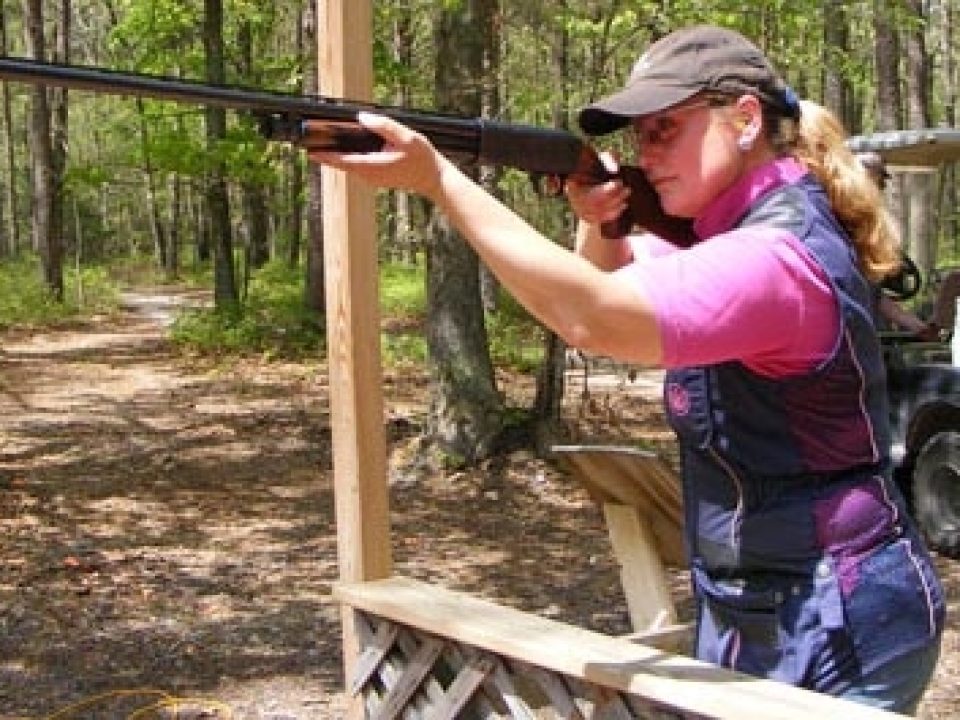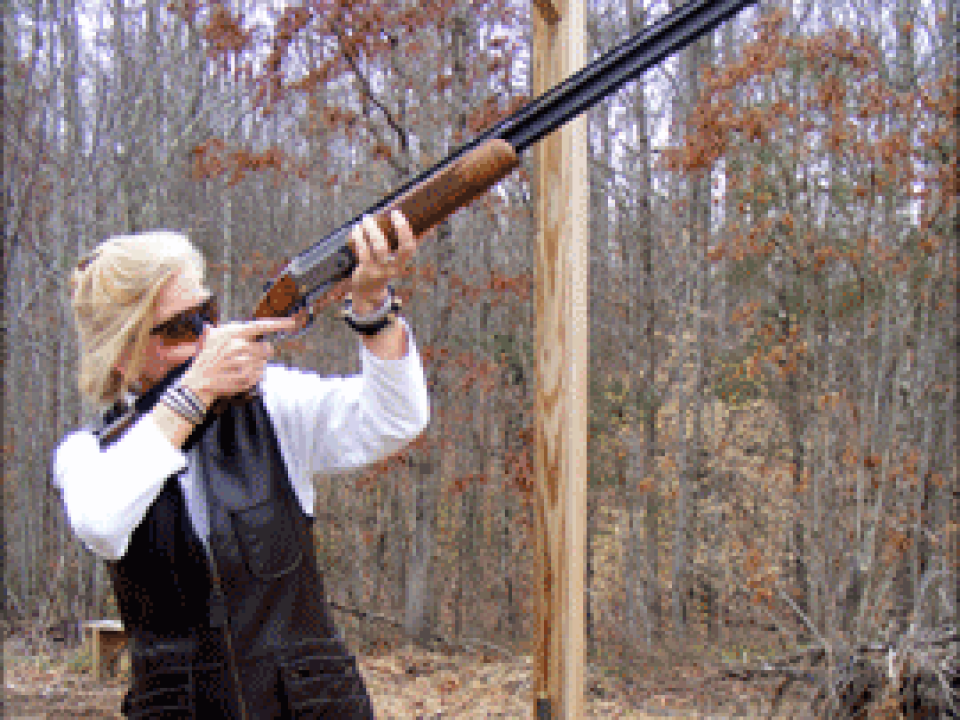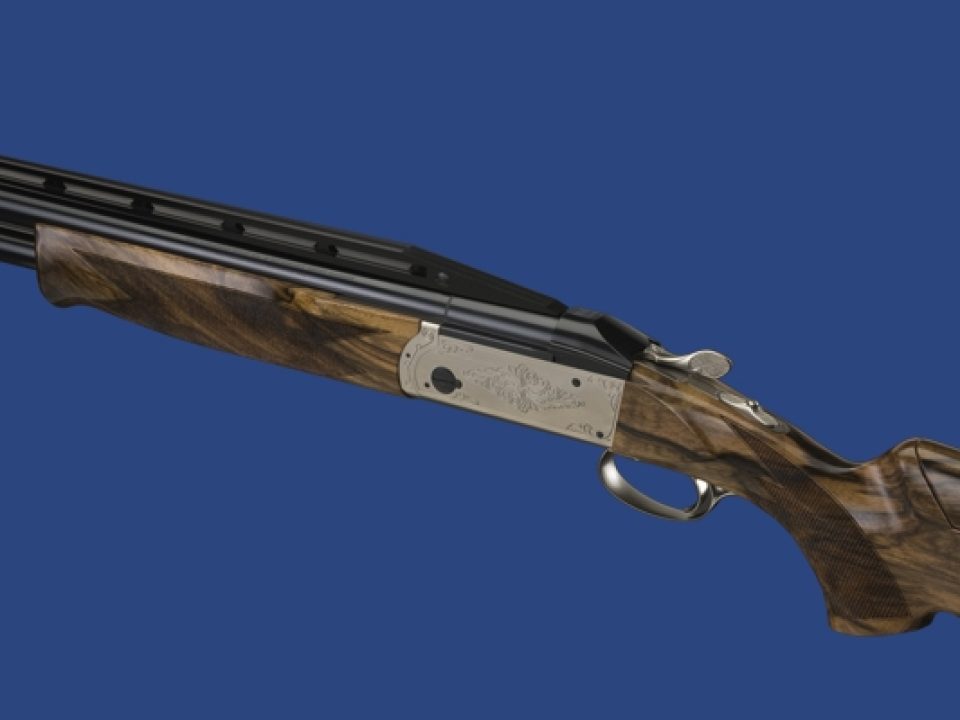
Saturday, Sep 04th

Last update01:10:09 AM GMT

60-Seconds-with

Peer Review

Peer Review presents an entirely new approach to shotgun reviews. We actually let real people, and not just the experts, get their hands on the guns we evaluate and share their opinions with Shotgun Life readers. The Peer Review participants are trusted, long-time shooting partners with the Shotgun Life staff. They are not affiliated with any gun manufacturer and take pride in presenting their objective, unbiased assessments to complement the introduction by Shotgun Life Publisher, Irwin Greenstein.

Peer Review: The Blaser F3 28-Gauge Over/Under

E-mail Print

Written by Irwin Greenstein with the opinions of Stephen Biello, Debbie Clay, Barry Goff, Sr., Brad Landseadel, Elizabeth Lanier, Joe Notarfrancesco , Vero Ricci, Steve Toomey, Kent Witters, Carolinn Poucher Woody


After Elizabeth Lanier finished shooting five stand with Blaser’s 28-gauge F3, her immediate response was “I think that maybe Blasers aren’t given the kudos they deserve.”

And you know what? We agree with her.

While Team Blaser shooters have accumulated trophies in the U.S. Open, the Sporting Nationals and the Texas State Shoot, and Blaser is a popular corporate sponsor of sanctioned competitions across the U.S., the German shotgun and rifle maker eludes most American shooters –except for the cognoscenti who prize cutting-edge engineering in their over/unders.

Pronounced Blah-zer, the 28-gauge F3 drives home the point that Blaser has not quite yet reached the tipping point for recreational shooters in search of high-quality, mid-priced shotguns. Part of the reason may be that Blasers have been coming into the U.S. only since 2005 – a relative newbie compared to Beretta, Krieghoff, Browning and other staples of the American shotgun scene.

ELanier
Elizabeth Lanier shooting the 28-gauge Blaser F3.

But the Shotgun Life Peer Review Posse clearly demonstrated that once you shoot a 28-gauge F3, you’ll want to own one.

As Steve Toomey said after shooting sporting clays with the 28-gauge F3, “I’d buy that gun in a minute. I loved that gun.”

And Joe Notarfrancesco commented after some sporting clays, “That would be the gun I’d give up my 12 gauge for. That’s how enjoyable it was to shoot.”

side
The 28-gauge Blaser F3.

If you haven’t shot a Blaser yet, we’re here to tell you that the ergonomics, balance and performance of the 28-gauge F3 make the shotgun stand out through its complete lack of drama. Rather than whippy, it proved controllable.  Instead of a youth-gun feel, Blaser’s 28 gauge exerted the grace and heft of a svelte 12-gauge sporter.

When some members of the Peer Review Posse noted that the F3 felt bigger than what you’d expect from a 28 gauge, this wasn’t meant as a slam.  Instead, nearly everyone shared the opinion that the 28-gauge F3 possessed the poise and self-assurance associated with a quality 12- gauge such as Krieghoff, Perazzi or Kolar.

Green2
The 28-gauge barrels for the F3.

And there’s a good reason for this shared perception…

Unlike most shotgun manufacturers who have two or three different size receivers to accommodate a full range of gauges, Blaser has only one receiver.  To maintain a consistent shooting experience, all of its barrels, regardless of gauge and length, weigh 3½ pounds and fit into the CNC-machined receiver – bringing total weight to between 8 and 8¼ pounds (the weight difference can also depend on wood density).

With barrels now available in 12, 20 and 28 gauge, the beauty of this ingenious approach is that you never have to reacquaint yourself with the gun, or reacclimatize to the weight and swing dynamics when shooting with sub-gauge tubes.

It makes you wonder why no one else has adopted this paradigm for building shotguns.

If you think of simplicity as a 21st century virtue, the standard F3’s aesthetic sets the bar for its clean yet purposeful lines.

On a rack of shotguns, the Blaser’s ultra low profile receiver, smooth slate-gray finish and matte-black barrels stand out as remarkably elegant and unpretentious, while conveying an unrivaled competence and precision. The F3 could easily come out of a Silicon Valley design studio instead of Blaser’s headquarters in Isny im Allgau, Germany – a country typically associated with the deep-relief style of firearms engraving called Federstich.

ManShooter
Steve Toomey gets ready to crush ‘em with the 28-gauge Blaser F3.

Given our druthers we would opt for the standard-grade shotgun simply because we are so taken with that grey satin receiver adorned only with “F3” in gold as complemented by the black barrels and other hardware including the trigger guard, top lever and hinge pin. The adjustable trigger is polished stainless steel. Add the wood, that on our gun featured smoky figuring contrasting between deep brown and honey gold, and you have the palette of an industrial loft conversion from Architectural Digest.

Higher grade models garnish the F3 receiver with progressively more ornamentation culminating with the full sideplate presentation of game, scroll and arabesque on the Imperial; and in fact this would be the way to go for lovers of fine engraving because the sideplates enhance the streamlined silhouette of the boxlock by elongating the receiver’s appearance. (Check out our story “The Most Expensive Blaser F3 in the World?”)

The slender receiver on the F3 results from engineering breakthroughs in the trigger group, ejectors and monobloc, which all contribute to the streamline dimensions. The receiver measures 2.415-inches high at its tallest point, making it one of the lowest profile guns we’ve handled.

F3Receiver
Bottom view of the F3 receiver.

The monobloc is the cornerstone for the low profile. A 0.842-inch-wide, 0.746-inch-long underlump protrudes into a recess in the bottom of the receiver, placing it flush with the bottom when the action is closed where it’s locked down with a full-width bolt.

The in-line hammers on the mechanical triggers perform like rocket sleds on the firing pins. Positioned directly over the trigger group, in exact alignment with the bores of the barrels, the F3’s in-line hammers also allow for a lower profile by eliminating taller cam-shaped hammers. Another low-profile over/under, the Browning Cynergy, employs a similar striker design for its mechanical trigger. Having shot both, however, I can clearly say that the F3 is smoother in every way, from the feel of the action to the impeccable fit between the monobloc and hinge pins.

Given Blaser’s engineering philosophy, it made sense that the F3 has mechanical triggers. They are inherently more reliable than the inertia triggers that continue to dominate the shotgun world. Inertia triggers rely on the kick from the first shot to engage the sear mechanism of the second, unfired barrel. If you accidentally hold the gun away from your shoulder, or if your first shell is a poofer, the second shot is less likely to fire.  By contrast, mechanical triggers operate independently of each other, like a side by side with two triggers. Now imagine a buttery 3.3-pound pull on the perfectly contoured Blaser trigger and you can appreciate the wonder of shooting it.

inside
The Blaser Inertial Blocking System.

Better yet, Blaser’s IBS (Inertial Blocking System) prevents the involuntary second pull of the trigger (or fan firing) that you can find on single trigger guns. It’s just the kind of shock that can make you trade in your trusty, old shotgun for an F3.

With the F3, that struggle to wrestle open your new over/under has gone the way of the carburetor courtesy of Blaser’s Ejector Ball System, which is covered by some 10 patents. The arrangement cocks the ejectors upon firing instead of opening, relieving the pressure on the F3 ejector springs for easier opening – its effortlessness on par with some of the six-figure Best Guns coming out of England.

The barrel selector is inside the trigger guard. When the button is in the back position, the bottom barrel is selected.

Blaser’s barrels come in 28, 30 and 32 inches, as we mentioned the barrels all weigh the same and are interchangeable with the receiver. The barrels will accommodate 3-inch cartridges. They are chrome-plated and magnum proofed for steel. They also pack flat forcing cones and a backboring to 0.733 inches on the 12-gauge model. Side ribs contribute to the structural integrity of the barrels and the rib is vented. Each Blaser comes with a full set of extended, color-coded Briley chokes.

The result of this advanced barrel engineering is a 28 gauge that throws stunning patterns.

“I hit a 40-yard target solid with it so it patterned beautifully,” said Shotgun Life Posse member

Brad Landseadel while on the five-stand course.

F3Balancer
The adjustable balancing system in the F3 stock.

At the other end of the shotgun, the stock contains a balancer that regulates the weight of the buttstock with a weight cylinder.

The sum of the parts on the 28-gauge F3 is a highly controllable shotgun. The synergy of the palm swell and pistol grip ensured an exceptional level of confidence in the pointability.  Likewise, the tapered Prince of Wales forend rested comfortably in my left hand for marvelous handling on fast crossers.

The trigger revealed zero creep, conveying a sense of “mission accomplished” after each shot.

While Brad attributed his 40-yard hit to the excellent patterning, my own testimonial is a broken 60-yard teal with No. 9 shot through a light-mod choke in the bottom barrel.

The 28-gauge Standard F3 we shot was priced at $6,895. A set of 28-gauge barrels for your F3 will cost $2,733.

There are some people, like me, who believe that the 28-gauge is the perfect shotgun bore. If you also fall into that group, the F3 will spoil you for good.

Now let’s hear from the Shotgun Life Peer Review Posse on Blaser’s 28-gauge F3…

PR8

Steven Biello

Profession: Law Enforcement

Gun of Choice: Browning 525 Sporting

  • Aesthetically, I liked the way it looked.
  • It just had a real good feel about it.
  • The ejectors were the most powerful I’ve ever seen. Those shells are coming out.
  • It looked like a quality gun, but I wouldn’t be afraid to take it out into the field.
  • Really nice triggers…no drag whatsoever. It was really nice to shoot.
  • It was a smooth swinging gun.


PR1

Debbie Clay

Profession: Nurse

Gun of Choice: Browning 625

  • I really, really liked it.
  • I liked how the gun felt, it was well-balanced and it felt good on my shoulder. It felt good in a woman’s hand and the pistol grip was comfortable.
  • It pointed excellent.


PR7

Barry Goff, Sr.

Profession: Retired

Gun of Choice: Krieghoff K-80

  • The gun fit me well.
  • It had a good heft to it for a 28 gauge.
  • It had a nice, crisp trigger.


PR9

Brad Landseadel

Profession: NSCA Instructor and Owner of Central Virginia Sporting Clays

Gun of Choice: Beretta DT10

  • I hit a 40-yard target solid with it so it patterned beautifully.
  • It seems well-constructed and solid. It was nice and tight.
  • In my mind, when the gun was in the right place I automatically pulled the trigger, meaning that it was a very intuitive trigger.


LanierHeadShot

Elizabeth Lanier

Profession: NSCA Instructor

Gun of Choice: Perazzi MX8

  • Beautifully balanced.
  • Very well made.
  • To appeal to a woman’s market it needs a Monte Carlo stock or an adjustable comb.
  • It’s a sweet gun.


PR5

Joe Notarfrancesco

Profession: Police Officer

Gun of Choice: Browning Golden Clays

  • In terms of fit, the pull was a little short for me.
  • That would be the gun I’d give up my 12 gauge for. That’s how enjoyable it was to shoot.
  • I liked the matte grey receiver.
  • The trigger was smooth and crisp.
  • The ejectors were phenomenal.
  • It swung very, very smooth.
  • The weight of it…that gun would not tire you out.
  • It had negligible recoil.


PR6

Vero Ricci

Profession: Retired Industrial Designer

Gun of Choice: Beretta 390 and Browning Sweet 16

  • I liked everything about it.
  • The barrels were slightly heavy and I would need time to adjust to it.
  • You don’t realize you’re shooting a 28 gauge when a gun fits that well.
  • The machining on that 28 gauge was marvelous.
  • The wood-to-metal finish was magnificent.
  • It was a delight to shoot. I’d buy one tomorrow.


PR4

Steve Toomey

Profession: Construction Inspector

Gun of Choice: Remington 1100

  • I’d buy that gun in a minute. I loved that gun.
  • It was well-balanced.
  • It went right to the target.
  • It had a nice trigger.


PR2

Kent Witters

Profession: Sales Engineeer, Scientific Instrumentation

Gun of Choice: Beretta 391

  • It fit me perfectly fine.
  • As far as the workmanship, I really liked it.
  • I liked the looks of the receiver.
  • It has a palm swell that fits real good.
  • Recoil was minimal because of the weight of the gun and relatively wide stock.


PR3

Carolinn Pocher Woody

Profession: Publishing Consultant

Gun of Choice: Caesar Guerini Maxum

  • It had a very crisp trigger
  • The barrel weight made it feel like a 12 gauge.
  • It was a very smooth-shooting gun.
  • The detailing was very nice.

Irwin Greenstein is the publisher of Shotgun Life. Please send your comments and questions to letters@shotgunlife.com.

Helpful resources:

http://www.blaser-usa.com

Peer Review: Krieghoff K-80 Pro Sporter

E-mail Print

Written by Irwin Greenstein with the opinions of John Ballard, Leon Palacpac, Andy Pusloskie and Tim Riley

Call me crazy, but when I started shooting the 12-gauge Krieghoff K-80 Pro Sporter the first thing that came to mind was not another shotgun – but a car.

And it wasn’t just any car, but the BMW X6 M sport utility vehicle.

What do the Krieghoff K-80 Pro Sporter and the BMW X6 M SUV have in common?

Essentially, they share an engineering philosophy that combines elements of their best products to create a new paradigm that delivers stunning results.

X6M
The fierce BMW X6 M.

The BMW X6 M starts out as a basic BMW X5 SUV, but a radical sloped coupe profile turns a boxy silhouette into a sexy head-turner. The engine compartment contains the V8 from other BMW models, except in the X6 M it’s tricked out with twin-turbos that raise the horsepower to a ground-shaking 555 – making its zero-to-60 performance of on par with a Ferrari 360 Modena.

While the engineers at BMW’s headquarters in Munich, Germany were devising the revolutionary X6 M, some 75 miles to the east in the gun-making hub of Ulm their counterparts at Krieghoff were hard at work on the K-80 Pro Sporter.

One look at the Pro Sporter and an amalgamation of K-80s starts running through your mind.

You notice the high rib and Monte Carlo style stock associated with the K-80 Trap Special over/under, yet you wonder why someone would be using it on sporting clays.

Although the K-80 Pro Sporter features the adjustable comb of a Krieghoff trap model, the recoil pad is the flat sporting version rather than the concave one you would find on their trap guns.

pro_sporterINSIDE
Krieghoff’s game-changing K-80 Pro Sporter.

Upon closer inspection, the K-80 Pro Sporter is topped by the tapered rib on the K-80 Trap Special. Although both have the 12-8 mm dimensions, the rib on the K-80 Pro Sporter “floats” above the barrel so that you can insert an adjustable wedge near the front bead to change the point of impact from 50/50 to 60/40. In fact, you can also achieve a 70/30 point of impact by using the 60/40 wedge and a figure-8 sight picture, which is used by a significant number of trap shooters.

When it comes to the stocks, first impressions of a near match with a trap model give way to the tale of the tape. Krieghoff’s #6 Adjustable Comb Stock Trap Monte Carlo stock has a 14 3/8- inch length of pull and a drop range of 1¼ inches to 1 5/8 inches.

Measuring Krieghoff’s #3 Pro Sporter stock yields a 14½-inch length of pull and a drop range of 1 5/8 inches to 1¼ inches. These dimensions also differ from the #3 Adjustable Sporting Stock, which has a length of pull of 14 3/8 inches and a drop range of 1 5/8 inches to 1¼ inches.

Clearly, the K-80 Pro Sporter draws inspiration from other Krieghoff models, but at the same time is unique unto itself as a high-performance, clays-crushing machine. Ultimately, with the K-80 Pro Sporter, Krieghoff has thrown down the gauntlet on the best possible way to shoot sporting clays, skeet, 5-Stand and FITASC.

If you observe most clays shooters, they tend to lean forward so that their balance point is the ball of their lead foot. As you lean forward in this position, your face creeps up on the stock and in order to see the targets you try to find them by tilting your eyes toward the top of their sockets. This means you tend to obscure your natural, predatory binocular vision. Stand upright to shoot, however, and you turn into a clays killer.

The higher rib and stock of the K-80 Pro Sporter force the shooter to stand more upright – or as I think of it – more predatory. A characteristic of a successful predator is to identify the target and strike it in the shortest possible time. The more upright position that the K-80 imposes on you actually presents a more expansive sight picture…reducing your reaction time.

Krieghoff’s design philosophy of upright shooting is also reflected in the receiver of the K-80 Pro Sporter. Krieghoff takes it as a point of pride that the receiver on the K-80 Pro-Sporter is “fairly long and high,” according to Alex Diehl, Krieghoff’s General Manager.

The shotgun’s flat, easy swing is largely attributed to the receiver serving as the center of gravity. The shotgun’s center mass rests in the hands of the shooter versus having a weight bias on the gun barrel, or in the stock as with many other manufacturers. All K-80s, including the Pro Sporter, are individually balanced around the hinge. The payoff is that there was never a muzzle-heavy feel, even with the 32-inch barrels, on the K-80 Pro Sporter that I shot.

The ambidextrous palm swell and tapered forend certainly enhanced my control of the K-80 Pro-Sporter. A straight plumb line down from the receiver to my right knee and foot created a light, fluid pivot for crossing targets.

For example, like other K-80s, the Pro Sporter doesn’t need side ribs on the barrels for strength or extra ballast. The free-floating barrels separated by the famous Krieghoff adjustable hanger improve aerodynamics (and heat dissipation), but more importantly complement the overall balance when you consider the receiver as a center fulcrum. The K-80 Pro Sporter swung as though it were on ball bearings.

This smooth handling was a virtue felt throughout.

The K-80 Pro Sporter minimizes felt recoil without relying on hydraulics or springs. So many shotgun manufacturers tout their recoil- reduction systems such as built-in shock absorbers, rubber inserts in the stock or other apparatus, which look and function like recoil prosthetics.

Okay, the Pro-Sporter weighs nearly 9 pounds so of course it will absorb gobs of recoil. But what I’m talking about here goes beyond taming Sir Isaac Newton’s third law of physics. I’m referring to the meticulous engineering behind a near-perfect, clays-shooting experience: even though the K-80 Pro Sporter is heavy, it is also nimble, balanced and comfortable. After blasting 1?-ounce loads for hour after hour, the K-80 Pro Sporter was about as comfortable as a day behind the wheel of that cushy BMW X6 M.

Does it have even less felt recoil than a standard K-80 sporting or skeet gun? Perhaps…

After all, if you’re leaning forward in a more conventional stance, your shoulder pocket takes the brunt of the recoil. By comparison, the more upright stance of the K-80 Pro Sporter has a tendency to distribute the effects of recoil to a wider area of softer tissue. I haven’t proven this notion scientifically, but it seems to make sense after you shoot the gun for a while and you experience a gentle push instead of a kick.

From my perspective, there’s a fine line between comfort and intuition when it comes to the character of a shotgun. You can often find the perfect blend in bespoke British shotguns that connect so fully with the shooter that it comes as second nature to effortlessly shoot game birds. It’s no surprise that Robert Churchill, whose method of instinctive wingshooting rocked the world, was a son of the British double gun.

trigger
The legendary Krieghoff K-80 trigger.

In the K-80 Pro-Sporter, comfort meets intuition in the remarkable trigger. Your brain tells you when to pull the trigger and your index finger easily obliges.

The K-80 Pro Sporter shares the same legendary trigger with other K-80s. It has a single, selective, mechanical trigger. The hammers and sears are operated by coil springs, a typical configuration for boxlocks like K-80s.

With a pull of about 3¼ to 3¾ pounds, the trigger is crisp and intuitive. The trigger shoe is contoured to your finger and can be adjusted back-and-forth. Lock times are between 25-30 millionths of a second. Release triggers are also available from Krieghoff.

The K-80 Pro Sporter is an affirmation of evolution rather than revolution in the lineage of the K-80’s ascent from Krieghoff’s first-generation competition shotgun, the K-32.

One feature that has remained in the K-80 Pro Sporter is Krieghoff’s trademark sliding top breech. The top latch slides forward to secure the barrels to the receiver at the best possible point. It also helps maintain a solid fit regardless of how much you shoot it. The sliding top breech is strong and secure, and personally I find it easier to keep clean than the more popular underlug.

The Pro Sporter is also equipped with the K-80 non-automatic sliding safety. It’s located on the top tang just behind the opening lever. The K-80's safety can be locked “off” so that no targets are lost through engaging the safety by mistake.

Is this a gun that you will fall in love with at first sight? Not the base model I shot. The standard scroll of a single wreath flourish on the case-hardened nickel receiver seemed gratuitous. I would prefer the plain, modern look of a Blaser F3 as the entry-level design. Still, you only need to move to the next option called the Super Scroll Nickel and the K-80 receiver becomes a pallet of fine engraving. Ultimately, Krieghoff can have your K-80 Pro Sporter custom engraved.

The standard Turkish walnut on the K-80 Pro Sporter was attractive enough. Nicely figured and hand chequered, it’s finished with a protective satin epoxy. And like the engraving, the sky’s the limit on the amount of money you can spend on upgraded wood from Krieghoff.

As with Krieghoff’s Sporting models, the K-80 Pro Sporter comes standard with five titanium chokes: skeet, two improved cylinders, modified and improved modified.

Miles
Gebben Miles and his winning
K-80 Pro Sporter.

The K-80 Pro Sporter is a shotgun that will definitely change your game. For proof, look no further than Gebben Miles. He picked up a K-80 Pro Sporter only five weeks before the 2009 Sporting Clays Nationals and won his first major title with the shotgun.

Now let’s hear what the Shotgun Life Peer Review Posse has to say about the Krieghoff K-80 Pro Sporter…

Ballard
John Ballard

Profession: Retired

Gun of Choice: Benelli Super Sport

“First of all I was impressed with the gun with regards to the weight. It doesn’t feel like a traditional K-80. It feels lighter. I thought the balance was great. It was just perfect. I like the high rib, because you can stand more erect and see the target better and it gives you better peripheral vision because my head is up straighter. The trigger was fine. It felt very good. I didn’t notice any recoil and I was shooting those Black Mamas and they’re pretty good hitters. The gun feels good in your hands. The swing was very smooth. I would definitely buy the gun.”

Doc
Dr. Leon Palacpac

Profession: Physician

Gun of Choice: Beretta 686 White Onyx

“The trigger pull was excellent. There was no creep whatsoever. It was very easy to swing. The gun felt well balanced. The weight is a little heavy for me, and the gun was too long. It shot very well.”

Andy
Andy Pusloskie

Profession: Millwork Salesman

Gun of Choice: Caesar Guerini

“The balance is very nice, and allows for the gun to swing very smoothly and evenly. You can’t miss a target with it. I would prefer that the rib isn’t as high as it is. For example, at station low one on skeet, I saw the rib instead of the bird on the pair but at stations three, four and five the swing is just wonderful. It’s a heavy gun, but the weight is evenly distributed, and allows for very little felt recoil even with 1?-ouce loads. The trigger had no play in it at all and was very smooth. The length-of-pull was just about right for me. It fit me very well. The wood is very nice on it, but I’d expect that on a Krieghoff. The wood to metal fit is very good. The ejectors are not over-sprung to avoid accidentally hitting somebody with the spent shells.”

Tim
Tim Riley

Profession: Commercial HVAC

Gun of Choice: Browning Ultra XS Skeet

“The gun had very little recoil. It gave me a bigger sight picture. I was able to see the full target. The trigger was crisp, real good. It’s a comfortable weight. It’s not a hard swinging gun, the swing is very light.”

Useful resources:

http://www.krieghoff.com

Peer Review: The Fausti Dea Round Body and the Fausti Caledon

E-mail Print

Written by Irwin Greenstein with the opinions of Terry Crawford, Rick Cundiff, Josh Lepman, Darrell McKigney, Mark Polek and Joe Svach

Coming to your local dealer soon: fine Italian shotguns bearing the Fausti name.

Although the three Italian Fausti sisters have become more popular than the Mona Lisa in shooting clubs across the U.S., if you wanted to purchase one of their shotguns it helped if you lived within driving distance of a Cabela’s. Until recently, the outdoor superstore was the sole American retailer.

But in March 2009, Joe Cunniffe and Craig Johnson launched Fausti USA – the manufacturer’s own distribution arm in Fredericksburg, Virginia. Under their stewardship, Fausti of Italy is rapidly establishing a national network of American dealers and sales representatives to supplement Cabela’s. So when you walk into your local gun store, you’ll find Faustis now displayed alongside Brownings, Berettas, Krieghoffs and other staples of the shotgun sports.

The Fausti lineup is eclectic, befitting the company’s boutique approach to gun making. The receivers and other parts are CNC-machined for space-age tolerances, but many of the models mirror the golden age of shotgun craftsmanship. You’ll find over/unders, side by sides and hammer guns with prices ranging from $2,000 upwards –   all of them finished by hand.

Although Fausti USA will accept custom orders for premium shotguns, the American market will initially be home to five production boxlocks:

  • The Dea Duetto is a single-trigger, 28 gauge/.410 combo side by side with a list price of $4,999.
  • The Dea Round Body is a 20-gauge side by side with more engraving and an overall higher quality finish. It’s a classic double-trigger field gun and sells for $5,899.
  • The Class is an over/under field gun available in 20-gauge and 12-gauge models. The coin-finish receiver has full-cover engraving and a list price of $2,449.
  • The Class is also available in a very lovely round body. It comes only as a 20 gauge with either an engraved coin-finish on the receiver or a case-hardened finish. That gun sells for $4,199.
  • The Caledon is their entry model with a price of $1,999. It’s an over/under field gun with a coin-finish receiver that has a unique engraving pattern. The Caledon is available in both 20-gauge and 12-gauge models.

Given that we’ll be seeing plenty more Faustis here in the U.S., we took the opportunity to conduct a Peer Review on two models. The Peer Review Posse shot the Dea Round Body and the Caledon.

The Fausti Dea Round Body

The Dea Round Body is Fausti’s interpretation of a traditional upland shotgun. With double, gold-plated triggers and curved edges along the bottom of the receiver, it begs to be taken on your next pheasant hunt. This gun is a true round action, not a squared action with the edges polished off.

It had a straight English stock and matching wood butt plate with case-colored screws. The oil-finished Turkish walnut on our shotgun featured attractive figuring that complemented the case-colors  of the receiver, which itself was resplendent with full scroll and the words Dea Round Body in gold that arced on the side of the receiver in the spirit of a Holland & Holland Sporting or Krieghoff Essencia. We liked the curved fit of the receiver to the stock – softening the perpendicular seam that typically characterizes a boxlock. The long tang that flowed into the bottom of the stock was adorned with scroll engraving that carried into the mounting screws as well.

Dea-Round-Body
The Fausti Dea Round Body.

The wood on the splinter forend was well-matched to the stock. The case-colored hardware matched the button on the forend finial to release the Anson push-rod latch. Remove the forend and you’ll see a switch that allows you to select between eject and extract modes for the spent shells – a unique feature that was well-received.

The chequering throughout is finely executed by laser, and its expanse on the forend would allow just about any shooter to find a comfortable hold without inadvertently touching the hot barrels.

A tapered raised rib flowed into the top tang that hosted the safety. It had a single brass bead at the muzzle. Our Dea Round Body had a manual safety, which was appreciated among our seasoned shooters.

The Dea Round Body comes standard with five screw-in chokes: cylinder, improved cylinder, modified, improved modified and full. The chokes rated for lead only are improved modified and full, while cylinder, improved cylinder and modified and rated for both lead and steel.

The dimensions of the Dea Round Body are as follows:

  • Guages available are 12, 16, 20 and 28. The 12, 16 and 28 gauge models feature frames scaled to the gauge.
  • Barrel length: 28 inches (30-inch and 26-inch lengths are available on special order).
  • Overall length: 45½ inches
  • Average weight: 6 pounds
  • Length of pull: 14 3/8 inches
  • Drop at heel: 2¼ inches
  • Drop at comb: 1 7/8 inches

The interior of the receiver appeared clean and well finished. It had Dual Purdey locking lugs with two fasteners and a double-bite lock. The mono-block barrel construction featured jeweled machining on the  sides of the monobloc. The Dea Round Body accepts up to 3-inch shells.

We brought the Dea Round Body to Prospect Hall, a private hunting and shooting club in Kearneysville, West Virginia. The occasion was a morning of sporting clays with a group of vintage shotgun enthusiasts.

Unlike many courses that have turned sporting clays into an extreme sport, Prospect Hall adheres to the philosophy that the targets should simulate the flight of actual game birds. This approach is also manifested in the spare stations of a few logs on the ground and the natural terrain and landscaping. In short, the Prospect Hall course offered a true upland experience for the Dea Round Body.

Before heading out, we had convened in the dining room of the old farm house for coffee and pastries. I had placed the Dea Round Body on the antique mahogany table for all to review. The men shouldered it, inspected it closely and debated its virtues. The Dea Round Body drew admiration for the overall finish and appearance. Then we went out to shoot.

shooter
Darrell McKigney shoots the Fausti Dea Round Body at Prospect Hall.

Of the five guns in the squad (myself included), nearly everyone thought the trigger pull was too heavy at 6½ pounds – that is except for Darrell McKigney. At about the third station of the Prospect Hall course, Darrell stashed his AyA in the cart and took up the Dea Round Body for the duration of the course and proceeded to absolutely crush targets with it. When someone else in the squad mentioned the heavy triggers, he would smile and powder one more set of birds.

We had a similar experience with another shooter at a different course. This time it was at the Prince George’s County Trap & Skeet Center in Glenn Dale, Maryland. Despite its name, the facility has a challenging 18-station sporting clays course where we gave the Dea Round Body a run-through. There were five guns in our squad, including Shotgun Life Editor, Deb McKown.

Again, four of the guns thought the trigger pull was too stiff. But Deb took up the shotgun and started blowing away targets with it – experiencing no problems with the 6½ pounds of trigger pull.

For the record, Fausti USA’s Joe Cunniffe said the trigger pull from the factory on Dea Round Bodys should be about 5 pounds. So it’s conceivable that our gun was out of tolerance. That said, the new Fredericksburg hub has a service center that would bring the shotgun into specs if the customer requested.

The Fausti Caledon

For starters, let me say that I loved the Fausti Caledon. You would be hard-pressed to find a better 12-gauge, over/under field gun at $1,999.

The Caledon’s appearance, handling and quality make it one of the best values in the market and this is a field gun I would buy.

caledon-2
The Fausti Caledon.

The coin-finish receiver belied the shotgun’s price. A swoop that resembled the blade of a sheepsfoot knife started at the back of the receiver and widened toward the monoblock. While the upper part of the receiver displayed a plain finish, the area inside the “knife blade” held a classic leaf scroll that covered the underside with even greater detail as it wrapped around a gold pheasant in flight. The motif seamlessly extended to the forend hardware where it joined the receiver.

Details abound in the Caledon. The forend relief on the bottom of the receiver was cross-hatched. There was a proud wood-to-metal finish between the receiver and the stock, as well as the forend and the hardware. The fences where the barrels met the receiver were sculpted and finely engraved. The forend latch and trigger guard was also engraved. One of the nicest features for a gun at this price was the filigreed top lever.

When it came to the wood, Fausti classified the Turkish, oil-finished, walnut as A+, which I would accept as a fair characterization. Like the Dea Round Body, the chequering was applied by laser and provided good grip. The Caledon’s Prince of Wales stock made it easy to mount for wingshooting, complemented by a smooth, ¼-inch, rubber recoil pad.

The Caledon’s trigger had a comfortable 3-pound pull. The barrel selector was on the top strap, along with the auto-safety switch that bedeviled our reviewers trying this field gun on skeet and sporting clays.

The 28-inch barrels were topped with a vented rib that had a single brass bead on the muzzle. The Caledon came with the same choke selection as the Dea Round Body. The Caledon included automatic ejectors.

Here are the dimensions for the Fausti Caledon:

  • Barrel length: 26, 28 and 30 inches for both the 12 gauge and 20 gauge models. (The Caledon and Class models also will be available in scaled frame 16 gauge and 28 gauge models with barrel lengths of 26, 28 and 30 inches.)
  • Chamber: 3 inches
  • Overall length: between 43½ inches and 47½ inches on the 12 gauge and 20 gauge models depending on barrel length
  • Average weight: between 6.1 pounds and 7¼ pounds depending on gauge and barrel length
  • Length of pull: 14½ inches
  • Drop at comb: 1¾ inches

Two particular instances stood out for me when I shot the Caledon over a period of several weeks.

The first time was at the Prince George’s County Trap & Skeet Center. While Deb deftly handled the Dea Round Body, I opted for the Caledon. Since my regular shotgun is a semi-auto with a 4-pound trigger, it took me a while to become familiar with the Caledon. My biggest obstacles were the shorter length of pull combined with the lighter trigger.

Because the Caledon was shorter than my everyday semi-auto, I found myself exerting too much pressure to make sure it was firmly in my shoulder during a low-gun mount. There’s a right way and wrong way to do this, and I kept it doing it the wrong way, which is to inadvertently leverage your trigger finger during the mount. Consequently, I kept firing the Caledon’s 3-pound trigger prematurely at the targets.

Once I got accustomed to the gun, however, it was quite enjoyable. Of the final 25 targets I nailed 19. By that time, I was smitten with the Caledon. It handled in a neutral manner and once I mastered the mount the gun came up with a ready zeal from its excellent ergonomics and balance.

For a gun with 28-inch barrels you would expect the swing to run wild. Yet the 7¼ pounds was distributed with a slight muzzle bias, contributing to a controllable swing. In part, the tapered Prince of Wales forend also helped convey that sense of control, since it fit comfortably into my left hand. In addition, the recoil with my 2¾-inch, 1-ounce shells proved negligible, providing an additional level of reassurance that further enamored me to the Caledon.

The final time I shot the Caledon was at dusk – closing out a full day of clays shooting at Prospect Hall that included walking 100 rounds of sporting clays, 100 rounds of grouse butt and 50 rounds of ZZ birds.

Four of us had arrived at the Shenandoah Valley Sportsmen Club in Martinsburg, West Virginia at about 4:30 PM to hunt mourning doves. We drove up as close as possible to our assigned field. Still, we had to lug our full gun bags, folding chairs and guns several hundred yards to the tree line. That’s when I truly noticed how easily the Caledon carried.

Once I picked a spot, there was plenty of time to wait for the birds. The evening was unusually warm and perfumed of early autumn, and I have to admit I was ready for a snooze. But when the call of birds from a fellow hunter rang through the field the Caledon came up with an eagerness that immediately got me going again. Given the acrobatics of mourning doves, I made some extraordinary shots that personally lit up the evening for me.

Now that we shot both Fausti field guns, I’m looking forward to 2010 when Fausti USA will start importing target guns. We’ll be the first to provide you with an update on the new models.

The Peer Review Posse

In our Peer Reviews, recreational shooters we know and trust try the shotguns and give us their feedback. The objective here is to get the opinions of everyday shooters who would spend their hard-earned money on a shotgun.

The Peer Review Posse evaluated the Dea Round Body and the Caledon on sporting clays, grouse butt and skeet.

The Peer Review Posse on the Dea Round Body

terry
Terry Crawford

Profession: Semi-retired/sports writer

Gun of Choice: Side by sides

“The wood to metal finish is good. It balances between the hands well with a little weight forward of the hinge pins. It’s a lively gun. From the standpoint of a gun for bird hunting, it’s excellent, but the trigger pull is too heavy. The engraving is very good. I could use this and knock the living hell out of pheasants and chukars and anything else that flies.

The walnut is nicely figured wood. The chequering on the stock is well executed. The rose and scroll engraving is good. I like the fact that it’s a non-automatic safety. The ejector/extractor feature, that’s a plus. In the field I don’t like ejectors. It’s a classic upland bird gun. It would be in the Birmingham gun makers’ class. It’s a high end production gun.”

rick-cundiff
Rick Cundiff

Profession: Investment Banker

Gun of Choice: Caesar Guerini Forum

“It handled very well. It’s a tight gun and I thought the fit and finish were extraordinary. The case hardening was really colorful and the bluing on the barrels was nice and bright. I loved the wood butt plate. The gun swung very nice. I had no problems seeing the targets with it. It would be a wonderful hunting gun, it’s nice and light. The gun had no noticeable kick.”

darrell
Darrell McKigney

Profession: Public Policy Professional

Gun of Choice: English-style sidelocks

“I thought it was a very attractive gun. It felt like a solid-handling gun. I liked the classic boxlock and two triggers and case coloring. This gun stays true to the English boxlock style.”

The Peer Review Posse on the Caledon

josh
Josh Lepman

Profession: Railroad track maintenance specialist

Gun of Choice:12-gauge Remington 1100 and 20-gauge Browning over/under.

“I hit every target that was pulled with it, and I wouldn’t expect to do that with a gun I never shot before. I was able to swing it quite smoothly for a light-weight field gun, and it wasn’t whippy. The trigger was just great, it was just right. It certainly looks like a quality gun. It looks nice and it feels right.”

mark
Mark Polek

Profession: Marketing analyst

Gun of Choice: Caesar Guerini 20-gauge

“I thought the gun was too light for skeet and the trigger pull was too light. It swung OK, but I thought it was whipsawing because it was too light. It did hit the targets with it, and I had no problem hitting the targets except for the light trigger. The gun feels very well made.”

joe
Joe Svach

Profession: Computer programmer

Gun of Choice: Browning Citori

“The weight was good, especially for a field gun. The trigger was kind of light for me, but once you got used to it, it was alright. The swing was good. Overall, the feel of the gun was very good.”


Useful resources:

http://www.faustiusa.com

Peer Review: The Browning Silver Lightning

E-mail Print

I’ll be the first to admit that I may have been suffering from a mid-life crisis, but ultimately I really wanted to prove that a mainstream semi-auto like the Browning Silver Lightning still had what it takes in our digital era of composite gladiators such as the Maxus and Vinci.

I was in a similar state of mind as when I had turned 30 and happened to be on assignment as a reporter in New Orleans. As I found myself hurling toward senility, there was no better town to prove that I still had what it takes to party till dawn. (Unfortunately, when my wife and I were packing up to move several years later she came across a photo taken that night of me in Pat O’Brien’s hanging off two babes, my eyes sort of ga-ga and my tongue lolling around.)

I wanted to pursue the mortal limits of the Silver Lightning in the same way I put myself through the wringer on that wicked night long ago in New Orleans.

SilverMossOakTree
The Browning Silver in Mossy Oak Tree Stand.

And with that tender thought in mind, I decided to try and kill it. I had weather and timing on my side, but the Silver Lightning is one of those stoic shotguns that can go on to become a family heirloom. With their reliability taken for granted, they are subject to more neglect than most, but persist in their endurance.

Like most of us, the Silver Lightning does a highly competent job without fanfare or hype. Browning’s Silver Lightning won’t cause your buddies to drool with envy. You won’t find dazzling decals on the stock declaring it an inertia-driven marvel. Nor will your Silver Lightning take the crown in a gun-rack beauty show.

But what the Peer Review Posse discovered is that the Browning Silver Lightning will exceed your expectations for reliability and handling. Tweaked for the 21st century by Browning engineers, the Silver Lightning is an old-school semi-auto in the most endearing way possible.

As fortune would have it, I was off to a good start when it came to stress-testing the Silver Lightning.

When shotgun manufacturers circulate review models to the media, the specimen that usually arrives in the box has already been manhandled pretty heavily (it’s sort of like rock stars with hotel rooms). You’ll get shotguns that have burned through tens of thousands of rounds in Argentina with zero maintenance, or shotguns with barrel bores so encrusted that the screw-in chokes refused to budge.

The Silver Lightning I received had been thrashed, judging by the scratches on the wood and carbon-charred chamber (although the choke did unscrew). But nothing rattled on the shotgun and the wood-to-metal fit remained tight. There was no slack in the trigger and the bolt shut with clear authority. When I mounted the Silver Lightning it felt right and true.

So while this Silver Lightning had already gone a few, bruising rounds it still had legs. That was good, because looking at the 10-day weather forecast a spring storm front was racing my way. I knew it would be my opportunity to inflict a heaping measure of watery abuse on the shotgun. If Mother Nature cooperated, the plan was to run 500 rounds through the shotgun during the worst of the impending downpours. I figured with a name like Lightning, if the gun couldn’t stand up to the rain it was sure to receive a double-thumbs down from the Peer Review Posse.

My ground rules were simple: get the gun as wet as possible (without throwing it in a lake) and never clean it or dry it. No oil or solvent or rag would touch the Silver Lightning on my watch.

Since it was too early in the year for wingshooting, I would put the shotgun through its torture test by shooting sporting clays, trap and five-stand.

I couldn’t ask the rest of the Peer Review Posse to be as fanatical when it came to evaluating the Silver Lightning in the rain, and so their comments, which follow below, were rendered under more reasonable shooting conditions.

At first it was hard to tell how the Silver Lightning would hold up. The shotgun was positioned in the Browning semi-auto line-up between the new Maxus fighter jet and the more traditional 10-gauge Browning Gold.

The heartbeat of the Maxus is the state-of-the-art Power Drive Gas System. Its gas piston features larger exhaust ports to dump gases faster on heavy loads. The piston also has a 20-percent longer stroke travel to reliably handle lighter loads. It’s a completely different beast than the Browning Silver or Gold shotguns. Designed from a clean sheet of paper, the Maxus was intended to inflect devastation on the duck-hunting killing fields of Mississippi, South Dakota and Alberta under the harshest conditions endured by the baddest, macho, camo-clad warriors ever to set foot in a blind.

For the rest of us who enjoy a waterfowl adventure that starts at 4 am with flapjacks and bacon, the Browning design team wanted the Silver and Gold to prove a reliable and competent companion. The Silver and Gold share the same DNA. Both employ identical trigger groups and are built around Browning’s self-adjusting Active Valve gas system.

As Browning explains it, the Active Valve system is designed to cut recoil to the shoulder caused by gas expelled from spent shells. When shooting light loads in the Silver and Gold shotguns, most of the gasses drive the action. With heavier magnum loads, however, only a fraction of gas operates the action. The Active Valve vents the remaining gases through the forend and away from the receiver. By diverting the gasses through the front of the shotgun, the recoil is reduced at the shoulder.

The Silver’s suggested retail prices of between $1,079 and $1,419 make most models only marginally less expensive than the Maxus, which can list for between $1,199 and $1,379. Meanwhile, the three models in the Browning Gold line-up range in price from $1,579 to $1,639.

Browning Silver Tale of the Tape

Gauge

Barrel Length

Overall Length

Length of Pull

Drop at Comb

Drop at Heel

Nom. Weight

MSRP

12  3½"

28"

49"

14 1/4"

1 3/4"

2"

7 lbs 9 oz

$1,259

12  3½"

26"

47"

14 1/4"

1 3/4"

2"

7 lbs 8 oz

$1,259

12  3"

28"

48 1/4"

14 1/4"

1 3/4"

2"

7 lbs 6 oz

$1,089

12  3"

26"

46 1/4"

14 1/4"

1 3/4"

2"

7 lbs 4 oz

$1,089

20  3"

28"


$997

20  3"

26"


Source: Browning (www.browning.com)


Browning’s family of Silver semi-autos includes 13 models. They are available in several finishes and include slug guns for taking down deer. The Silver Lightning features a gloss, walnut stock with the Lightning-style forend that we found was well-matched in grain and finish.

Across the entire line of Browning shotguns, the Lightning designation means you’re getting a forend sans the Schnabel pout but tapered toward the front for faster maneuverability. Combined with the satin-finish receiver, 1-inch ventilated recoil pad, gold trigger and ventilated rib on the 28-inch barrel, the Silver Lightning was the picture of a classic semi-auto.

SilverBlack
The Browning Silver in black composite.


Any questions about the Silver’s lineage should be put to rest when you recognize that Browning describes the aluminum alloy design of the receiver as “semi-humpback.”

Sound familiar? It should because the Browning Automatic 5 shotgun was the first mass produced semi-auto. It had the distinctive profile of a raised receiver that flowed into the barrel but abruptly dropped down into the stock, as though sliced on a Tootsie-Roll assembly line. Over the years, the A-5 earned the endearing nickname of “Humpback.” Designed and manufactured by John Browning in 1898, the inertia-driven “Humpback” A-5 saw continued production through 1998 – firmly establishing the A-5 in the annals of shotgun history.

Given the number of years I had already taken off my life expectancy during that single night in New Orleans I certainly didn’t anticipate hanging around long enough to see if the Silver Lightning now laying on my bench would survive even the next decade.

All the equipment was now in place for the shotgun’s trial by water: the Browning Silver with its 28-inch barrels, the three Invector-Plus chokes that came with the gun (Improved Cylinder, Modified and Full), the owner’s manual (just in case) and 25 boxes of Federal 12-gauge, 2¾-inch, 1? ounce, #8s packed with lead shot and rated at 1,200 fps. I grabbed the cheapest, flimsiest gun sleeve in my possession and tucked the gun away. The only thing left to do was pray for rain.

Irwin
The author shooting the Browning Silver Lightning in the rain at the Loch Raven Skeet and Trap Center.

First stop was my home club, the Loch Raven Skeet and Trap Center in Phoenix, Maryland. It has two voice-controlled trap fields that work perfectly fine in the rain, and with the steady downpour in progress I was off to a good start.

When I arrived there, I put the Silver Lightning on the gun rack of a trap field, went back to the club for my gear but got caught up chatting around with some of the regulars. I would say I was in the club house for about 20 minutes, the Silver Lightning just sitting out there in the mean time. The gloss finish on the wood beaded the rain, as it would continue to do over the next three days.

I shot 100 rounds of wobble trap from the 16-yard line, going through four boxes of shells (plus a few extra shots). One aspect of the Silver Lighting that immediately impressed me was its forward ejection system – eliminating the possibility of hitting other squad members to the right (a pet peeve). Naturally, the forward ejection would be appreciated in a blind.

At first the trigger felt a bit stiff, but that soon passed. The other feature I liked about the shotgun was its large triangular safety designed for shooting with gloves. With a Modified choke, the low-flying birds could be shot dead-on, but the high-fliers needed some float off the muzzle. True to its name, the Silver Lightning handled very quickly without running away on the wide sweepers. In fact, you would think it weighed less than its 7 lbs., 6 oz.

Shooting it, I didn’t feel any recoil to the shoulder, but there was slight jar to my cheek. Part of the problem may have been that the shotgun was wet and slippery, but when I finished there was no experience of lasting discomfort you would find with some real thumpers. Maybe I got used to it over the next few days, but ultimately recoil never proved to be an issue during the 500-round test.

Most important, though, of the 100 shells that cycled through the gun none of them jammed.

The following day I went to Central Penn Sporting Clays in Wellsville, Pennsylvania. It sprinkled throughout the 100 rounds of shooting. Central Penn can throw some very fast targets, many of them crossing mid-trajectory. The Silver Lightning handled beautifully and I shot in the high end of my range. Once again, the shotgun did not jam at all.

On the third day of my testing, I returned to Loch Raven Skeet and Trap for a few rounds of 5-stand. There was very heavy rain and I really felt bad for my stalwart trapper. During my 100 rounds, the shotgun jammed twice, once during the third game and once during the fourth game.

As I was ready to leave, I saw a couple of guys shooting skeet. Turned out they couldn’t wait to try a new Savage over/under that one of them just bought. I asked if I could join them and we shot two games together for another 50 rounds. The Browning Silver performed flawlessly.

I still had 150 rounds to shoot to meet my 500 goal and opted for sporting clays at the Prince George’s County Skeet and Trap Center in Glen Dale, Maryland. It was now the fourth consecutive day of shooting in the rain without cleaning, drying or oiling the Browning Silver.

On that day the rain was torrential. The clubhouse regulars started making wise cracks that someone was crazy enough to actually shoot in this miserable weather.  It was a good thing that Prince George’s uses an electronic controller with a solo-delay feature, because their only trapper, engaged in a texting frenzy, didn’t want to go out in the rain.

I grabbed a cart and took off to Station 1. I have to admit that by now I was getting pretty disgusted with being wet all the time. The Silver Lightning cooperated on this last, wettest day. Of the 150 rounds fast rounds I put through the shotgun, only one didn’t cycle.

In the end, of the 500 wet rounds that I shot with the Browning Silver I experienced only three jams – all of them on the second shot. Of course, some of that could be chalked up to user error – not holding the gun tight enough against my shoulder to cycle the next shot, not loading it properly or even a bad shell. When all is said and done, I thought that under the grueling circumstances three jams out of 500 rounds was pretty darn good for this semi-auto.

Now let’s hear from Shotgun Life’s Peer Review Posse:


Rick_Cundiff

Rick Cundiff

Investment Banker

Gun of Choice: Caesar Guerini Forum

“It pointed very well and came up perfectly. I liked the fast action. It had no felt recoil."

“I didn’t notice the noise of the action, which tends to bother me on some semi-automatics."

“I thought it could use longer barrels. I’d like to see 30-inch barrels.”


Tim-Hoff

Tim Hoff

Salesman

Gun of Choice: Beretta 390


“The gun was very responsive. I thought it would be a lot faster because of the light weight, but it’s evenly balanced between the hands so it handled nicely."

“I would like to see longer barrels."

“I didn’t even notice the recoil. It has as much recoil as my (Beretta) 390."

“I thought it swung rather smoothly. I didn’t get that jumpy feeling you would expect with a gun that has a shorter barrel.”


Rosensteen_closeup

Scott Rosensteen

Marketing Representative

Gun of Choice: Beretta 682 Gold

“I thought the gun was too light for me."

“I’m 6’4” and I felt the gun was just too small for me."

“I found that the gun kicked the heck out of my face.”

Useful resources:

http://www.browning.com

http://www.lochravenskeettrap.com/

http://pgtonline.org


It's FREE, But It's Not for Everyone
Join an elite group of readers who receive their FREE e-letter every week from Shotgun Life. These readers gain a competitive advantage from the valuable advice delivered directly to their inbox. You'll discover ways to improve your shooting, learn about the best new products and how to easily maintain your shotgun so it's always reliable. If you strive to be a better shooter, then our FREE e-letter is for you.

Please fill out this form to sign up.
First Name:
Last Name:
* Email:
We value your privacy. We will never rent or sell your e-mail address to another company.
Irwin Greenstein, Publisher

Peer Review: The SKB GC7 Clays 20/28/.410 Three-Barrel Set

E-mail Print

SKB is a shotgun company that flies under the radar of most wing and clays shooters, which is regrettable given the enthusiastic impression the GC7 Three-Barrel Set made on the Shotgun Life Peer Review Posse.

The outcome by the Peer Review Posse ran the gamut from amazement at the impressive quality for such an affordable shotgun, to our Editor, Deb McKown running a 23 on skeet with the .410 barrel set the first time she ever laid hands on the gun. And Peer Review Posse member Alessandro Vitale who is an AA skeet shooter ran the stations with the .410 also during his first time with the shotgun.

By coincidence, most of the Peer Review Posse either currently shot a Browning or owned one so that the Browning experience still remained fresh. It was a natural leap for us to collectively draw a comparison between the SKB under evaluation and the Browning Citori.

In many ways the SKB bears a strong resemblance to the popular Citori, yet costs a fraction of the price with absolutely no sacrifice in quality or performance (although some members of the Peer Review Posse would have preferred better cosmetics). At the same time, we felt strongly that the SKB stood on its own as a quality shotgun that was easy on the wallet.

SKBsideview
The SKB GC7 20-gauge that supported the 28-gauge and .410 barrels.

Getting down to the nitty-gritty of price, the SKB 20-gauge GC7 Grade II Clays Series with 30-inch barrels, which served as the basis for our three barrel set, retailed for $2,099. By comparison, a Browning Citori 625 Sporting in 20 gauge, with 30-inch barrels, had a retail price of $3,459 – making the Browning some 40% more expensive.

The Grade II GC7 three-barrel set we tested was the fixed-comb model that listed for $4,999. (The same shotgun would cost $5,199 with an adjustable comb.) So the extra $2,900 over the price of the stand-alone CG7 20 gauge gets you a set of 28-gauge and .410 barrels with all chokes, forends and a foam-lined aluminum travel case.

The lower price of the SKB is largely attributed to the company’s conservative marketing budget.

Rob Johansen, who has been involved with SKB’s U.S. operation since 1987, is the first to admit that he skimps on marketing campaigns employed by bigger companies that typically pass along the costs to consumers. By stripping out the marketing overhead, Rob is able to offer SKBs at a lower price point than Browning, Beretta, Caesar Guerini and others.

“Here’s a gun that you won’t associate with any big time shooters, but ask your friends and neighbors about it and they’ll say good things,” Rob commented. “We provide value to shooters who are not predisposed to a brand name.”

Although there is a wide selection of over-unders that cost under $3,500, the SKBGC7 and the Browning Citori seemed to have the most in common. For starters, both are made by highly regarded Japanese manufacturers.

Browning has a long-standing relationship with Miroku, which made the first Japanese Browning. Introduced in 1973, the Citori overcame a mountain of skepticism about Japanese shotguns by going on to become the best-selling over-under in history.

Whether or not the Citori groomed American enthusiasts to embrace Japanese shotguns is certainly up for discussion. But SKB had been exporting shotguns to the U.S. since 1968 – five years prior to the Citori’s American debut. And like Mirouku’s Browning, SKB has created a full family of shotguns for wing and clays shooting.

While Miroku started building guns in 1893, Mr. Shigyo SaKaBa worked as a gunsmith’s apprentice and by 1855, at the age of 20, he began the production and development of his own guns. SKB celebrated its 150th anniversary in 2007.

The culmination of this experience is the CG7 line of over-unders, which is available in Game and Clay models.

SKB’s new GC7 Game models are available in three grades in a choice of 12, 20 and 28 gauge or .410. Multi-gauge sets are available in three configurations: 12 and 20, 20 and 28, or 20, 28 and .410. The configurations differ slightly for the Game and Clays models.

The weight of our Grade II Clays model came in at 7 pounds, 10 ounces. It had a 14 5/8 inch length of pull, 1½ inch drop at comb and a 2 3/16 inch drop at heel. That made the shotgun nine ounces heavier than the Citori 625 Sporting, which ironically made the SKB feel more like a Browning – especially when it came to swinging the gun on a skeet field. The SKB had a length of pull that was about ¼ inch shorter than the Citori 625 Sporting, giving rise to the shared opinion that it fit just about everyone in the Peer Review Posse with no problem whatsoever.

For example, Deb currently shoots a 20-gauge Browning Citori Ultra XS Skeet. She had the stock cut ½ inch for a better fit. Yet the SKB obviously fit her well enough to knock off a 23 in skeet with the .410 barrels.

There’s something predictable about shooting a Citori that carried over into the GC7. It comes down to the balance, heft and trigger feel. And you can even go as far as saying that the classical, boxlock Citori styling reunites you with an old shooting buddy.

While we won’t go as far as saying that the SKB completely evoked the affable predictably of a Citori, the GC7 did convey the sense that you were making the acquaintance of a new shooting pal who you immediately liked because he reminded you of an old friend.

In part, the relationship between our SKB and the Citori came down to the well-built feel of our GC7.

SKBreceiver
The SKB GC7 20 gauge.

SKB manufactures two receivers, one for 12 gauge and the other for 20 gauge. The receiver is cut from a single steel ingot. A silver nitride finish is applied to resist corrosion. It has a powerful Greener-style crossbolt locking mechanism – a design that has been proven to endure generations of abuse. Like so many Brownings, the SKB had a tight lock-up.

As with the receiver, the monobloc is machined from a single steel ingot. It houses two locking lugs which engage the crossbolts, and two shoulder lugs which interlock with the receiver. In addition, two channels inside the receiver accommodate the cocking rods. Overall, the shotgun had a sturdy feel upon opening and closing it – and when you factor in the price the GC7 far surpasses anything in its class when it comes to quality construction.

The triggers house V-shaped hammer springs that provided crisp engagement and pull. We never found the trigger to be a point of contention throughout our tests.

Of course you can’t appreciate the construction quality of the CG7 until you shoot it, but our three-barrel set made a great first impression when it came to value.

SKB’s GC7 series comes standard with six Briley flush-mounted chokes, ranging from extra full through cylinder. As with our 20-28-.410 set, each barrel arrives with its own chokes and Prince of Wales forend. The GC7 forends feature a Deeley Release pull-down lever. SKB does an excellent job of matching the wood for the entire shotgun. The American Black Walnut featured 18 line diamond cut checkering with a high-gloss polyurethane finish.

SKBengraving
The Grade II engraving on the SKB GC7.

The half side plates of our GC7 featured the Grade II game scenes of grouse on the wing with a floral adornment on the hinge pins. The machined engravings of the birds seemed the most Asian characteristic of the shotgun. Their style suggested the elegance of Japanese silk paintings – no real attempt to render an accurate depiction but rather an expression of the natural world. I was probably the only member of the Peer Review Posse who liked the art on the gun, while others felt it was a shortcoming.

When it came to shooting the CG7, the 20-gauge and 28-gauge performed admirably, but the .410 was the one that everyone wanted to own.

The 30-inch barrels of the 20 and 28 gauge swung like 32-inch gun. The longer 32-inch barrels are used by some manufacturers to manage the whippiness of the lighter subgauge shotguns. But the heavier weight of the CG7 helped stabilize the 20 gauge and 28 gauge barrels very nicely, while telegraphing a confident sense of control through the tapered Prince of Wales forend. So if you’re not a fan of 32-inch barrels on subgauge shotguns you should find the CG7 to your liking.

The slightly shorter length of pull compared with the Citori 625 Sporting helped the CG7 come up to the shoulder very nicely, facilitating a fluid swing for low-gun shooters. This is when the CG7 felt slightly nose-heavy, but once you understood the gun’s dynamics it was easy to transform a mild liability into an advantage by applying a little more effort with your left hand to get that swing started to achieve the follow through of a bigger shotgun.

Everyone agreed, however, that when it came to the .410 it was as close to perfection as you could find in any gauge shotgun in that price range. In addition to Deb’s 23 at skeet, and Alessandro’s perfect 25, the .410 nailed some other impressive shots, notably an outgoing teal at about 50 yards. The .410 made the CG7 absolutely effortless to shoot in terms of mounting the gun, finding the target and following through to the break. It was certainly the most intuitive gauge of the three-barrel set and went on to become the favorite.

Now let’s hear from the Shotgun Life Peer Review Posse:

Brown

Lee Brown

Aerospace Engineer

Gun of Choice: Beretta Diamond Pigeon

“I was impressed by a couple of things. People who are tall and have long arms like me frequently find that stock guns are too small for them. On this gun, the length of pull and the drop were perfect. I’m used to a 34” barrel so at first it felt a little light, but the balance was excellent.

“The mechanicals were good and tight, so you could get a lot of use out of it before anything gets loose on the gun.

“For the price, I thought a little more engraving and ornamentation would’ve been nice but that has nothing to do with how the gun shoots and this gun shoots very well.”

Noppenberger

Jeff Noppenberger

Home Improvement

Gun of choice: Browning Cynergy

“I liked the gun a lot. It fit like a glove out of the box.

“The swing of the gun was awesome. The gun swings like a dream, it begs you to get on the target. It felt like the balance was perfect in each one of the barrels. It’s a very impressive, solid, neutral feeling gun. Everybody seemed to shoot real well with it.

“As far as shooting it, and the actual mechanics, I think it’s a real nice gun.

“The quality was real good. It felt tight. I found the gun to be extremely accurate.

“It has a traditional look but I would like to see an oil finish on the wood.

“The .410 was absolutely a blast. I would buy the .410 in a minute.”

Rosensteen

Scott Rosensteen

Marketing Representative

Gun of choice: Beretta 682 Gold Sporting

“It had good weight and balance. I felt it shot where I pointed it. It shot at the same place regardless of which barrels you used.

“Overall I was very impressed with it. Everything seemed top-notch – not at all flimsy. It felt sturdy. I liked it.

“It definitely had a good weight for a .410 and the sub gauges in general. It was easy to swing.”

Vitale

Alessandro Vitale

Entrepreneur

Gun of Choice: Benelli

“There’s a classic style to the gun. It has a Citori old-school look. The gun fits like a Browning and it’s solid. It has super quality and a great ejection mechanism. It’s a tight gun. It swings great and the balance is good.

“I noticed muzzle jump on the 20 gauge I think it should have ported barrels. I also thought there should’ve been a palm swell on the grip.

“Compared with a Guerini or a Browning, it needs better scroll work. For the money, Guerini gives you higher quality wood and engraving, but SKB gives you the extra barrels.

Irwin Greenstein is Publisher of Shotgun Life. You can reach him at letters@shotgunlife.com.

Useful resources:

http://www.skbshotguns.com

It's FREE, But It's Not for Everyone
Join an elite group of readers who receive their FREE e-letter every week from Shotgun Life. These readers gain a competitive advantage from the valuable advice delivered directly to their inbox. You'll discover ways to improve your shooting, learn about the best new products and how to easily maintain your shotgun so it's always reliable. If you strive to be a better shooter, then our FREE e-letter is for you.

Please fill out this form to sign up.
First Name:
Last Name:
* Email:
We value your privacy. We will never rent or sell your e-mail address to another company.
Irwin Greenstein, Publisher

  • «
  •  Start 
  •  Prev 
  •  1 
  •  2 
  •  Next 
  •  End 
  • »

Page 1 of 2

italian-books